Vitturi Bruno Kusznir, Nerdal Patrik Theodor, Maetzler Walter
Department of Neurology, University Hospital Schleswig-Holstein and Kiel University, Kiel, Germany.
NPJ Digit Med. 2025 May 1;8(1):234. doi: 10.1038/s41746-025-01659-2.
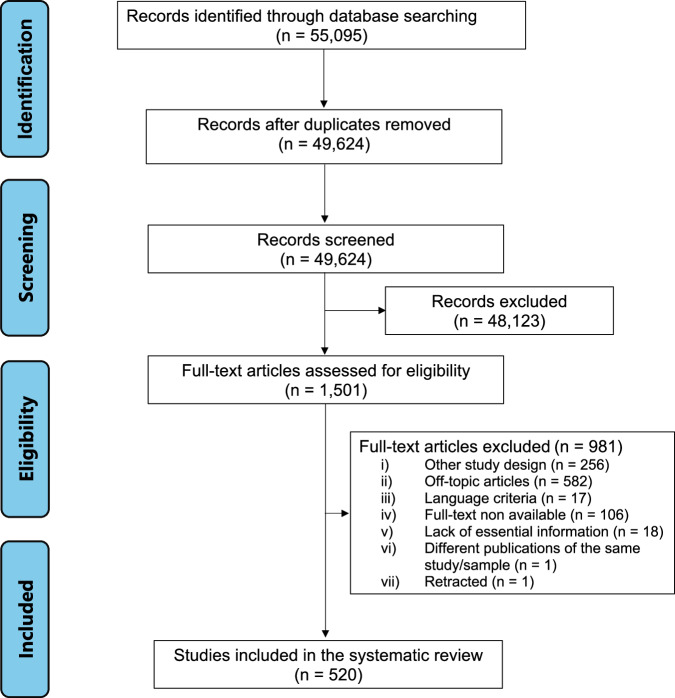
This review presents the status quo of how far the digitalization of elements of the neurological examination has progressed. Our focus was on studies that assessed the examination conducted in person, rather than through telemedicine platforms. Five hundred and twenty studies were included in this systematic review. The digital tools covered ten elements of the neurological examination: gait (173, 33%), motor system (149, 29%), eyes (85, 16%), cognitive functions (53, 10%), sensory system (47, 9%), balance (35, 7%), other movements (24, 5%), other cranial nerves (24, 5%), coordination (10, 2%), and autonomic nervous system (9, 2%). Most of the tools were portable (442, 85%), and in 215 studies (41%) the devices were wearable. The cost of the digital tools used was described and discussed in 167 (32%) studies. Most devices (61%) had a low complexity, and half required high additional analytic effort.
本综述介绍了神经学检查各要素数字化进展的现状。我们关注的是评估现场进行的检查的研究,而非通过远程医疗平台开展的检查。本系统综述纳入了520项研究。数字工具涵盖神经学检查的十个要素:步态(173项,33%)、运动系统(149项,29%)、眼睛(85项,16%)、认知功能(53项,10%)、感觉系统(47项,9%)、平衡(35项,7%)、其他运动(24项,5%)、其他颅神经(24项,5%)、协调(10项,2%)和自主神经系统(9项,2%)。大多数工具为便携式(442项,85%),215项研究(41%)中的设备为可穿戴设备。167项(32%)研究描述并讨论了所使用数字工具的成本。大多数设备(61%)复杂度较低,一半设备需要大量额外分析工作。