Daijikai Mihara Hospital, 6-31-1 Nakano-cho, Mihara, Hiroshima, 723-0003, Japan.
Eur Arch Psychiatry Clin Neurosci. 2012 Sep;262(6):493-9. doi: 10.1007/s00406-012-0296-9. Epub 2012 Feb 10.
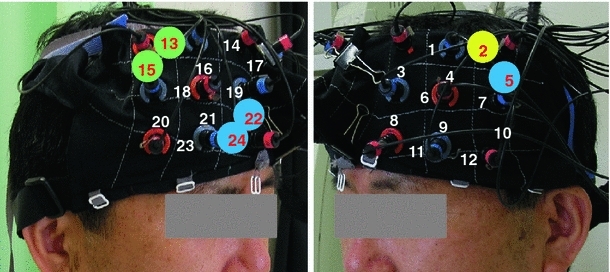
Affective symptoms, such as depression and apathy, and cognitive dysfunction, such as psychomotor slowness, are known to have negative impacts on the quality of life (QOL) of patients with mental and physical diseases. However, the relationships among depressive symptoms, apathy, psychomotor slowness, and QOL in a non-clinical population are unclear. The aim of the present study was to assess these relationships and examine the underlying cortical mechanisms in a non-clinical population. Fifty-two healthy male volunteers were assessed for depressive symptoms using the Zung Self-rating Depression Scale (SDS), for apathy measured using the Apathy Scale, and QOL using the Short-Form 36 item questionnaire (SF36). The volunteers also performed the Trail Making Test Part A (TMT-A) while undergoing assessment of hemoglobin concentration changes in the frontal cortical surface using 24-channel near-infrared spectroscopy (NIRS). The scores of the SDS and Apathy Scale showed significant negative correlations with the scores of most of subscales of the SF36. In addition, the SDS score had a significant positive correlation with the time to complete the TMT-A. Further, activation of several frontal cortical areas had a significant positive correlation with the scores of the SDS and Apathy Scale. These results suggest that the degree of depressive symptoms and apathy are associated with a lower QOL in a non-clinical population and that cortical hyperactivation during a psychomotor task measured by NIRS may identify objectively individuals with a high degree of depressive symptoms and apathy.
情感症状,如抑郁和冷漠,以及认知功能障碍,如精神运动迟缓,已知会对患有身心疾病的患者的生活质量 (QOL) 产生负面影响。然而,非临床人群中抑郁症状、冷漠、精神运动迟缓与 QOL 之间的关系尚不清楚。本研究旨在评估这些关系,并研究非临床人群中的潜在皮质机制。52 名健康男性志愿者使用zung 自评抑郁量表 (SDS) 评估抑郁症状,使用冷漠量表评估冷漠,使用 36 项简短健康调查问卷 (SF36) 评估生活质量。志愿者还在进行血红蛋白浓度变化的评估时执行了 Trail Making Test 部分 A (TMT-A),使用 24 通道近红外光谱 (NIRS)。SDS 和冷漠量表的评分与 SF36 的大多数子量表的评分呈显著负相关。此外,SDS 评分与完成 TMT-A 的时间呈显著正相关。此外,几个额皮质区域的激活与 SDS 和冷漠量表的评分呈显著正相关。这些结果表明,在非临床人群中,抑郁症状和冷漠的严重程度与较低的 QOL 相关,并且 NIRS 测量的精神运动任务期间皮质的过度激活可能客观地区分出具有高度抑郁症状和冷漠的个体。