Buck Institute for Research in Aging, Novato, CA, USA.
Free Radic Res. 2012 Aug;46(8):1011-8. doi: 10.3109/10715762.2012.662277. Epub 2012 Feb 14.
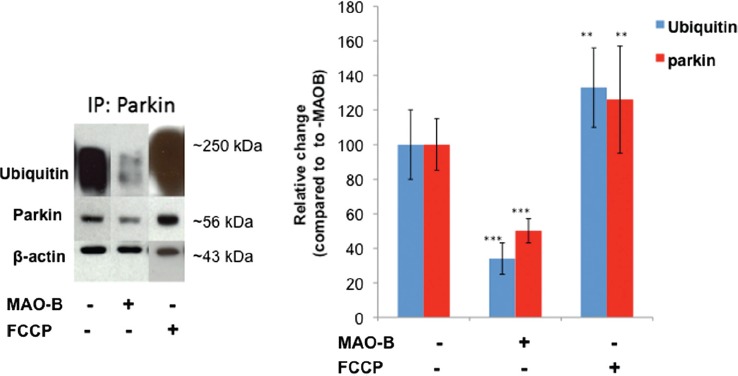
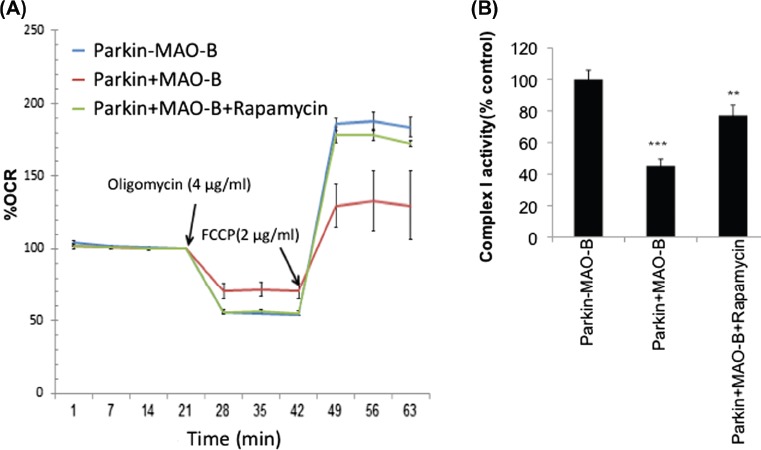
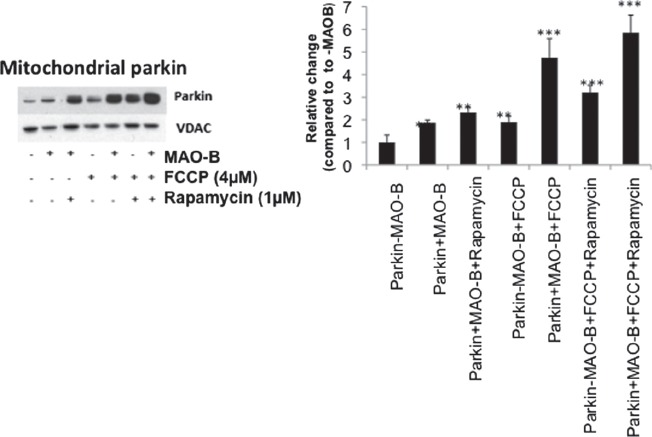
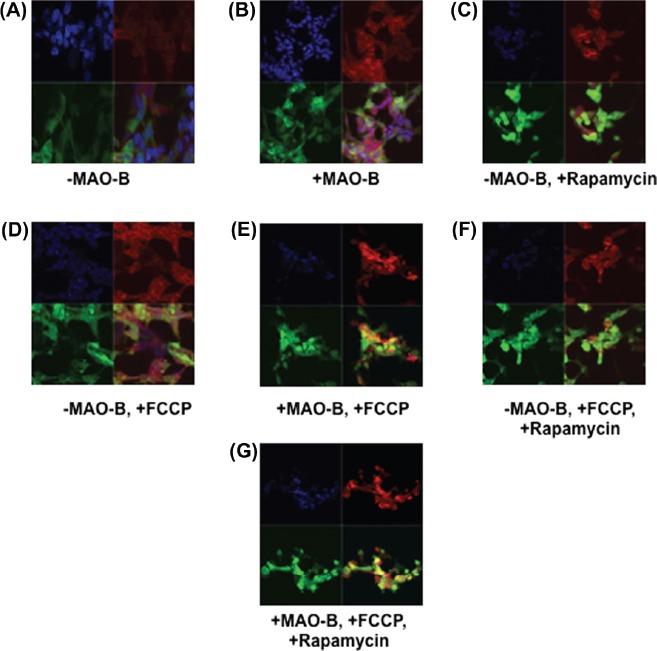
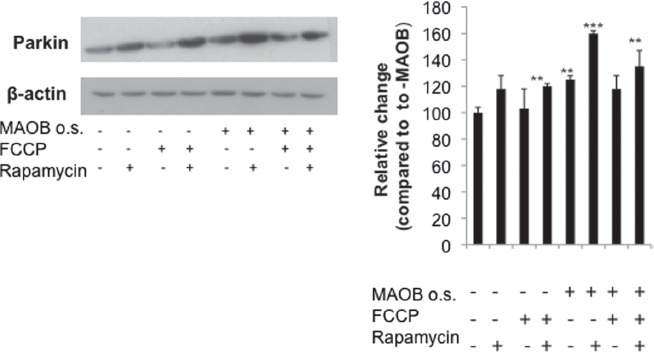
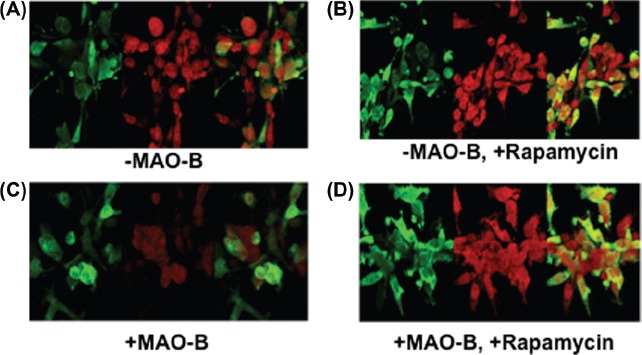
Increased oxidative stress in the Parkinsonian substantia nigra is believed to contribute to neurodegeneration, in part due to regionally elevated levels of the enzyme monoamine oxidase B (MAO-B). Increased oxidative stress has also been reported to be associated with the inhibition of E3 ligase activity of the Parkinson's disease-related protein parkin. In an inducible MAO-B cell model, losses in parkin E3 ligase activity were found to occur in conjunction with reduced mitochondrial turnover and decreased mitochondrial function, although this did not inhibit parkin's ability to translocation to damaged mitochondria. The mTOR inhibitor rapamycin was found to restore both mitophagy and mitochondrial function in these cells. These data suggest that MAO-B induction can interfere with mitochondrial quality control via losses in parkin activity that in turn impact on mitochondrial turnover. Rapamycin may be an effective means of counteracting the effects of lost parkin function by independently enhancing autophagic removal of damaged mitochondria.
帕金森病患者黑质中的氧化应激增加被认为是导致神经退行性变的原因之一,部分原因是单胺氧化酶 B(MAO-B)的区域水平升高。氧化应激增加也与帕金森病相关蛋白 parkin 的 E3 连接酶活性抑制有关。在可诱导的 MAO-B 细胞模型中,发现 parkin E3 连接酶活性的丧失与线粒体周转率降低和线粒体功能下降同时发生,尽管这并没有抑制 parkin 向受损线粒体易位的能力。雷帕霉素(mTOR 抑制剂)被发现可以恢复这些细胞中的线粒体自噬和线粒体功能。这些数据表明,MAO-B 的诱导可以通过 parkin 活性的丧失干扰线粒体的质量控制,进而影响线粒体的周转率。雷帕霉素可能是一种通过独立增强受损线粒体的自噬清除来抵消失去 parkin 功能影响的有效手段。