Department of Pharmaceutics, Utrecht Institute for Pharmaceutical Sciences, Utrecht University, Utrecht, The Netherlands.
Int J Nanomedicine. 2012;7:417-33. doi: 10.2147/IJN.S26485. Epub 2012 Jan 31.
Activated proximal tubular cells play an important role in renal fibrosis. We investigated whether sunitinib and a kidney-targeted conjugate of sunitinib were capable of attenuating fibrogenic events in tubulointerstitial fibrosis.
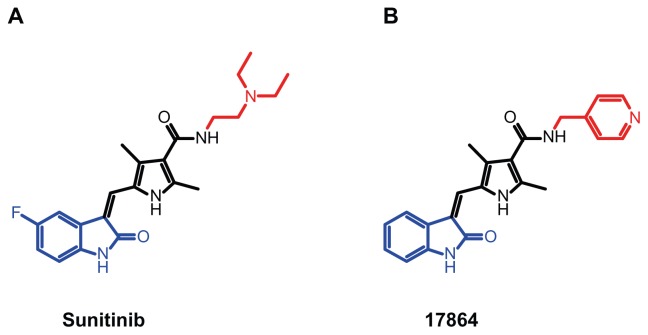
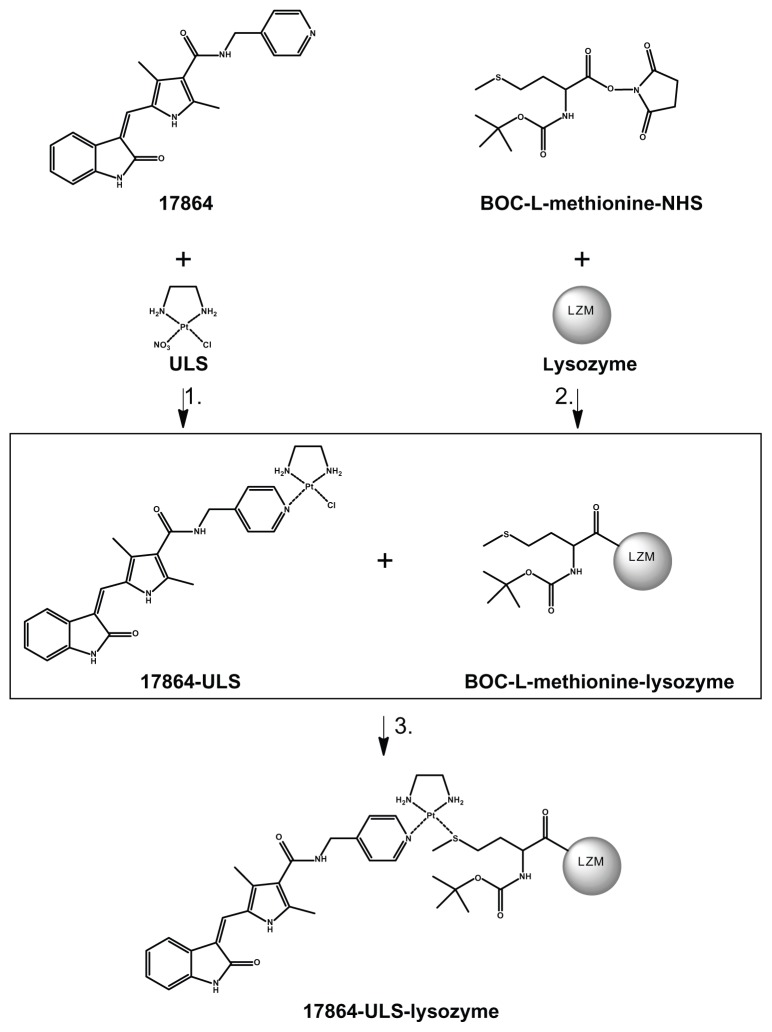
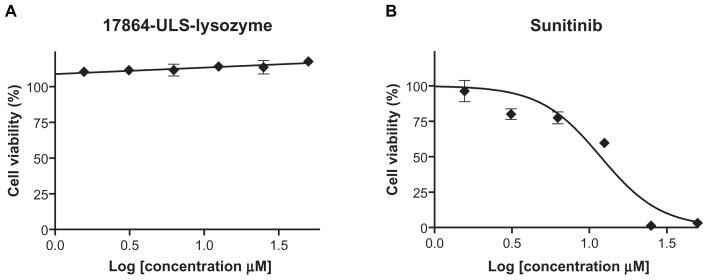
A kidney-targeted conjugate was prepared by linkage of a sunitinib analog (named 17864) via a platinum-based linker to the kidney-specific carrier lysozyme. Pharmacological activity of 17864-lysozyme was evaluated in human kidney proximal tubular cells (HK-2); the capability of the kidney-directed conjugate to accumulate in the kidneys was studied in mice. Potential antifibrotic effects of a single-dose treatment were evaluated in the unilateral ureteral obstruction (UUO) model in mice.
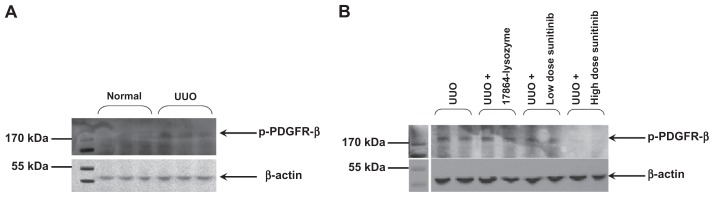
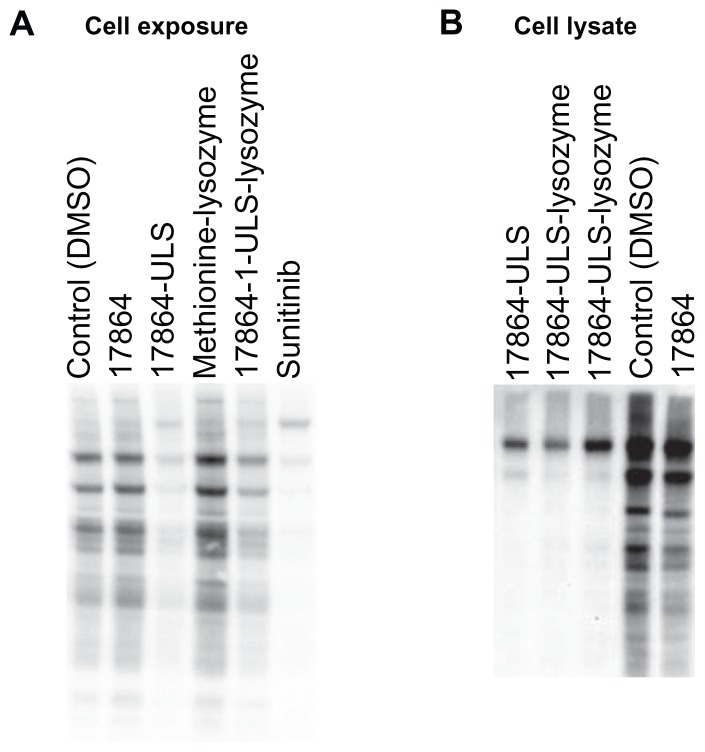
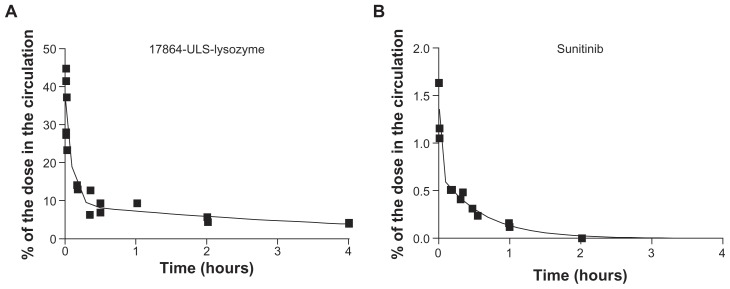
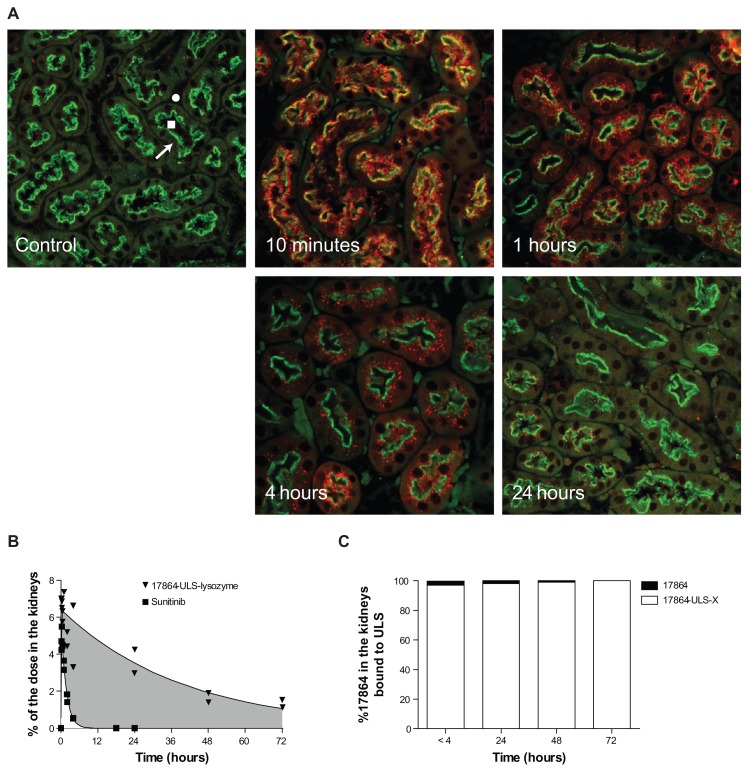
The 17864-lysozyme conjugate and its metabolites strongly inhibited tyrosine kinase activity. Upon intravenous injection, 17864-lysozyme rapidly accumulated in the kidneys and provided sustained renal drug levels for up to 3 days after a single dose. Renal drug level area under the curve was increased 28-fold versus an equimolar dose of sunitinib malate. Daily treatment of UUO mice with a high dose of sunitinib malate (50 mg/kg) resulted in antifibrotic responses, but also induced drug-related toxicity. A single dose of 17864-lysozyme (equivalent to 1.8 mg/kg sunitinib) was safe but showed no antifibrotic effects.
Multikinase inhibitors like sunitinib can be of benefit in the treatment of fibrotic diseases, provided that their safety can be improved by strategies as presented in this paper, and sustained renal levels can be achieved.
活化的近端肾小管细胞在肾纤维化中起着重要作用。我们研究了舒尼替尼及其肾脏靶向缀合物是否能够减轻肾小管间质纤维化中的纤维生成事件。
通过将舒尼替尼类似物(命名为 17864)通过基于铂的接头连接到肾脏特异性载体溶菌酶来制备肾脏靶向缀合物。在人肾近端肾小管细胞(HK-2)中评估 17864-溶菌酶的药理活性;在小鼠中研究肾脏定向缀合物在肾脏中的积累能力。在单侧输尿管梗阻(UUO)模型中评估单次剂量治疗的潜在抗纤维化作用。
17864-溶菌酶缀合物及其代谢物强烈抑制酪氨酸激酶活性。静脉注射后,17864-溶菌酶迅速在肾脏中积累,并在单次剂量后长达 3 天内提供持续的肾脏药物水平。肾脏药物水平曲线下面积相对于马来酸舒尼替尼的等摩尔剂量增加了 28 倍。每日用高剂量马来酸舒尼替尼(50mg/kg)治疗 UUO 小鼠可产生抗纤维化反应,但也会引起与药物相关的毒性。单次给予 17864-溶菌酶(相当于 1.8mg/kg 舒尼替尼)是安全的,但没有抗纤维化作用。
多激酶抑制剂如舒尼替尼在治疗纤维化疾病方面可能有益,前提是可以通过本文提出的策略提高其安全性,并实现持续的肾脏水平。