Department of Immunology, Genetics and Pathology, Uppsala University, Uppsala, Sweden.
Ups J Med Sci. 2012 May;117(2):244-50. doi: 10.3109/03009734.2012.654861. Epub 2012 Feb 15.
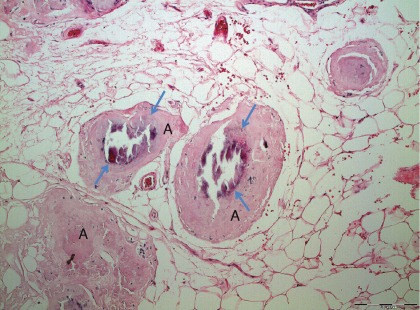
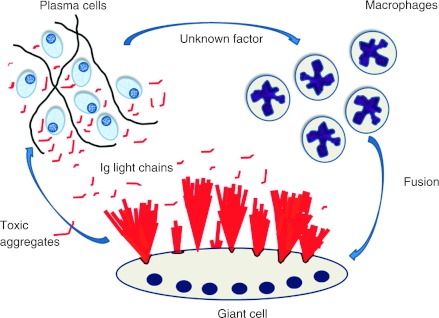
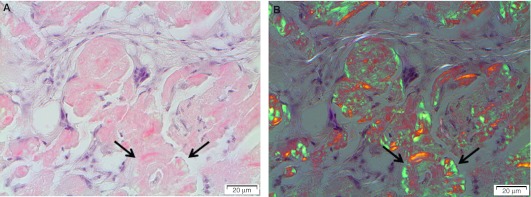
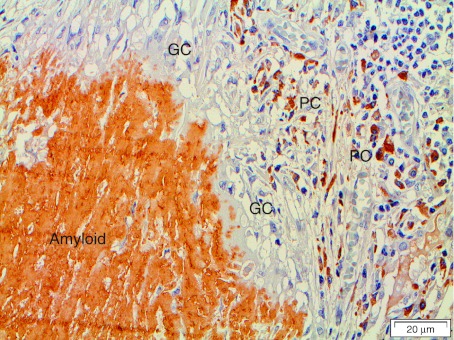
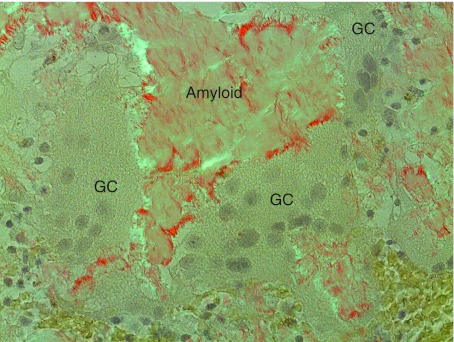
Although AL amyloidosis usually is a systemic disease, strictly localized AL deposits are not exceptionally rare. Such case reports form a considerable body of published articles. Although both AL amyloidosis types are formed from an N-terminal segment of a monoclonal immunoglobulin light chain, a typical localized AL amyloid differs from the systemic counterpart by the morphological appearance of the amyloid, and presence of clonal plasma cells and of giant cells. In this article it is pointed out that localized AL amyloidosis ('amyloidoma') represents a true plasma cell neoplasm and not a pseudotumor. The pathogenesis of localized AL amyloidosis may differ from that of the systemic type, a suggestion underlined by the fact that localized AL amyloidosis of kappa type is as common as that of lambda origin, in contrast to the systemic form where lambda chains constitute the overwhelming majority of cases. It is suggested that oligomeric assemblies of the produced immunoglobulin light chain are toxic to plasma cells, which in this way commit suicide.
虽然 AL 淀粉样变性通常是一种系统性疾病,但严格局限的 AL 沉积物并非异常罕见。这种病例报告构成了相当数量的已发表文章。尽管两种 AL 淀粉样变性类型均由单克隆免疫球蛋白轻链的 N 端片段形成,但典型的局限性 AL 淀粉样变性与系统性淀粉样变性在淀粉样变性的形态外观以及克隆性浆细胞和巨细胞的存在方面有所不同。本文指出,局限性 AL 淀粉样变性(“淀粉样瘤”)代表真正的浆细胞肿瘤,而不是假肿瘤。局限性 AL 淀粉样变性的发病机制可能与系统性类型不同,这一观点的依据是,κ 型局限性 AL 淀粉样变性与λ 起源一样常见,而系统性形式中,λ 链构成绝大多数病例。有人认为,产生的免疫球蛋白轻链的寡聚体组装对浆细胞有毒性,浆细胞以此方式自杀。