Dept. of Neurology, Veterans Affairs Medical Center, San Francisco, California 94121, USA.
J Neuroinflammation. 2012 Feb 15;9:31. doi: 10.1186/1742-2094-9-31.
Traumatic brain injury (TBI) induces activation of microglia. Activated microglia can in turn increase secondary injury and impair recovery. This innate immune response requires hours to days to become fully manifest, thus providing a clinically relevant window of opportunity for therapeutic intervention. Microglial activation is regulated in part by poly(ADP-ribose) polymerase-1 (PARP-1). Inhibition of PARP-1 activity suppresses NF-kB-dependent gene transcription and thereby blocks several aspects of microglial activation. Here we evaluated the efficacy of a PARP inhibitor, INO-1001, in suppressing microglial activation after cortical impact in the rat.
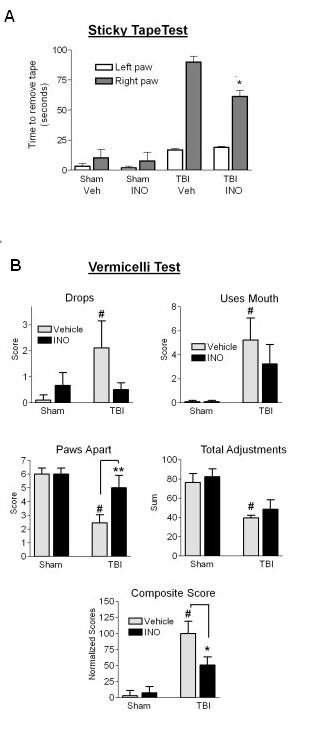
Rats were subjected to controlled cortical impact and subsequently treated with 10 mg/kg of INO-1001 (or vehicle alone) beginning 20 - 24 hours after the TBI. Brains were harvested at several time points for histological evaluation of inflammation and neuronal survival, using markers for microglial activation (morphology and CD11b expression), astrocyte activation (GFAP), and neuronal survival (NeuN). Rats were also evaluated at 8 weeks after TBI using measures of forelimb dexterity: the sticky tape test, cylinder test, and vermicelli test.
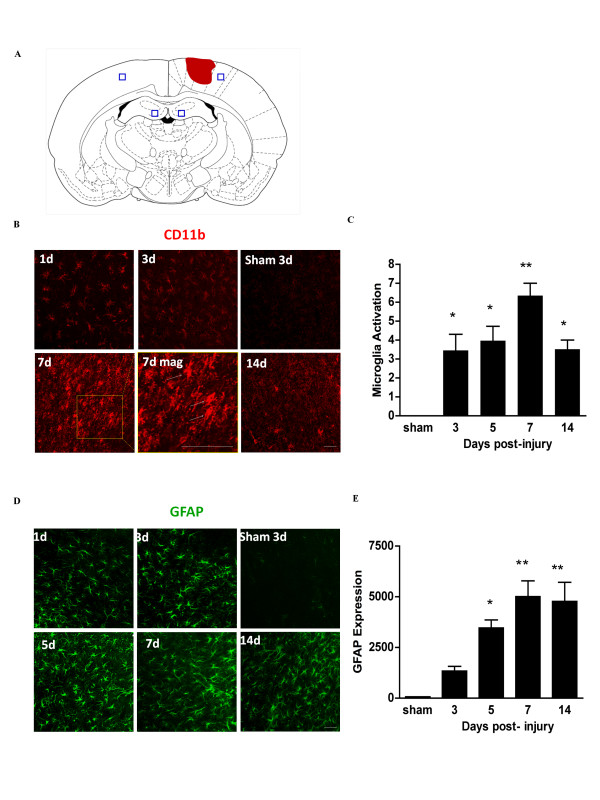
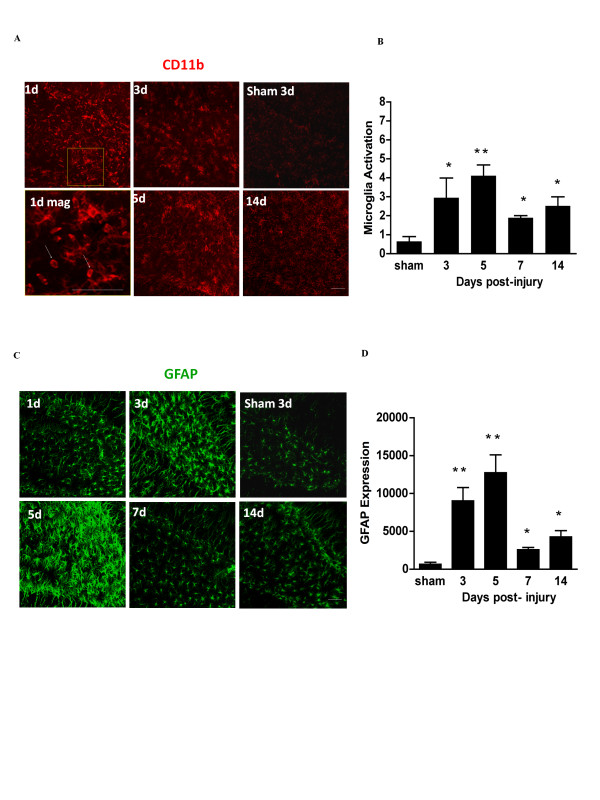
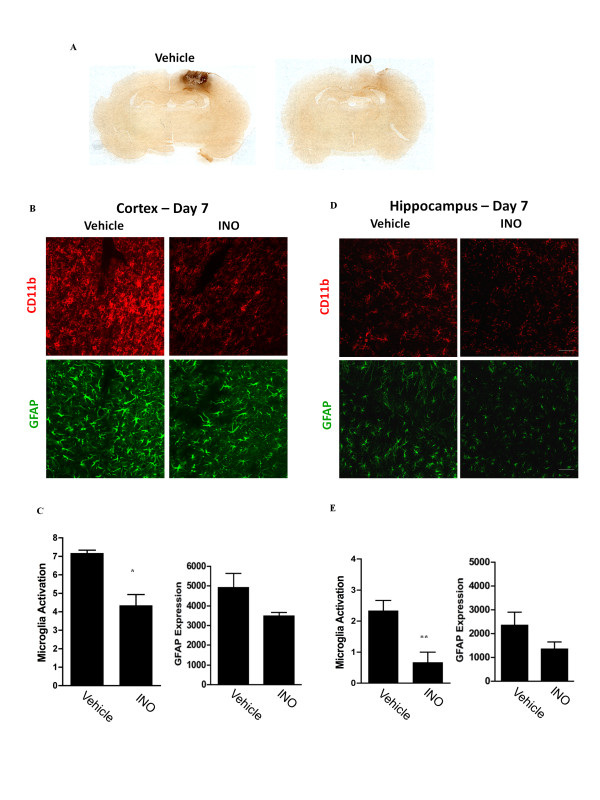
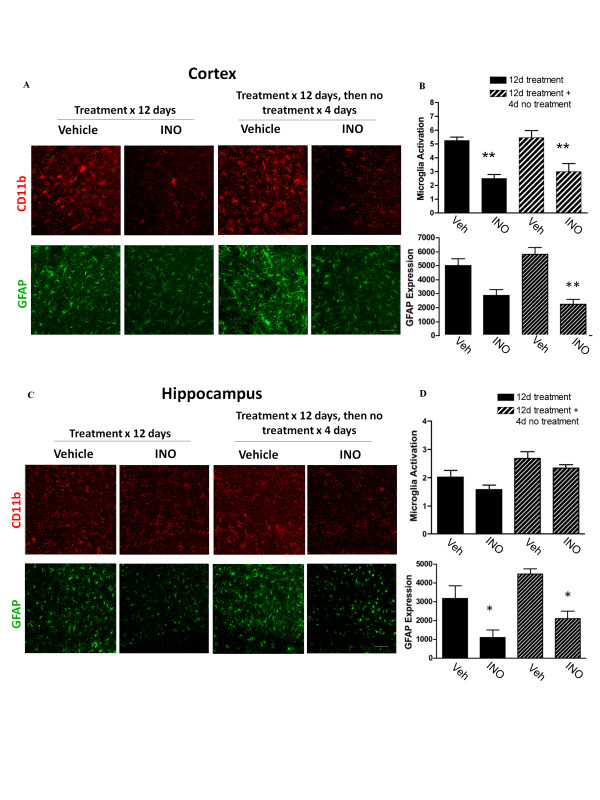
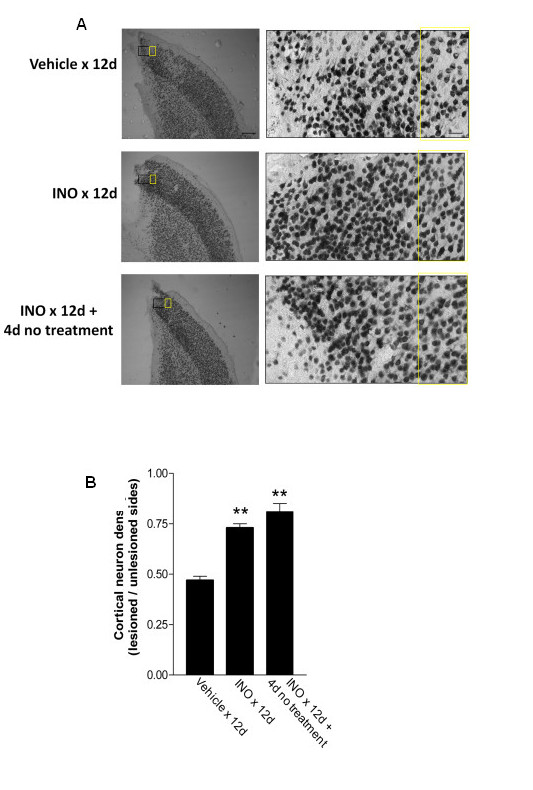
Peak microglial and astrocyte activation was observed 5 to 7 days after this injury. INO-1001 significantly reduced microglial activation in the peri-lesion cortex and ipsilateral hippocampus. No rebound inflammation was observed in rats that were treated with INO-1001 or vehicle for 12 days followed by 4 days without drug. The reduced inflammation was associated with increased neuronal survival in the peri-lesion cortex and improved performance on tests of forelimb dexterity conducted 8 weeks after TBI.
Treatment with a PARP inhibitor for 12 days after TBI, with the first dose given as long as 20 hours after injury, can reduce inflammation and improve histological and functional outcomes.
创伤性脑损伤 (TBI) 会引发小胶质细胞的激活。激活的小胶质细胞反过来又会增加二次损伤并损害恢复。这种先天免疫反应需要数小时到数天才能完全显现,因此为治疗干预提供了一个具有临床相关性的机会窗口。小胶质细胞的激活部分受到多聚(ADP-核糖)聚合酶 1 (PARP-1) 的调节。PARP-1 活性的抑制可抑制 NF-kB 依赖性基因转录,从而阻断小胶质细胞激活的几个方面。在这里,我们评估了 PARP 抑制剂 INO-1001 在抑制大鼠皮质撞击后小胶质细胞激活的疗效。
大鼠接受皮质控制撞击,然后在 TBI 后 20-24 小时开始用 10mg/kg 的 INO-1001(或单独载体)进行治疗。在几个时间点收获大脑,用于评估炎症和神经元存活的组织学,使用小胶质细胞激活的标志物(形态和 CD11b 表达)、星形胶质细胞激活(GFAP)和神经元存活(NeuN)。大鼠还在 TBI 后 8 周使用前肢灵巧性测量进行评估:胶带测试、圆柱测试和粉条测试。
这种损伤后 5 到 7 天观察到小胶质细胞和星形胶质细胞的激活达到峰值。INO-1001 显著降低了损伤皮层和同侧海马体的小胶质细胞激活。在用 INO-1001 或载体治疗 12 天后,再观察 4 天没有药物的情况下,没有观察到反弹炎症。减少的炎症与损伤皮层中神经元存活增加和 TBI 后 8 周进行的前肢灵巧性测试中的改善表现相关。
在 TBI 后 12 天用 PARP 抑制剂治疗,第一次剂量在损伤后 20 小时给予,可减少炎症并改善组织学和功能结果。