Institute of Public Health, University of Heidelberg, Heidelberg, Germany.
BMC Public Health. 2012 Feb 18;12:134. doi: 10.1186/1471-2458-12-134.
Male Circumcision (MC) has been recommended as one of the preventive measures against sexual HIV transmission by the World Health Organization (WHO). Rwanda has adopted MC as recommended but the country is a non-traditionally circumcising society. The objective was to explore knowledge and perception of Rwandan men on Male Circumcision (MC) and to determine the factors associated with the willingness to be circumcised and to circumcise their sons.
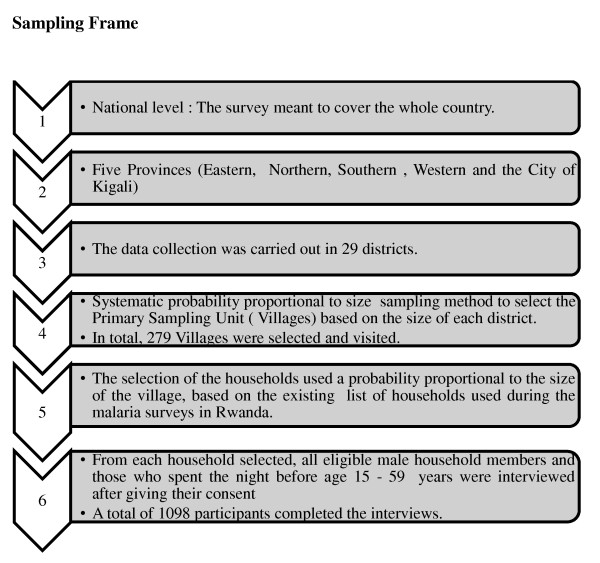
This cross sectional study was conducted in 29 districts of Rwanda between January and March 2010. Data were collected using a structured questionnaire among men aged 15-59 years. The rate of MC was measured and its perception from respondents, and then the factors associated with the willingness to go for MC were analysed using multiple logistic regressions.
A total of 1098 men were interviewed. Among respondents 17% (95% CI 14-19%) reported being circumcised. About three-quarter (72%) could define MC, but 37% of adolescent could not. Half of the participants were willing to get circumcised and 79% of men would accept circumcision for their sons. The main motivators for MC were its benefits in HIV/STI prevention (69%) and improving hygiene (49%). Being too old was the main reason (32%) reported by men reluctant to undergo MC and younger men were afraid of pain in particular those less than 19 years old (42%). The willingness to circumcise was significantly associated with younger age, living in the Eastern Province, marital status, and the knowledge of the preventive role of circumcision.
Adolescents and young adults were more willing to be circumcised. It is critical to ensure the availability of pain free services in order to satisfy the increasing demand for the scale up of MC in Rwanda.
世界卫生组织(WHO)曾建议男性割礼(MC)作为预防性行为中 HIV 传播的措施之一。卢旺达已采用了 MC,但该国并不是一个传统的割礼社会。本研究旨在探讨卢旺达男性对男性割礼(MC)的认知和看法,并确定与愿意接受割礼和为儿子割礼相关的因素。
本横断面研究于 2010 年 1 月至 3 月在卢旺达的 29 个地区进行。通过在 15-59 岁男性中使用结构化问卷收集数据。测量 MC 的流行率并从受访者处评估其认知,然后使用多因素逻辑回归分析与愿意接受 MC 相关的因素。
共采访了 1098 名男性。受访者中,17%(95%CI 14-19%)报告曾接受过割礼。约四分之三(72%)的人可以定义 MC,但 37%的青少年不能。一半的参与者愿意接受割礼,79%的男性会接受为儿子割礼。MC 的主要动机是其在 HIV/性传播感染(STI)预防方面的益处(69%)和改善卫生(49%)。男性不愿意接受 MC 的主要原因是年龄太大(32%),而年轻男性特别害怕疼痛,尤其是 19 岁以下的男性(42%)。愿意接受割礼与年龄较小、居住在东部省、婚姻状况以及对割礼预防作用的了解显著相关。
青少年和年轻成年人更愿意接受割礼。为了满足卢旺达不断增加的 MC 推广需求,确保提供无痛苦服务至关重要。