Shapiro Kevin A, Moo Lauren R, Caramazza Alfonso
Department of Psychology, Harvard University Cambridge, MA, USA.
Front Psychol. 2012 Feb 8;3:26. doi: 10.3389/fpsyg.2012.00026. eCollection 2012.
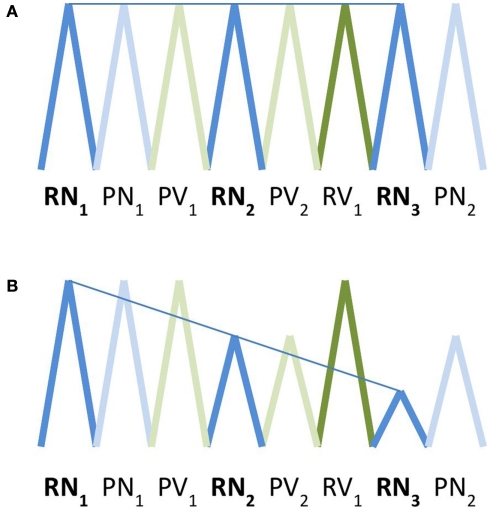
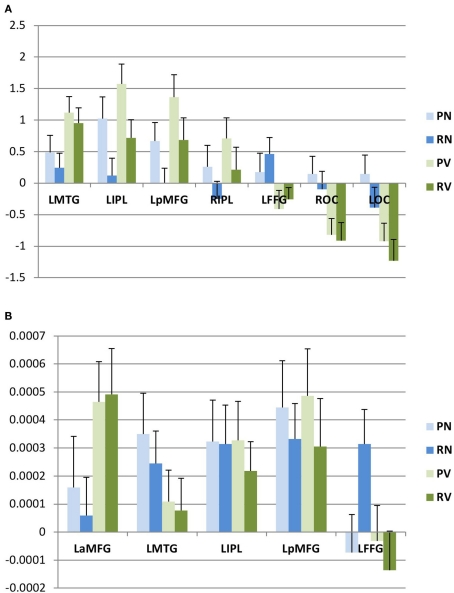
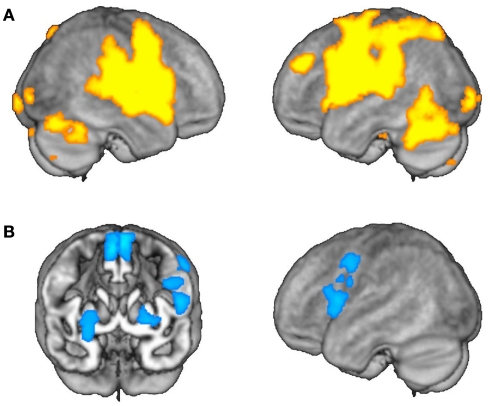
The ability to generate novel sentences depends on cognitive operations that specify the syntactic function of nouns, verbs, and other words retrieved from the mental lexicon. Although neuropsychological studies suggest that such operations rely on neural circuits distinct from those encoding word form and meaning, it has not been possible to characterize this distinction definitively with neuroimaging. We used functional magnetic resonance imaging (fMRI) to show that a brain area engaged in a given grammatical operation can be identified uniquely by a monotonic decrease in activation as that operation is repeated. We applied this methodology to identify areas involved selectively in the operation of inflection of nouns or verbs. By contrast, areas involved in processing word meaning do not show this monotonic adaptation across stimuli. These results are the first to demonstrate adaptation in the fMR signal evoked not by specific stimuli, but by well-defined cognitive linguistic operations.
生成新句子的能力取决于认知操作,这些操作指定了从心理词汇库中检索出的名词、动词和其他单词的句法功能。虽然神经心理学研究表明,此类操作依赖于与编码单词形式和意义的神经回路不同的神经回路,但用神经成像技术还无法明确地描述这种差异。我们使用功能磁共振成像(fMRI)来表明,参与特定语法操作的脑区可以通过该操作重复时激活的单调减少来唯一识别。我们应用这种方法来识别选择性参与名词或动词词形变化操作的脑区。相比之下,参与处理单词意义的脑区在不同刺激下不会表现出这种单调适应性。这些结果首次证明了功能性磁共振信号中并非由特定刺激,而是由明确的认知语言操作诱发的适应性。