Mahmoudvand H, Mohebali M, Sharifi I, Keshavarz H, Hajjaran H, Akhoundi B, Jahanbakhsh S, Zarean M, Javadi A
Department of Medical Parasitology and Mycology, School of Public Health, Tehran University of Medical Sciences, Tehran, Iran.
Iran J Parasitol. 2011 Mar;6(1):1-11.
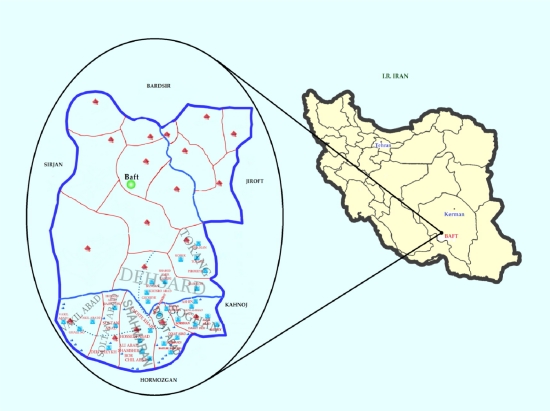
Visceral leishmaniasis (kala-azar) is an endemic disease in some areas of Iran. A cross- sectional study was conducted for sero-epidemiological survey of visceral leishmaniasis (VL) in Baft district from Kerman Province, southeast of Iran.
Blood samples were collected from children up to 12 years old and 10% of adult population from Baft villages with a multi-stage randomized cluster sampling. In addition, blood samples were collected from 30 domestic dogs from the same areas. All the collected blood samples were tested by direct agglutination test (DAT) for the detection of anti-Leishmania antibodies in both human and dog using the cut-off value of ≥1:3200 and ≥1:320, respectively. Parasitological, molecular, and pathological were performed on infected dogs. Chi-square and Fisher exact tests were used to compare sero-prevalence values.
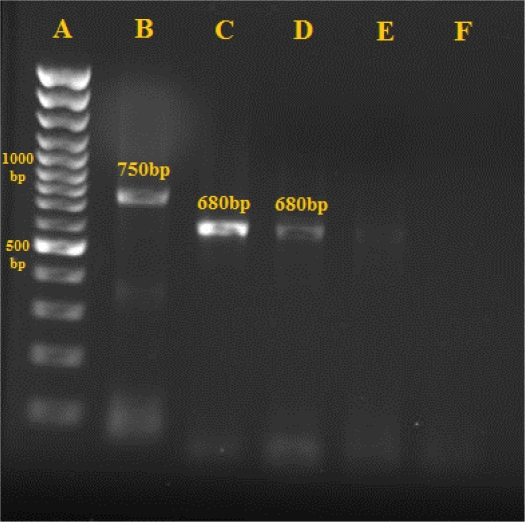
From 1476 collected human serum samples, 23 (1.55%) showed anti-Leishmania antibodies at titers of 1:800 and 1:1600 whereas 14 (0.95%) showed anti-Leishmania infantum antibodies at titers of ≥1:3200. No statistically significant difference was found between male (1.18%) and female (0.69%) sero-prevalence (P=0.330). Children of 5-8 years showed the highest sero-prevalence rate (3.22%). Seven out of 30 domestic dogs (23%) showed anti-Leishmania antibodies at titers ≥1:320. Leishmania infantum was identified in five infected dogs by nested - PCR assay.
It seems that visceral leishmaniasis is being endemic in southern villages of Baft district, southeast of Iran.
内脏利什曼病(黑热病)是伊朗部分地区的一种地方病。在伊朗东南部克尔曼省的巴夫特地区开展了一项横断面研究,以进行内脏利什曼病(VL)的血清流行病学调查。
采用多阶段随机整群抽样方法,从巴夫特村庄12岁以下儿童和10%的成年人群中采集血样。此外,从同一地区的30只家犬采集血样。所有采集的血样均通过直接凝集试验(DAT)检测人和犬的抗利什曼原虫抗体,人用的截断值为≥1:3200,犬用的截断值为≥1:320。对感染犬进行寄生虫学、分子生物学和病理学检查。采用卡方检验和费舍尔精确检验比较血清流行率值。
在1476份采集的人血清样本中,23份(1.55%)抗利什曼原虫抗体滴度为1:800和1:1600,而14份(0.95%)抗婴儿利什曼原虫抗体滴度≥1:3200。男性(1.18%)和女性(0.69%)血清流行率之间未发现统计学显著差异(P=0.330)。5至8岁儿童的血清流行率最高(3.22%)。30只家犬中有7只(23%)抗利什曼原虫抗体滴度≥1:320。通过巢式PCR检测在5只感染犬中鉴定出婴儿利什曼原虫。
看来内脏利什曼病在伊朗东南部巴夫特地区的南部村庄呈地方流行。