Institute of Population Health, University of Ottawa, Ottawa, Ontario, Canada.
PLoS One. 2012;7(2):e30153. doi: 10.1371/journal.pone.0030153. Epub 2012 Feb 8.
To examine the genetic and environmental influences on variances in weight, height, and BMI, from birth through 19 years of age, in boys and girls from three continents.
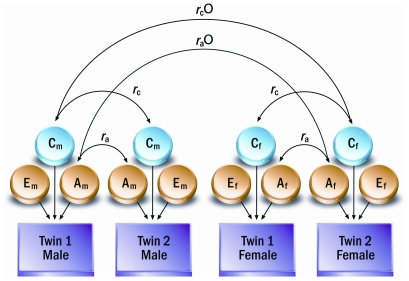
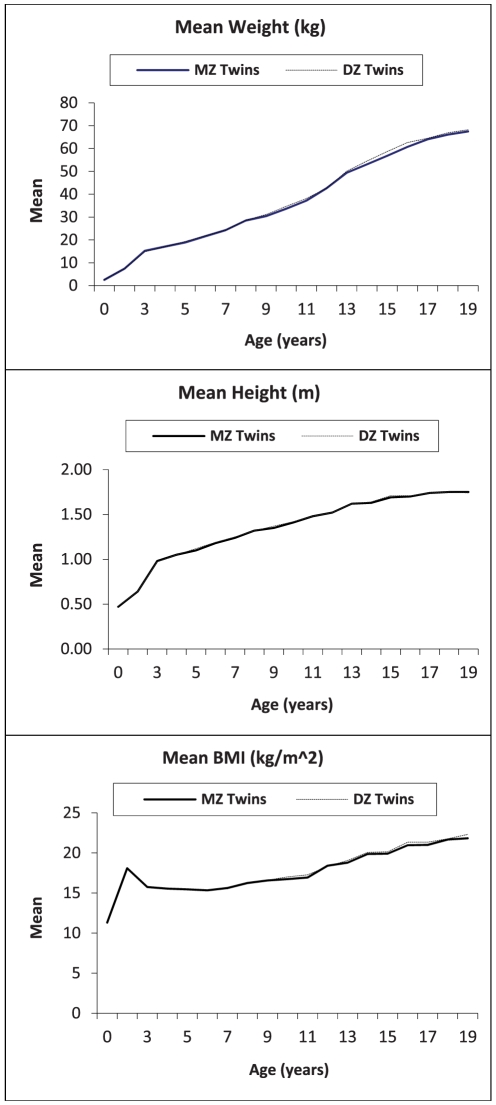
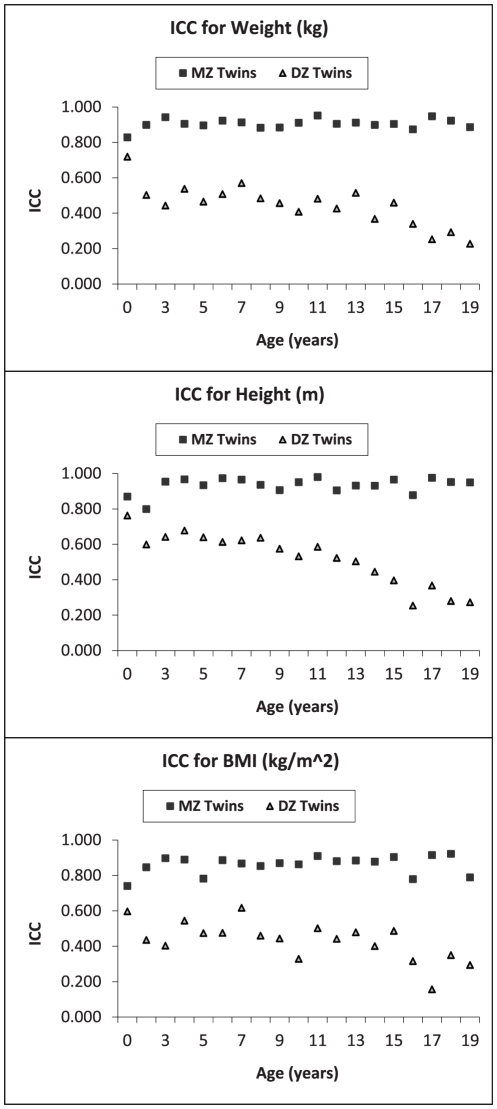
Cross-sectional twin study. Data obtained from a total of 23 twin birth-cohorts from four countries: Canada, Sweden, Denmark, and Australia. Participants were Monozygotic (MZ) and dizygotic (DZ) (same- and opposite-sex) twin pairs with data available for both height and weight at a given age, from birth through 19 years of age. Approximately 24,036 children were included in the analyses.
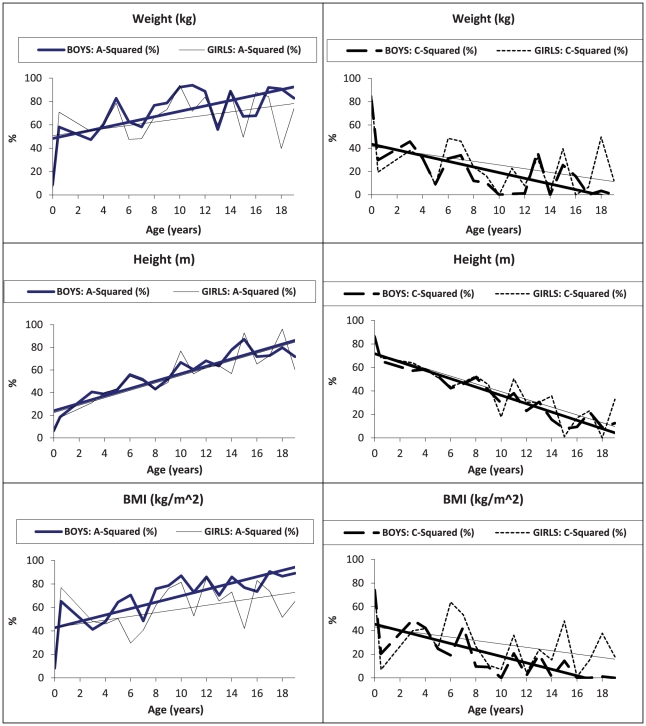
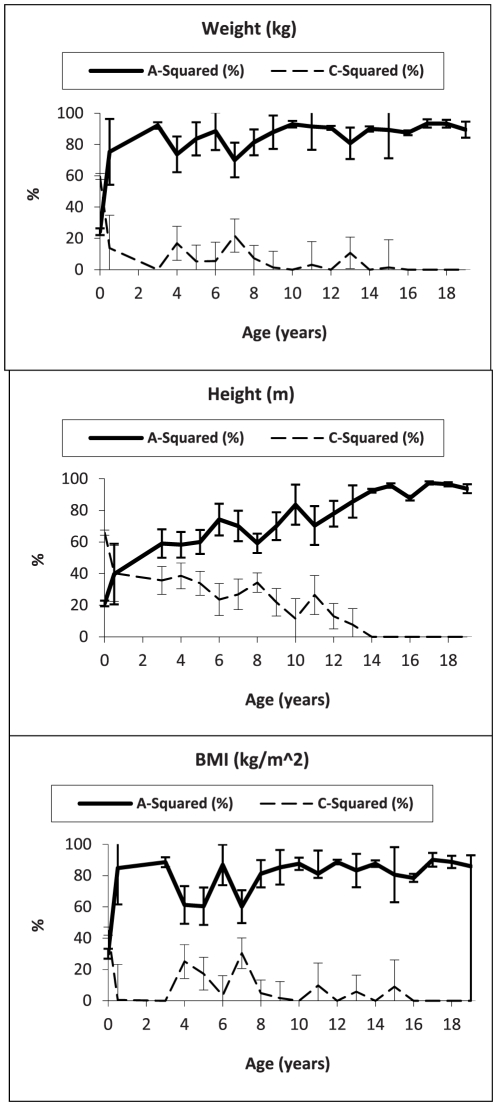
Heritability for body weight, height, and BMI was low at birth (between 6.4 and 8.7% for boys, and between 4.8 and 7.9% for girls) but increased over time, accounting for close to half or more of the variance in body weight and BMI after 5 months of age in both sexes. Common environmental influences on all body measures were high at birth (between 74.1-85.9% in all measures for boys, and between 74.2 and 87.3% in all measures for girls) and markedly reduced over time. For body height, the effect of the common environment remained significant for a longer period during early childhood (up through 12 years of age). Sex-limitation of genetic and shared environmental effects was observed.
Genetics appear to play an increasingly important role in explaining the variation in weight, height, and BMI from early childhood to late adolescence, particularly in boys. Common environmental factors exert their strongest and most independent influence specifically in pre-adolescent years and more significantly in girls. These findings emphasize the need to target family and social environmental interventions in early childhood years, especially for females. As gene-environment correlation and interaction is likely, it is also necessary to identify the genetic variants that may predispose individuals to obesity.
研究来自三大洲的男孩和女孩从出生到 19 岁时体重、身高和 BMI 的差异的遗传和环境影响。
横断面双胞胎研究。数据来自四个国家的 23 个双胞胎出生队列:加拿大、瑞典、丹麦和澳大利亚。参与者是同卵(MZ)和异卵(DZ)(同性别和异性别)双胞胎对,在给定年龄时具有身高和体重数据,从出生到 19 岁。大约有 24036 名儿童被纳入分析。
男孩出生时体重、身高和 BMI 的遗传力较低(6.4%至 8.7%),女孩较低(4.8%至 7.9%),但随着时间的推移而增加,在 5 个月后,所有性别中体重和 BMI 的差异都接近或超过一半。所有身体指标的共同环境影响在出生时较高(所有男孩指标的 74.1%-85.9%,所有女孩指标的 74.2%-87.3%),随着时间的推移明显降低。对于身高,共同环境的影响在儿童早期(直到 12 岁)的较长时间内仍然显著。遗传和共享环境效应存在性别限制。
遗传学似乎在解释儿童期到青春期后期体重、身高和 BMI 的变化方面发挥着越来越重要的作用,尤其是在男孩中。共同的环境因素在青少年时期之前发挥着最强和最独立的影响,在女孩中更为明显。这些发现强调了需要在儿童早期针对家庭和社会环境干预,特别是针对女性。由于基因-环境相关性和相互作用很可能,因此也有必要确定可能使个体易患肥胖症的遗传变异。