Laboratory of Cell Signaling, Graduate School of Pharmaceutical Sciences, The University of Tokyo, Tokyo, Japan.
PLoS One. 2012;7(2):e30265. doi: 10.1371/journal.pone.0030265. Epub 2012 Feb 7.
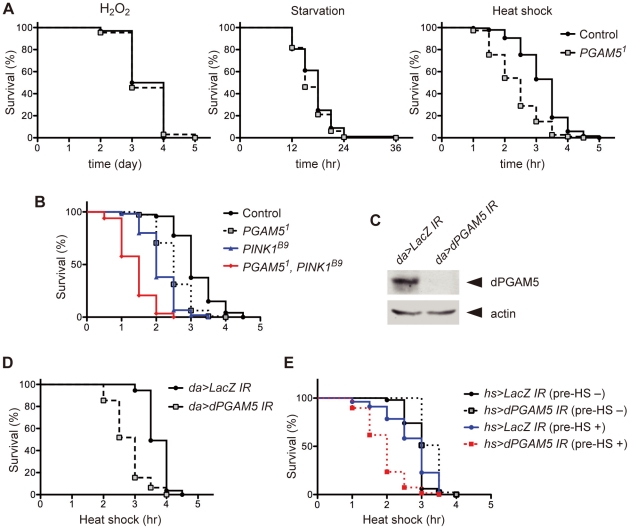
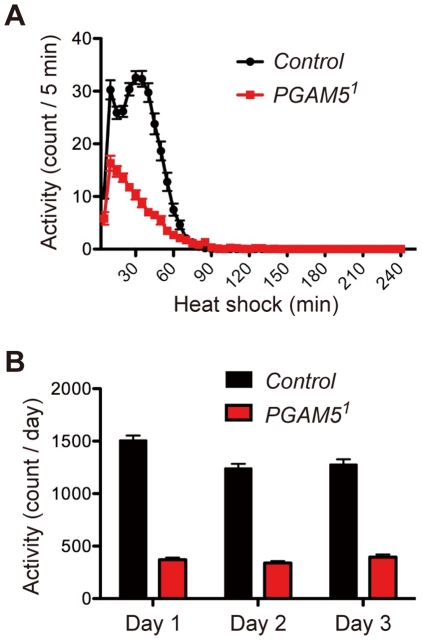
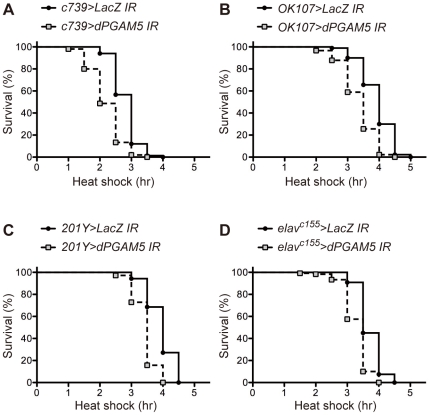
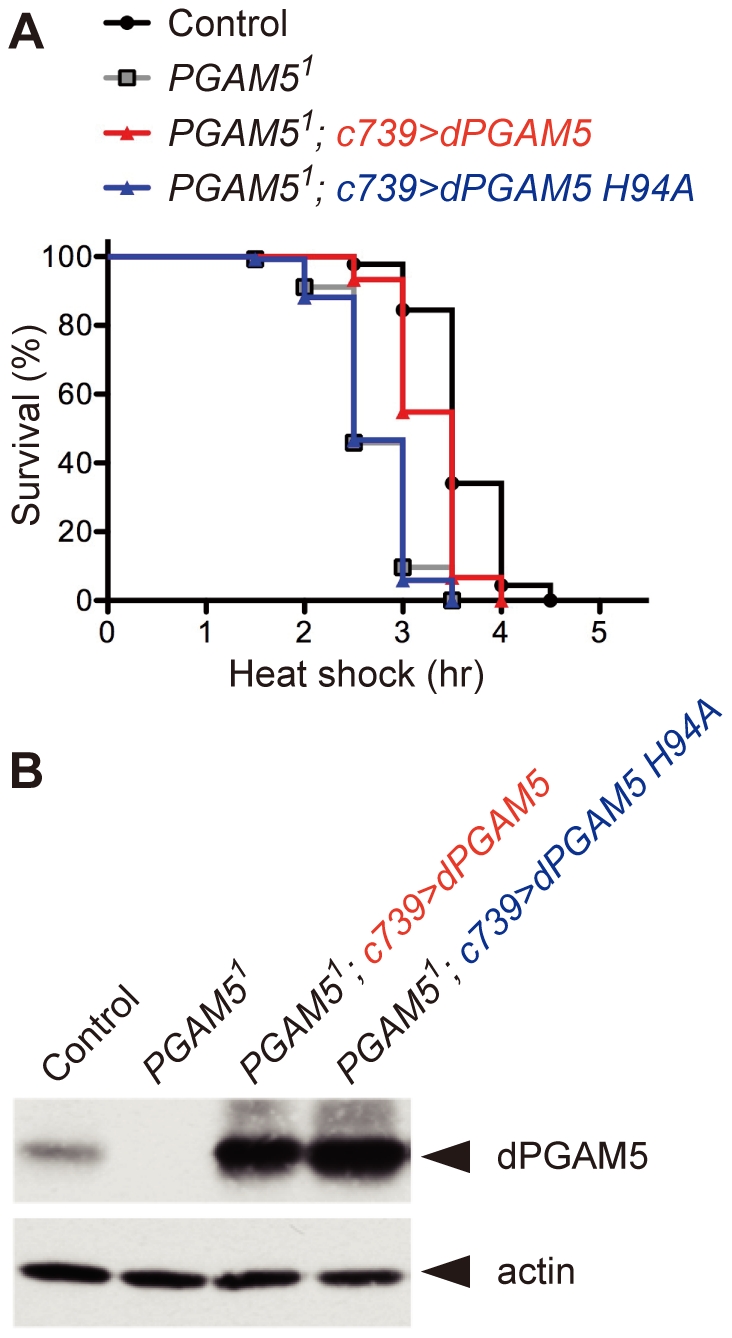
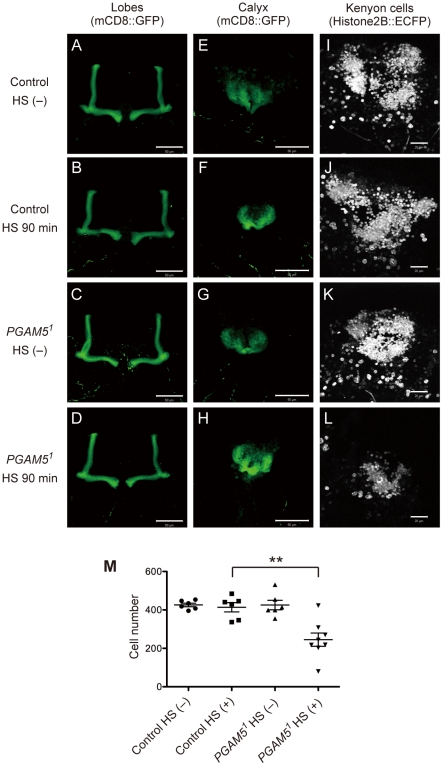
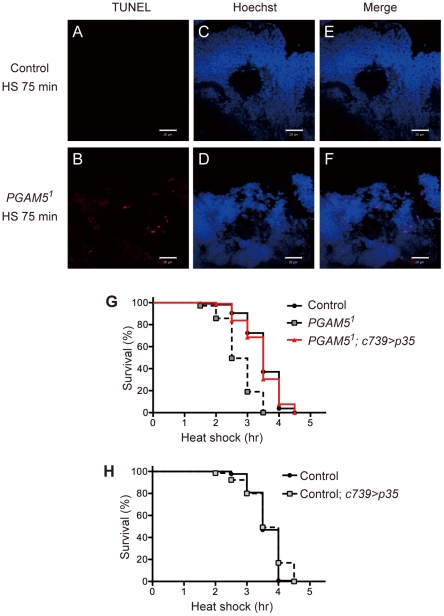
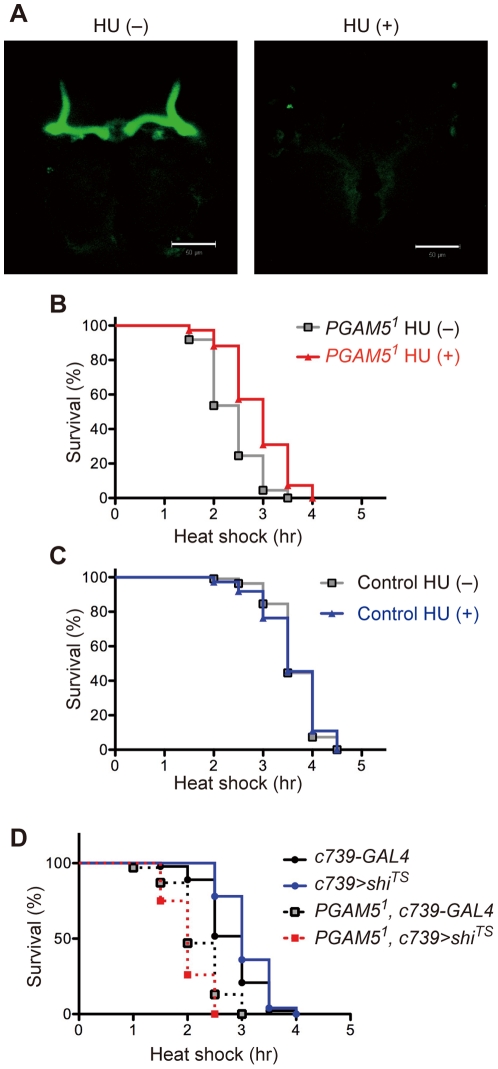
The heat shock (HS) response is essential for survival of all organisms. Although the machinery of the HS response has been extensively investigated at the cellular level, it is poorly understood at the level of the organism. Here, we show the crucial role of the mushroom body (MB) in the HS response in Drosophila. Null mutants of the mitochondrial phosphatase Drosophila PGAM5 (dPGAM5) exhibited increased vulnerability to HS, which was reversed by MB-specific expression of the caspase inhibitor p35, and similar vulnerability was induced in wild-type flies by knockdown of MB dPGAM5. Elimination of the MB did not affect the HS response of wild-type flies, but did increase the resistance of dPGAM5-deficient flies to HS. Thus, the MB may possess an apoptosis-dependent toxic function, the suppression of which by dPGAM5 appears to be crucial for HS resistance.
热休克(HS)反应是所有生物生存所必需的。尽管细胞水平上已经广泛研究了 HS 反应的机制,但在生物体水平上还知之甚少。在这里,我们展示了蘑菇体(MB)在果蝇的 HS 反应中的关键作用。线粒体磷酸酶果蝇 PGAM5(dPGAM5)的缺失突变体表现出对 HS 的易感性增加,这种易感性可以通过 MB 特异性表达半胱氨酸蛋白酶抑制剂 p35 逆转,并且在野生型果蝇中通过敲低 MB dPGAM5 也可以诱导类似的易感性。消除 MB 并不影响野生型果蝇的 HS 反应,但确实增加了 dPGAM5 缺陷型果蝇对 HS 的抵抗力。因此,MB 可能具有依赖细胞凋亡的毒性功能,而 dPGAM5 对其的抑制似乎对 HS 抵抗至关重要。