Department of Stem Cell Biology, Institute of Embryology and Genetics, Kumamoto University, Kumamoto, Japan.
PLoS One. 2012;7(2):e31513. doi: 10.1371/journal.pone.0031513. Epub 2012 Feb 7.
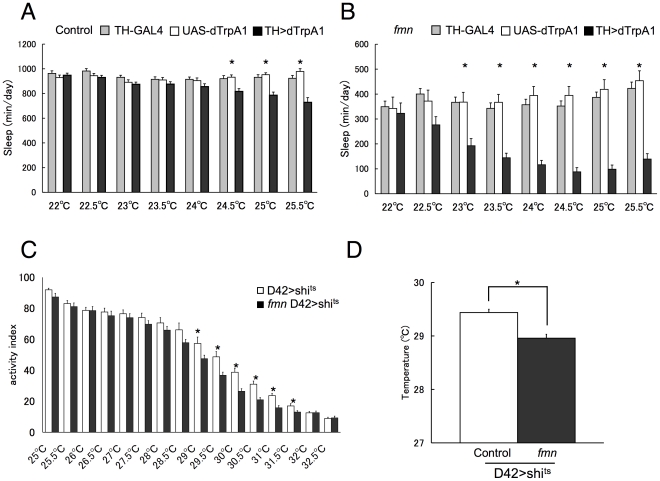
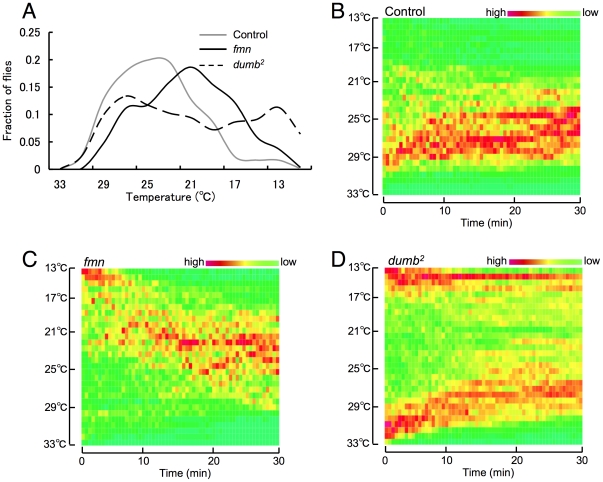
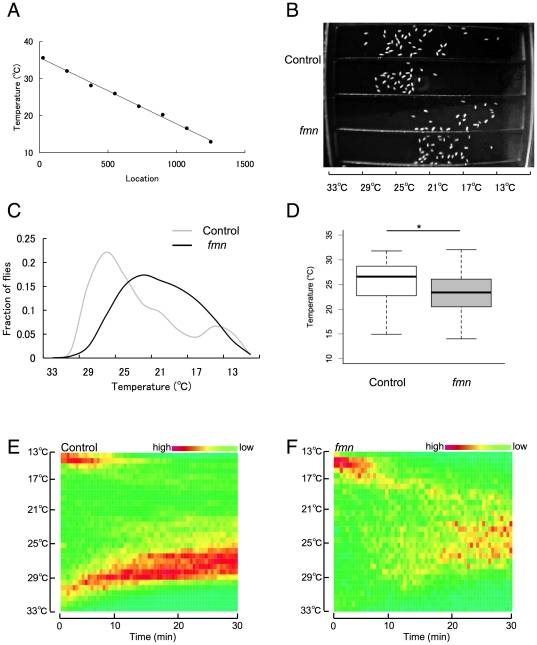
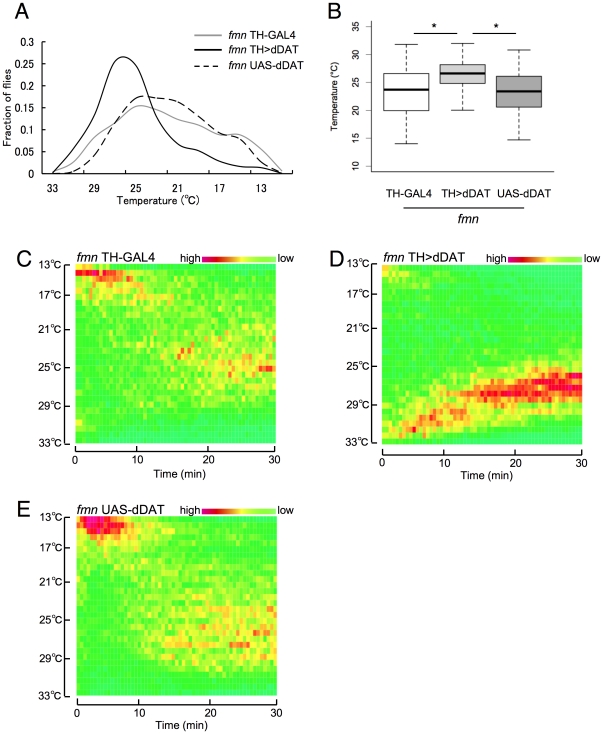
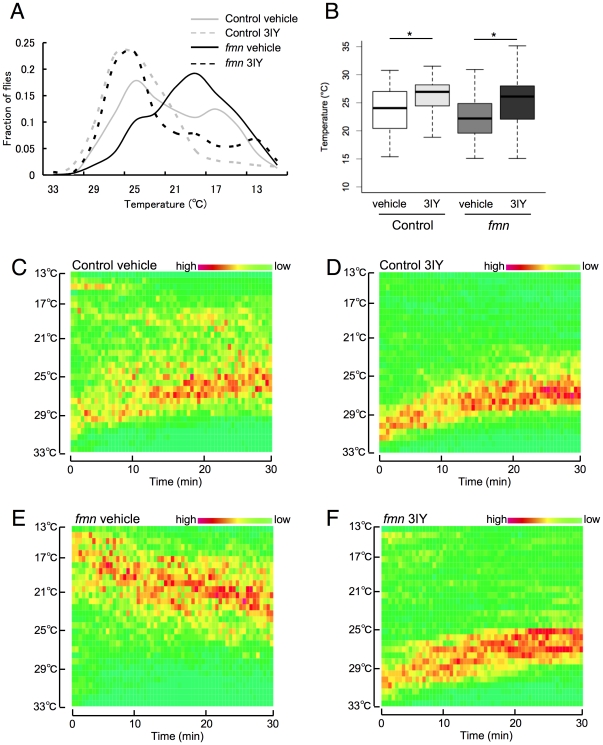
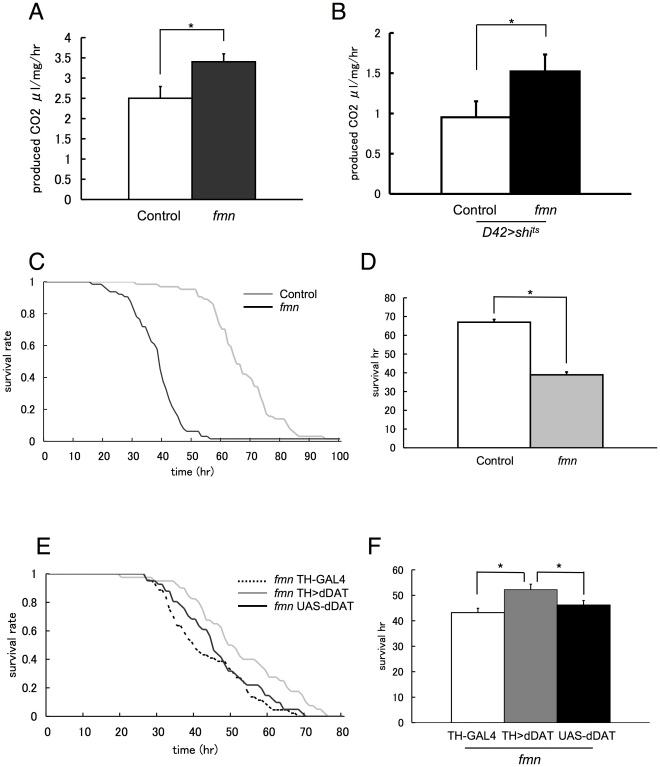
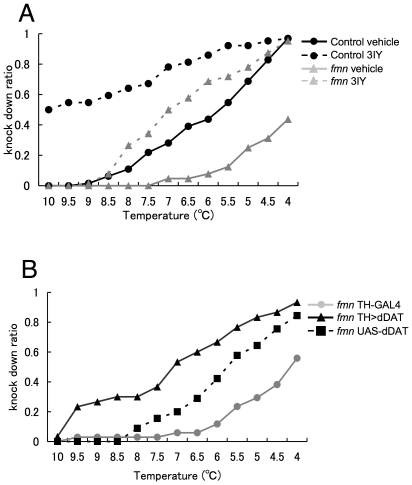
Homeothermal animals, such as mammals, maintain their body temperature by heat generation and heat dissipation, while poikilothermal animals, such as insects, accomplish it by relocating to an environment of their favored temperature. Catecholamines are known to regulate thermogenesis and metabolic rate in mammals, but their roles in other animals are poorly understood. The fruit fly, Drosophila melanogaster, has been used as a model system for the genetic studies of temperature preference behavior. Here, we demonstrate that metabolic rate and temperature sensitivity of some temperature sensitive behaviors are regulated by dopamine in Drosophila. Temperature-sensitive molecules like dTrpA1 and shi(ts) induce temperature-dependent behavioral changes, and the temperature at which the changes are induced were lowered in the dopamine transporter-defective mutant, fumin. The mutant also displays a preference for lower temperatures. This thermophobic phenotype was rescued by the genetic recovery of the dopamine transporter in dopamine neurons. Flies fed with a dopamine biosynthesis inhibitor (3-iodo-L-tyrosine), which diminishes dopamine signaling, exhibited preference for a higher temperature. Furthermore, we found that the metabolic rate is up-regulated in the fumin mutant. Taken together, dopamine has functions in the temperature sensitivity of behavioral changes and metabolic rate regulation in Drosophila, as well as its previously reported functions in arousal/sleep regulation.
温血动物,如哺乳动物,通过产热和散热来维持体温,而变温动物,如昆虫,则通过迁移到它们喜欢的温度环境来实现。儿茶酚胺被认为可以调节哺乳动物的产热和代谢率,但它们在其他动物中的作用还知之甚少。黑腹果蝇已被用作研究温度偏好行为的遗传模型系统。在这里,我们证明多巴胺在果蝇中调节一些对温度敏感的行为的代谢率和温度敏感性。像 dTrpA1 和 shi(ts) 这样的温度敏感分子诱导温度依赖性的行为变化,并且在多巴胺转运体缺陷突变体 fumin 中,诱导变化的温度降低。该突变体也表现出对较低温度的偏好。多巴胺神经元中多巴胺转运体的遗传恢复挽救了这种耐热表型。用多巴胺生物合成抑制剂(3-碘-L-酪氨酸)喂养的果蝇,多巴胺信号减弱,表现出对较高温度的偏好。此外,我们发现 fumin 突变体中的代谢率升高。总之,多巴胺在果蝇的行为变化的温度敏感性和代谢率调节中具有功能,以及其在觉醒/睡眠调节中的先前报道的功能。