Ecology and Evolution Research Centre, School of Biological, Earth and Environmental Sciences, University of New South Wales, Sydney, Australia.
PLoS One. 2012;7(2):e31804. doi: 10.1371/journal.pone.0031804. Epub 2012 Feb 15.
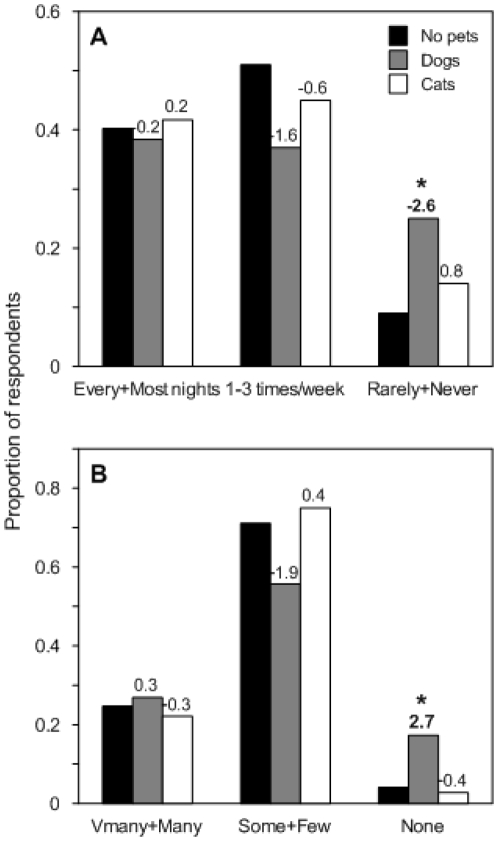
The impact of alien predators on native prey populations is often attributed to prey naiveté towards a novel threat. Yet evolutionary theory predicts that alien predators cannot remain eternally novel; prey species must either become extinct or learn and adapt to the new threat. As local enemies lose their naiveté and coexistence becomes possible, an introduced species must eventually become 'native'. But when exactly does an alien become a native species? The dingo (Canis lupus dingo) was introduced to Australia about 4000 years ago, yet its native status remains disputed. To determine whether a vulnerable native mammal (Perameles nasuta) recognizes the close relative of the dingo, the domestic dog (Canis lupus familiaris), we surveyed local residents to determine levels of bandicoot visitation to yards with and without resident dogs. Bandicoots in this area regularly emerge from bushland to forage in residential yards at night, leaving behind tell-tale deep, conical diggings in lawns and garden beds. These diggings were less likely to appear at all, and appeared less frequently and in smaller quantities in yards with dogs than in yards with either resident cats (Felis catus) or no pets. Most dogs were kept indoors at night, meaning that bandicoots were not simply chased out of the yards or killed before they could leave diggings, but rather they recognized the threat posed by dogs and avoided those yards. Native Australian mammals have had thousands of years experience with wild dingoes, which are very closely related to domestic dogs. Our study suggests that these bandicoots may no longer be naïve towards dogs. We argue that the logical criterion for determining native status of a long-term alien species must be once its native enemies are no longer naïve.
外来捕食者对本地猎物种群的影响通常归因于猎物对新威胁的天真无知。然而,进化理论预测,外来捕食者不可能永远保持新颖;猎物物种要么灭绝,要么学习并适应新的威胁。随着当地天敌不再天真无邪,共存成为可能,引入的物种最终必须“本土化”。但是,外来物种到底何时成为本地物种呢?大约 4000 年前,野狗(Canis lupus dingo)被引入澳大利亚,但它的本地地位仍然存在争议。为了确定一种易受攻击的本地哺乳动物(Perameles nasuta)是否能识别野狗的近亲,即家犬(Canis lupus familiaris),我们调查了当地居民,以确定有和没有居民犬的院子里袋狸的访问量。在这个地区,袋狸经常从丛林中出来,在夜间到居民区觅食,在草坪和花园床上留下明显的深锥形挖掘痕迹。有狗的院子里这些挖掘痕迹根本不太可能出现,而且出现的频率和数量都比有居民猫(Felis catus)或没有宠物的院子里要少。大多数狗晚上都被关在室内,这意味着袋狸并不是简单地被赶出院子或在它们离开挖掘痕迹之前被杀死,而是它们认识到了狗的威胁,并避开了那些院子。澳大利亚本土的哺乳动物与野生野狗有着数千年的相处经验,而野狗与家犬非常相似。我们的研究表明,这些袋狸可能对狗不再陌生。我们认为,确定长期外来物种本地地位的逻辑标准必须是,一旦其本地天敌不再天真无邪。