Centre for Mathematical and Computational Biology, Rothamsted Research, Harpenden, Herts, AL5 2JQ, UK.
Sci Rep. 2011;1:66. doi: 10.1038/srep00066. Epub 2011 Aug 18.
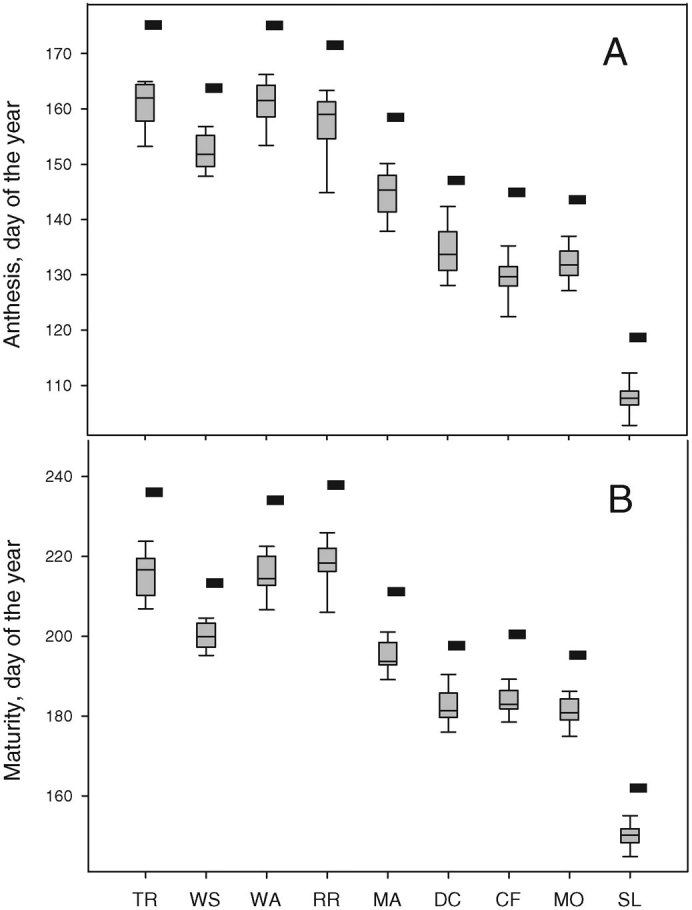
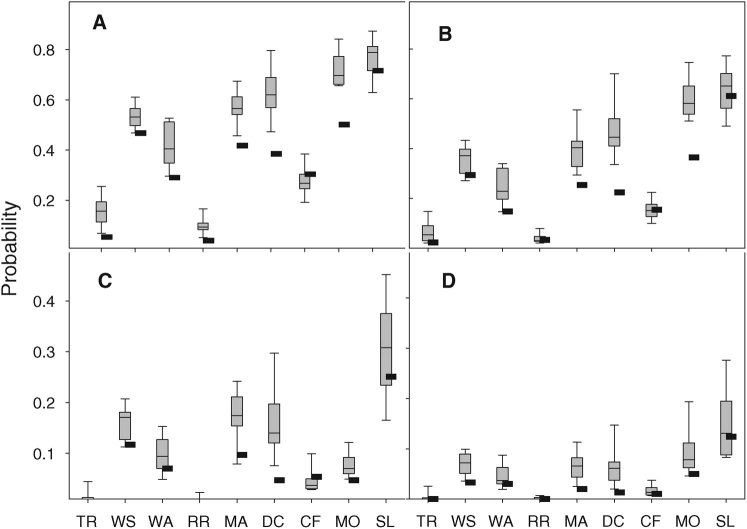
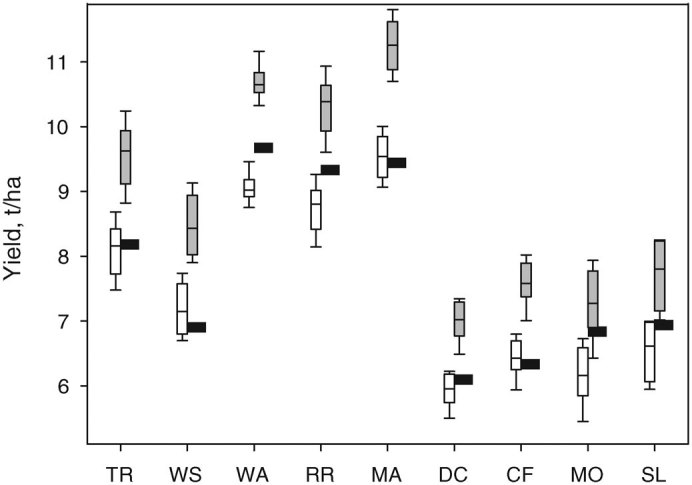
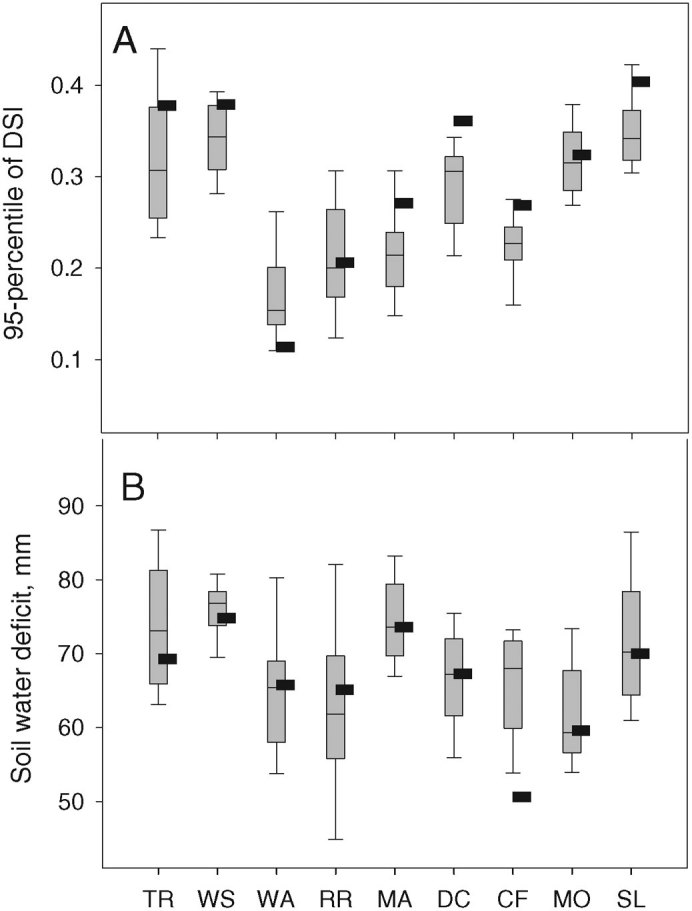
New crop cultivars will be required for a changing climate characterised by increased summer drought and heat stress in Europe. However, the uncertainty in climate predictions poses a challenge to crop scientists and breeders who have limited time and resources and must select the most appropriate traits for improvement. Modelling is a powerful tool to quantify future threats to crops and hence identify targets for improvement. We have used a wheat simulation model combined with local-scale climate scenarios to predict impacts of heat stress and drought on winter wheat in Europe. Despite the lower summer precipitation projected for 2050s across Europe, relative yield losses from drought is predicted to be smaller in the future, because wheat will mature earlier avoiding severe drought. By contrast, the risk of heat stress around flowering will increase, potentially resulting in substantial yield losses for heat sensitive cultivars commonly grown in northern Europe.
新的作物品种将是应对气候变化所必需的,气候变化的特点是欧洲夏季干旱和热应激加剧。然而,气候预测的不确定性给作物科学家和培育者带来了挑战,他们的时间和资源有限,必须选择最适合改良的特性。建模是量化未来对作物威胁的有力工具,从而确定改良的目标。我们使用小麦模拟模型结合局地气候情景来预测欧洲冬小麦热应激和干旱的影响。尽管整个欧洲预测 2050 年代夏季降水减少,但由于小麦将更早成熟,从而避免严重干旱,预计未来干旱造成的相对产量损失会更小。相比之下,花期附近热应激的风险将会增加,这可能会导致北欧常见的耐热品种的产量大幅减少。