Division of Cardiovascular and Diabetes Research, MultidisciplinaryCardiovascular Research Centre, University of Leeds, Leeds, U.K.
Diabetes. 2012 Apr;61(4):915-24. doi: 10.2337/db11-0963. Epub 2012 Feb 22.
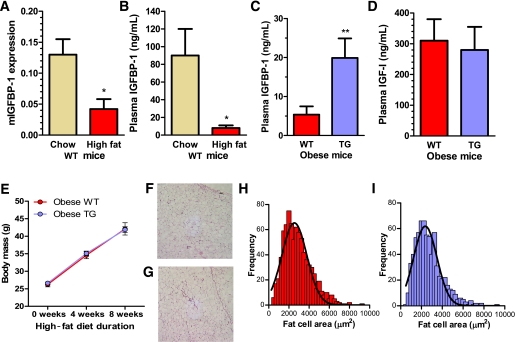
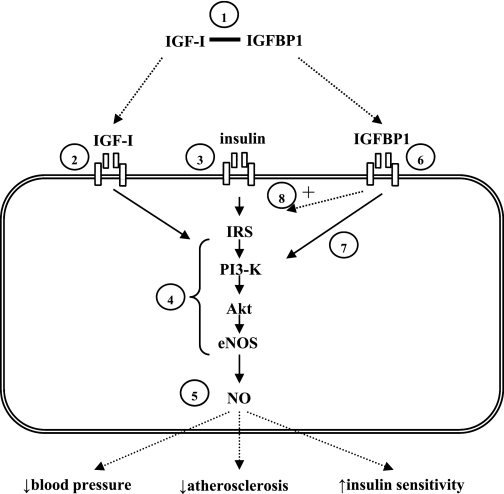
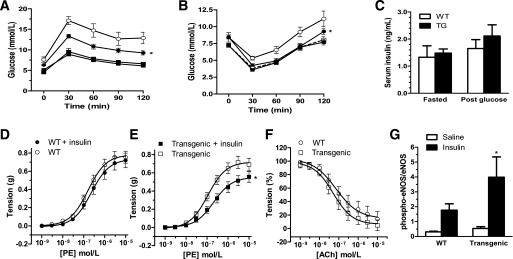
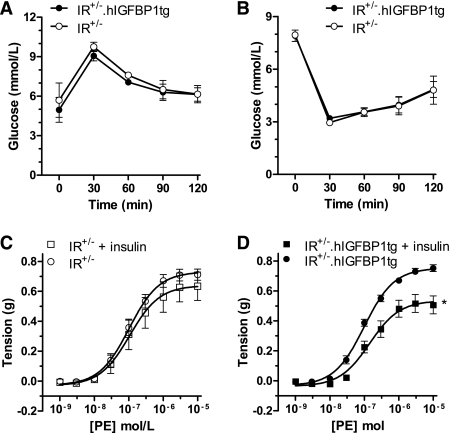
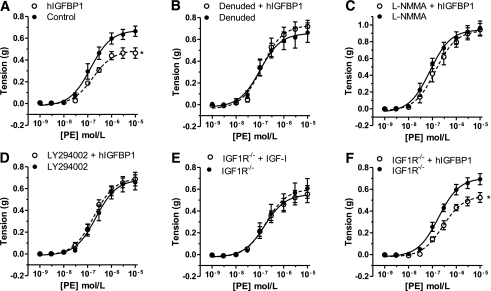
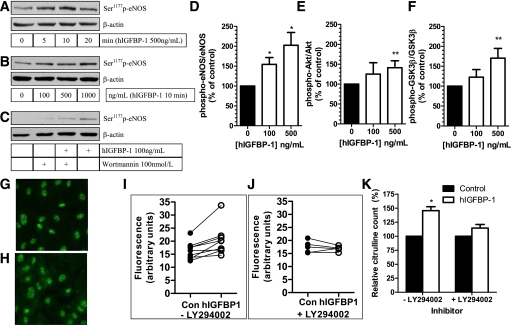
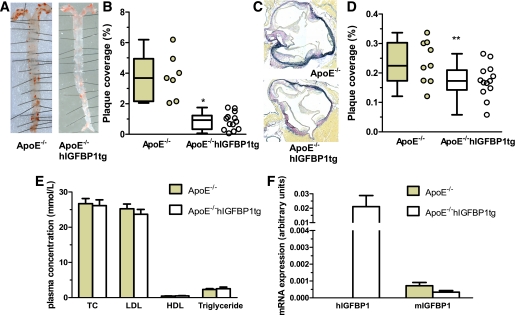
Low concentrations of insulin-like growth factor (IGF) binding protein-1 (IGFBP1) are associated with insulin resistance, diabetes, and cardiovascular disease. We investigated whether increasing IGFBP1 levels can prevent the development of these disorders. Metabolic and vascular phenotype were examined in response to human IGFBP1 overexpression in mice with diet-induced obesity, mice heterozygous for deletion of insulin receptors (IR(+/-)), and ApoE(-/-) mice. Direct effects of human (h)IGFBP1 on nitric oxide (NO) generation and cellular signaling were studied in isolated vessels and in human endothelial cells. IGFBP1 circulating levels were markedly suppressed in dietary-induced obese mice. Overexpression of hIGFBP1 in obese mice reduced blood pressure, improved insulin sensitivity, and increased insulin-stimulated NO generation. In nonobese IR(+/-) mice, overexpression of hIGFBP1 reduced blood pressure and improved insulin-stimulated NO generation. hIGFBP1 induced vasodilatation independently of IGF and increased endothelial NO synthase (eNOS) activity in arterial segments ex vivo, while in endothelial cells, hIGFBP1 increased eNOS Ser(1177) phosphorylation via phosphatidylinositol 3-kinase signaling. Finally, in ApoE(-/-) mice, overexpression of hIGFBP1 reduced atherosclerosis. These favorable effects of hIGFBP1 on insulin sensitivity, blood pressure, NO production, and atherosclerosis suggest that increasing IGFBP1 concentration may be a novel approach to prevent cardiovascular disease in the setting of insulin resistance and diabetes.
胰岛素样生长因子结合蛋白 1(IGFBP1)浓度降低与胰岛素抵抗、糖尿病和心血管疾病有关。我们研究了增加 IGFBP1 水平是否可以预防这些疾病的发生。通过在饮食诱导肥胖的小鼠、胰岛素受体杂合缺失的小鼠(IR(+/-))和 ApoE(-/-)小鼠中过表达人 IGFBP1,检测代谢和血管表型。在分离的血管和人内皮细胞中研究了人(h)IGFBP1 对一氧化氮(NO)生成和细胞信号转导的直接影响。饮食诱导肥胖小鼠的循环 IGFBP1 水平明显降低。在肥胖小鼠中过表达 hIGFBP1 可降低血压、改善胰岛素敏感性并增加胰岛素刺激的 NO 生成。在非肥胖 IR(+/-)小鼠中,过表达 hIGFBP1 可降低血压并改善胰岛素刺激的 NO 生成。hIGFBP1 可独立于 IGF 诱导血管扩张,并增加离体动脉段内皮型一氧化氮合酶(eNOS)活性,而在内皮细胞中,hIGFBP1 通过磷脂酰肌醇 3-激酶信号增加 eNOS Ser(1177)磷酸化。最后,在 ApoE(-/-)小鼠中,过表达 hIGFBP1 可减少动脉粥样硬化。hIGFBP1 对胰岛素敏感性、血压、NO 生成和动脉粥样硬化的这些有利影响表明,增加 IGFBP1 浓度可能是预防胰岛素抵抗和糖尿病患者心血管疾病的一种新方法。