Department of Molecular Microbiology and Biotechnology, The George S. Wise Faculty of Life Sciences, Tel-Aviv University, Ramat Aviv, Israel.
PLoS One. 2012;7(2):e32320. doi: 10.1371/journal.pone.0032320. Epub 2012 Feb 16.
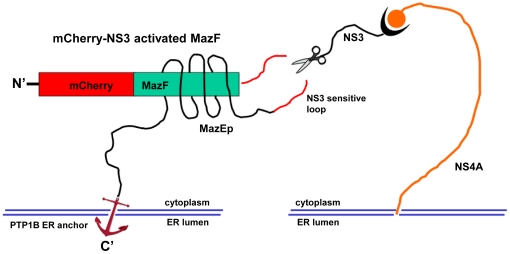
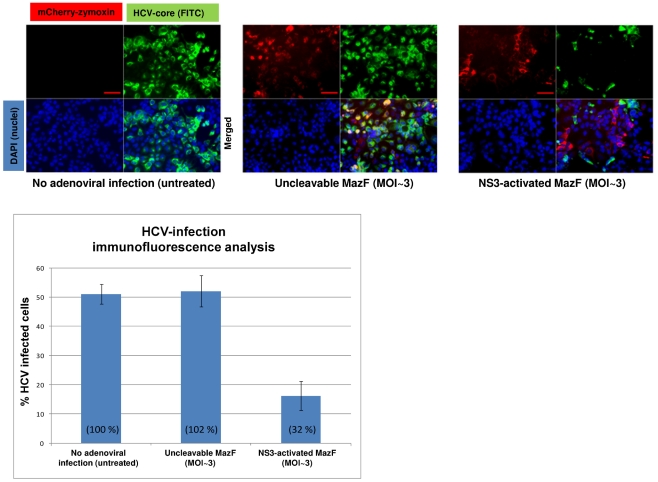
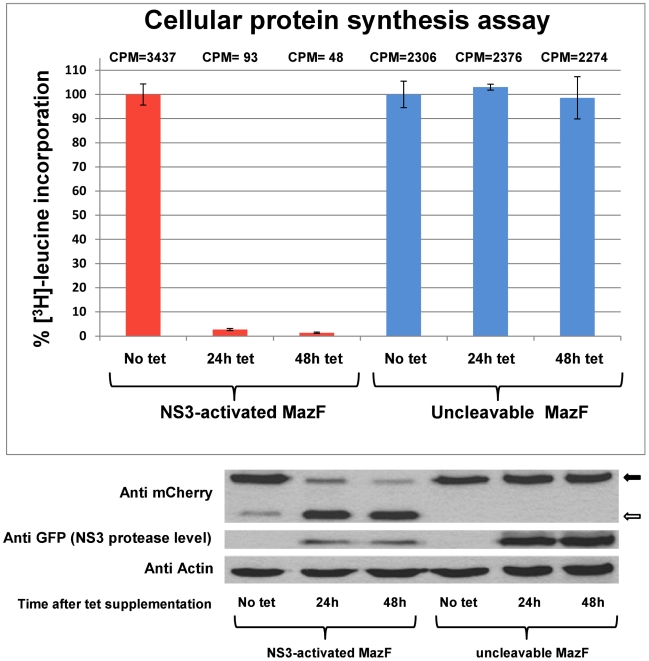
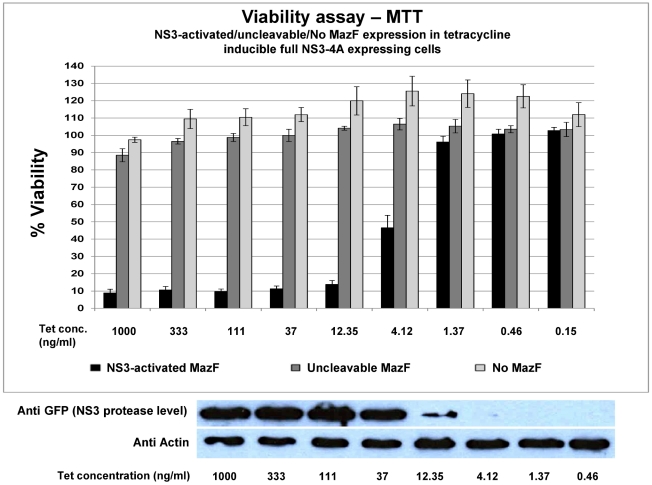
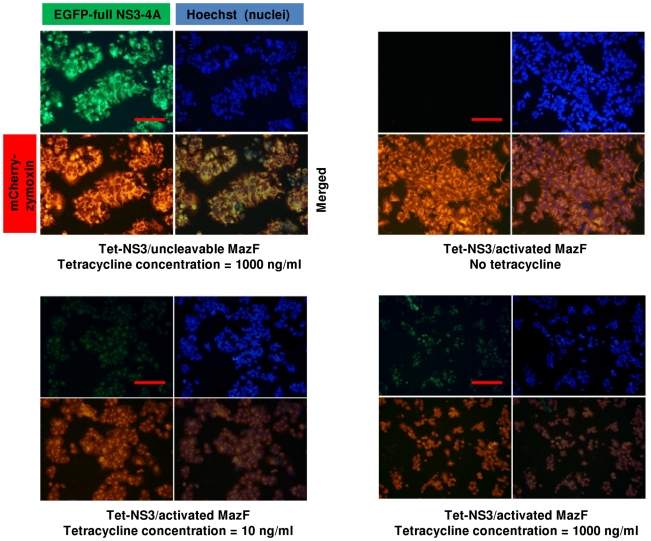
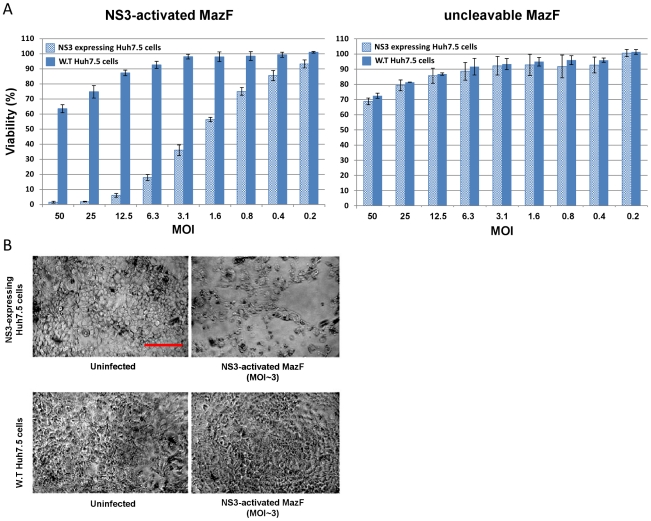
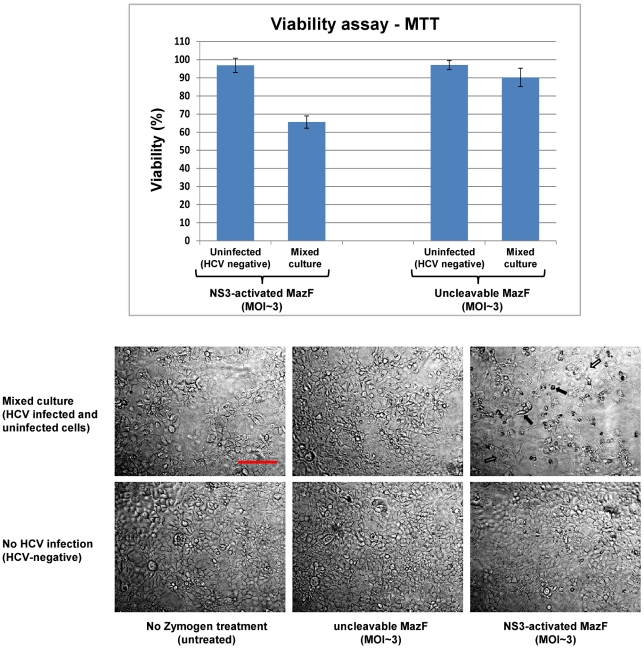
Hepatitis C virus (HCV) infection is a major cause of chronic liver disease and has become a global health threat. No HCV vaccine is currently available and treatment with antiviral therapy is associated with adverse side effects. Moreover, there is no preventive therapy for recurrent hepatitis C post liver transplantation. The NS3 serine protease is necessary for HCV replication and represents a prime target for developing anti HCV therapies. Recently we described a therapeutic approach for eradication of HCV infected cells that is based on protein delivery of two NS3 protease-activatable recombinant toxins we named "zymoxins". These toxins were inactivated by fusion to rationally designed inhibitory peptides via NS3-cleavable linkers. Once delivered to cells where NS3 protease is present, the inhibitory peptide is removed resulting in re-activation of cytotoxic activity. The zymoxins we described suffered from two limitations: they required high levels of protease for activation and had basal activities in the un-activated form that resulted in a narrow potential therapeutic window. Here, we present a solution that overcame the major limitations of the "first generation zymoxins" by converting MazF ribonuclease, the toxic component of the E. coli chromosomal MazEF toxin-antitoxin system, into an NS3-activated zymoxin that is introduced to cells by means of gene delivery. We constructed an expression cassette that encodes for a single polypeptide that incorporates both the toxin and a fragment of its potent natural antidote, MazE, linked via an NS3-cleavable linker. While covalently paired to its inhibitor, the ribonuclease is well tolerated when expressed in naïve, healthy cells. In contrast, activating proteolysis that is induced by even low levels of NS3, results in an eradication of NS3 expressing model cells and HCV infected cells. Zymoxins may thus become a valuable tool in eradicating cells infected by intracellular pathogens that express intracellular proteases.
丙型肝炎病毒 (HCV) 感染是慢性肝病的主要病因,已成为全球健康威胁。目前尚无 HCV 疫苗,抗病毒治疗与不良反应相关。此外,肝移植后复发性丙型肝炎尚无预防疗法。NS3 丝氨酸蛋白酶对于 HCV 复制是必需的,是开发抗 HCV 治疗的主要靶点。最近,我们描述了一种基于递送至 HCV 感染细胞的两种 NS3 蛋白酶可激活的重组毒素的治疗方法,我们将其命名为“zymoxins”。这些毒素通过与通过 NS3 切割的接头融合至合理设计的抑制性肽而失活。一旦递送至存在 NS3 蛋白酶的细胞中,抑制性肽被去除,导致细胞毒性活性重新激活。我们描述的 zymoxins 存在两个局限性:它们需要高水平的蛋白酶才能激活,并且在未激活形式下具有基础活性,导致治疗窗口狭窄。在这里,我们提出了一种解决方案,通过将大肠杆菌染色体 MazEF 毒素-抗毒素系统的毒性成分 MazF 核糖核酸酶转化为 NS3 激活的 zymoxin,克服了“第一代 zymoxins”的主要局限性,该 zymoxin 通过基因递送引入细胞。我们构建了一个表达盒,该表达盒编码一个单一多肽,该多肽包含毒素及其有效天然解毒剂 MazE 的片段,通过 NS3 可切割接头连接。当与抑制剂共价结合时,核糖核酸酶在未成熟的健康细胞中表达时可以很好地耐受。相比之下,即使低水平的 NS3 诱导的激活蛋白水解作用,也会导致 NS3 表达的模型细胞和 HCV 感染细胞的清除。因此,zymoxins 可能成为根除表达细胞内蛋白酶的细胞内病原体感染细胞的有用工具。