Yeo Chew Chieng, Abu Bakar Fauziah, Chan Wai Ting, Espinosa Manuel, Harikrishna Jennifer Ann
Biomedical Research Centre, Faculty of Medicine, Universiti Sultan Zainal Abidin, Medical Campus, Jalan Sultan Mahmud, 20400 Kuala Terengganu, Malaysia.
Centre for Research in Biotechnology for Agriculture (CEBAR) and Institute for Biological Sciences, Faculty of Science, University of Malaya, 50603 Kuala Lumpur, Malaysia.
Toxins (Basel). 2016 Feb 19;8(2):49. doi: 10.3390/toxins8020049.
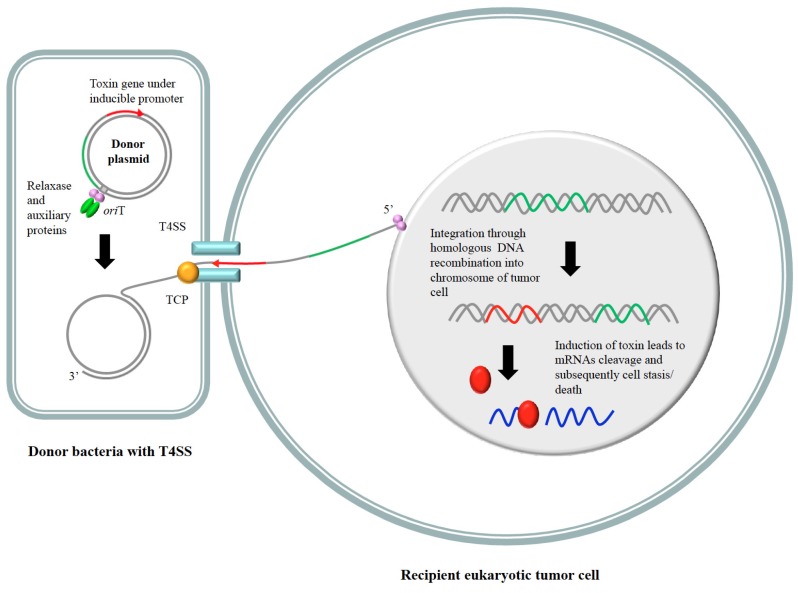
Toxin-antitoxin (TA) systems are found in nearly all prokaryotic genomes and usually consist of a pair of co-transcribed genes, one of which encodes a stable toxin and the other, its cognate labile antitoxin. Certain environmental and physiological cues trigger the degradation of the antitoxin, causing activation of the toxin, leading either to the death or stasis of the host cell. TA systems have a variety of functions in the bacterial cell, including acting as mediators of programmed cell death, the induction of a dormant state known as persistence and the stable maintenance of plasmids and other mobile genetic elements. Some bacterial TA systems are functional when expressed in eukaryotic cells and this has led to several innovative applications, which are the subject of this review. Here, we look at how bacterial TA systems have been utilized for the genetic manipulation of yeasts and other eukaryotes, for the containment of genetically modified organisms, and for the engineering of high expression eukaryotic cell lines. We also examine how TA systems have been adopted as an important tool in developmental biology research for the ablation of specific cells and the potential for utility of TA systems in antiviral and anticancer gene therapies.
毒素-抗毒素(TA)系统几乎存在于所有原核生物基因组中,通常由一对共转录基因组成,其中一个编码稳定的毒素,另一个编码其对应的不稳定抗毒素。某些环境和生理信号会触发抗毒素的降解,导致毒素激活,进而导致宿主细胞死亡或停滞。TA系统在细菌细胞中具有多种功能,包括作为程序性细胞死亡的介质、诱导一种称为持留的休眠状态以及稳定维持质粒和其他可移动遗传元件。一些细菌TA系统在真核细胞中表达时具有功能,这导致了一些创新应用,本文将对此进行综述。在这里,我们探讨了细菌TA系统如何被用于酵母和其他真核生物的基因操作、转基因生物的控制以及高表达真核细胞系的工程改造。我们还研究了TA系统如何被用作发育生物学研究中消融特定细胞的重要工具,以及TA系统在抗病毒和抗癌基因治疗中的潜在应用。