Department of Applied Physics, University of Eastern Finland, Kuopio, Finland.
PLoS One. 2012;7(2):e32344. doi: 10.1371/journal.pone.0032344. Epub 2012 Feb 16.
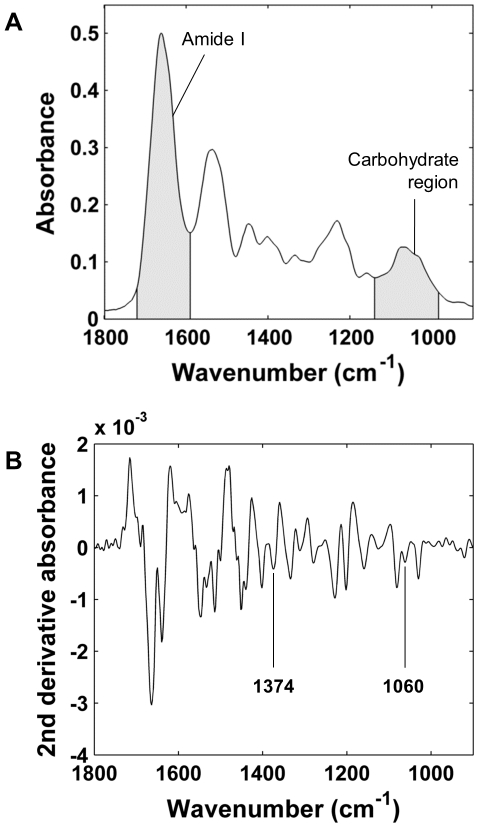
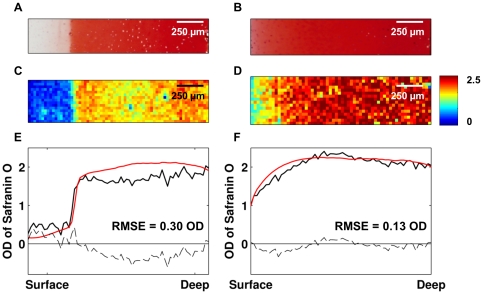
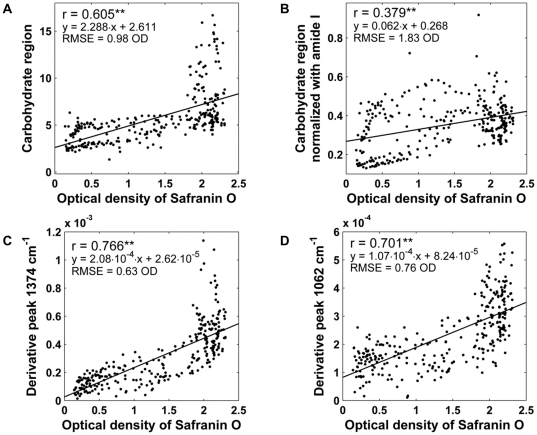
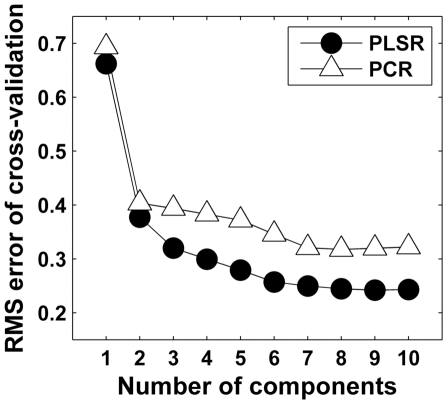
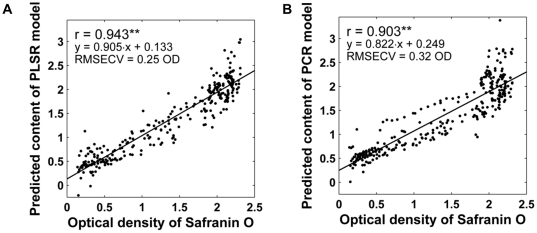
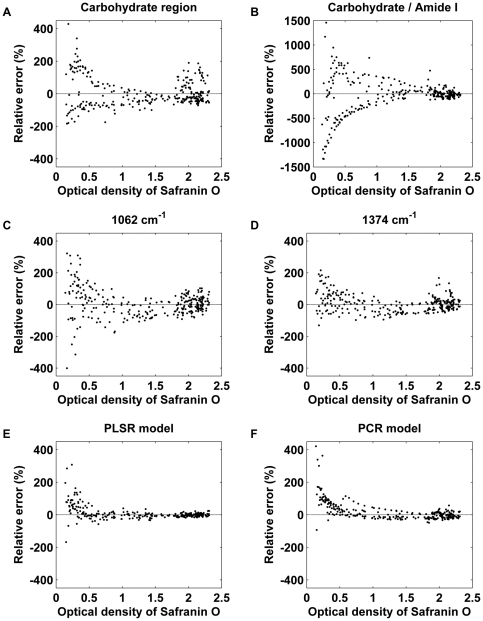
Fourier Transform Infrared (FT-IR) spectroscopic imaging has been earlier applied for the spatial estimation of the collagen and the proteoglycan (PG) contents of articular cartilage (AC). However, earlier studies have been limited to the use of univariate analysis techniques. Current analysis methods lack the needed specificity for collagen and PGs. The aim of the present study was to evaluate the suitability of partial least squares regression (PLSR) and principal component regression (PCR) methods for the analysis of the PG content of AC. Multivariate regression models were compared with earlier used univariate methods and tested with a sample material consisting of healthy and enzymatically degraded steer AC. Chondroitinase ABC enzyme was used to increase the variation in PG content levels as compared to intact AC. Digital densitometric measurements of Safranin O-stained sections provided the reference for PG content. The results showed that multivariate regression models predict PG content of AC significantly better than earlier used absorbance spectrum (i.e. the area of carbohydrate region with or without amide I normalization) or second derivative spectrum univariate parameters. Increased molecular specificity favours the use of multivariate regression models, but they require more knowledge of chemometric analysis and extended laboratory resources for gathering reference data for establishing the models. When true molecular specificity is required, the multivariate models should be used.
傅里叶变换红外(FT-IR)光谱成像技术更早地被应用于关节软骨(AC)中胶原蛋白和蛋白聚糖(PG)含量的空间估计。然而,早期的研究仅限于使用单变量分析技术。当前的分析方法缺乏对胶原蛋白和 PGs 的必要特异性。本研究的目的是评估偏最小二乘回归(PLSR)和主成分回归(PCR)方法分析 AC 中 PG 含量的适用性。多元回归模型与早期使用的单变量方法进行了比较,并使用由健康和酶降解的牛 AC 组成的样本材料进行了测试。软骨素酶 ABC 酶用于增加 PG 含量水平的变化,与完整的 AC 相比。番红 O 染色切片的数字密度测量为 PG 含量提供了参考。结果表明,多元回归模型比早期使用的吸收光谱(即糖醛酸区域的面积,带有或不带有酰胺 I 归一化)或二阶导数光谱单变量参数更能准确预测 AC 中的 PG 含量。更高的分子特异性有利于使用多元回归模型,但它们需要更多的化学计量学分析知识和扩展的实验室资源来收集建立模型的参考数据。当需要真正的分子特异性时,应使用多元模型。