Centre for Conservation Ecology & Environmental Sciences, School of Applied Sciences, Bournemouth University, Poole, United Kingdom.
PLoS One. 2012;7(2):e31619. doi: 10.1371/journal.pone.0031619. Epub 2012 Feb 20.
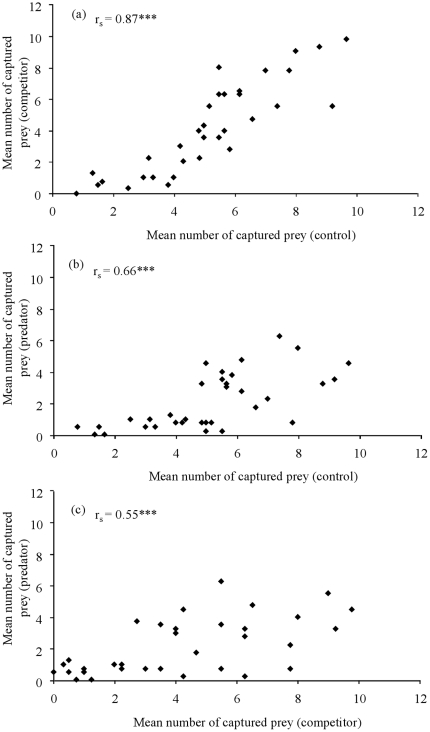
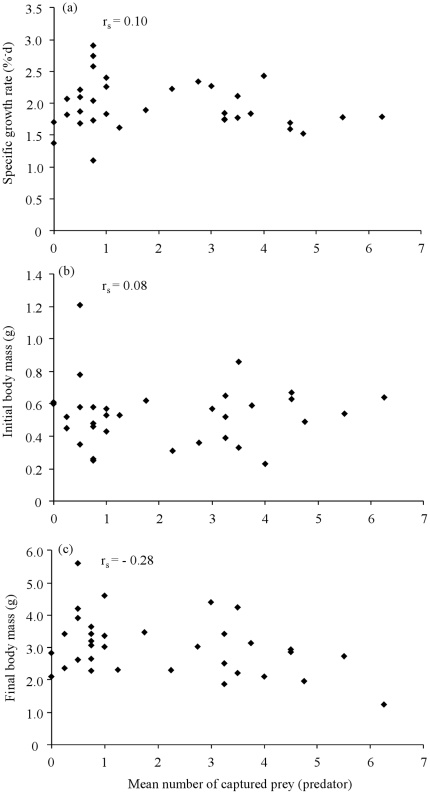
Models explaining behavioural syndromes often focus on state-dependency, linking behavioural variation to individual differences in other phenotypic features. Empirical studies are, however, rare. Here, we tested for a size and growth-dependent stable behavioural syndrome in the juvenile-stages of a solitary apex predator (pike, Esox lucius), shown as repeatable foraging behaviour across risk. Pike swimming activity, latency to prey attack, number of successful and unsuccessful prey attacks was measured during the presence/absence of visual contact with a competitor or predator. Foraging behaviour across risks was considered an appropriate indicator of boldness in this solitary predator where a trade-off between foraging behaviour and threat avoidance has been reported. Support was found for a behavioural syndrome, where the rank order differences in the foraging behaviour between individuals were maintained across time and risk situation. However, individual behaviour was independent of body size and growth in conditions of high food availability, showing no evidence to support the state-dependent personality hypothesis. The importance of a combination of spatial and temporal environmental variation for generating growth differences is highlighted.
解释行为综合征的模型通常侧重于状态依赖性,将行为变化与其他表型特征的个体差异联系起来。然而,实证研究却很少见。在这里,我们在独居顶级捕食者(梭子鱼,Esox lucius)的幼体阶段测试了一种大小和生长依赖性的稳定行为综合征,这种行为在风险中表现出可重复的觅食行为。在有/没有与竞争者或捕食者的视觉接触的情况下,测量了梭子鱼的游泳活动、对猎物攻击的潜伏期、成功和不成功的猎物攻击次数。在这种独居捕食者中,将风险跨越的觅食行为视为大胆的适当指标,因为据报道,这种行为在觅食行为和回避威胁之间存在权衡。支持存在行为综合征,即个体之间的觅食行为的等级差异在时间和风险情况下得以维持。然而,在食物丰富的情况下,个体行为与体型和生长无关,这表明没有证据支持状态依赖人格假说。强调了空间和时间环境变化的组合对产生生长差异的重要性。