Centre for Blood Research, University of British Columbia, Vancouver, British Columbia V6T 1Z3, Canada.
J Biol Chem. 2012 Apr 13;287(16):13382-95. doi: 10.1074/jbc.M111.314179. Epub 2012 Feb 24.
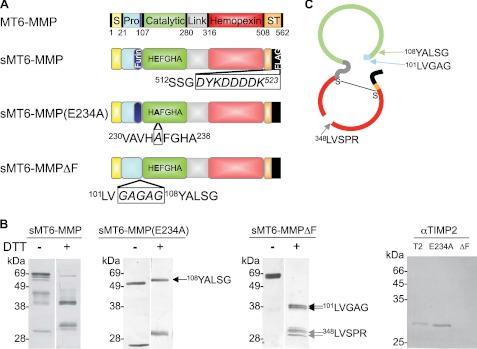
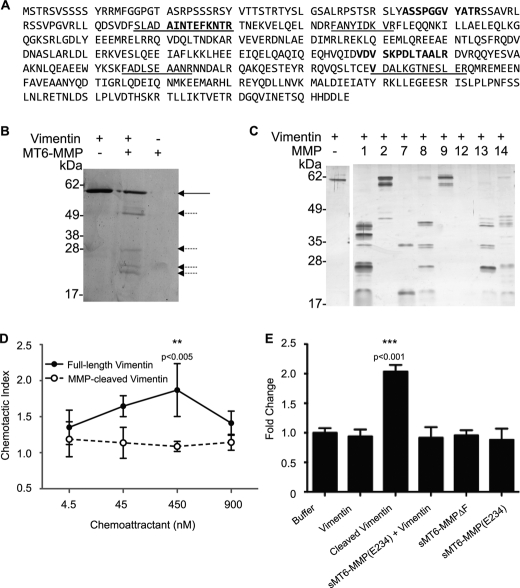
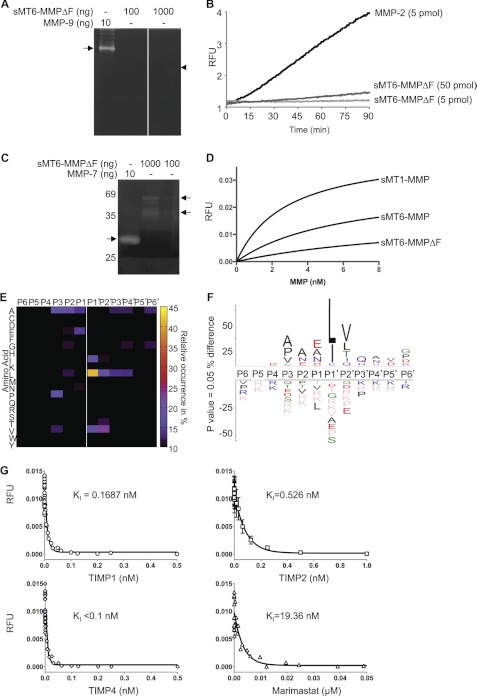
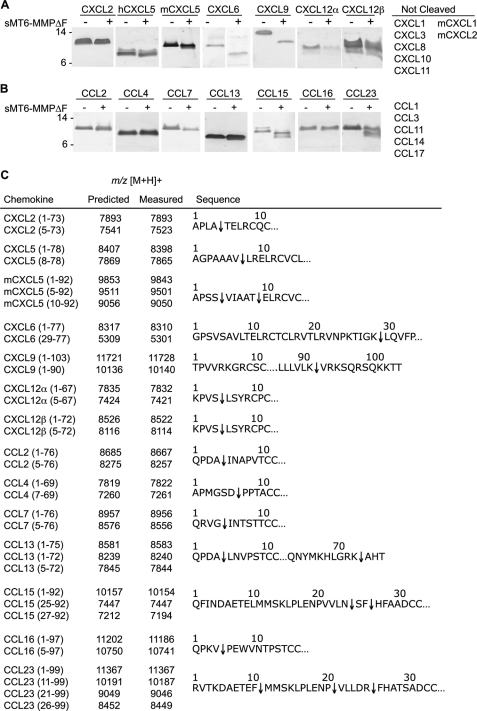
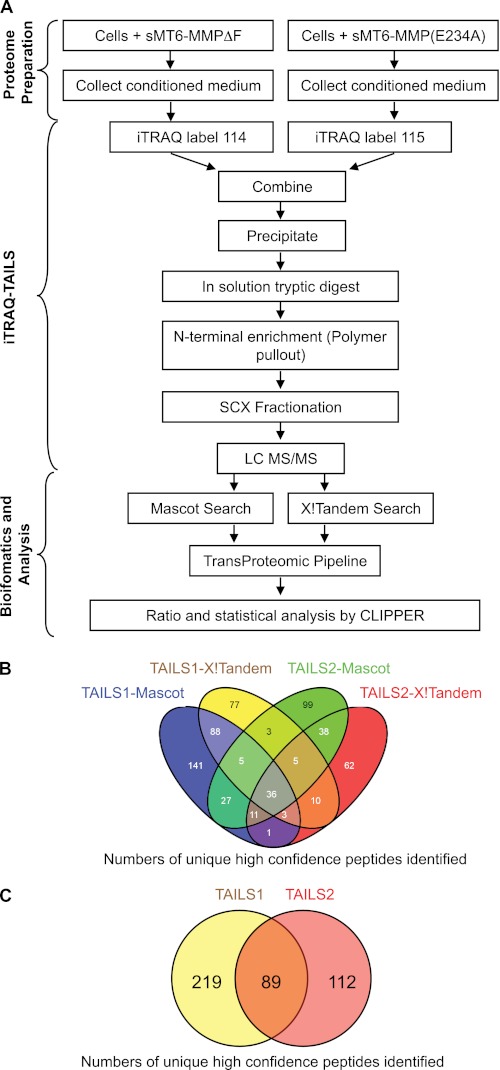
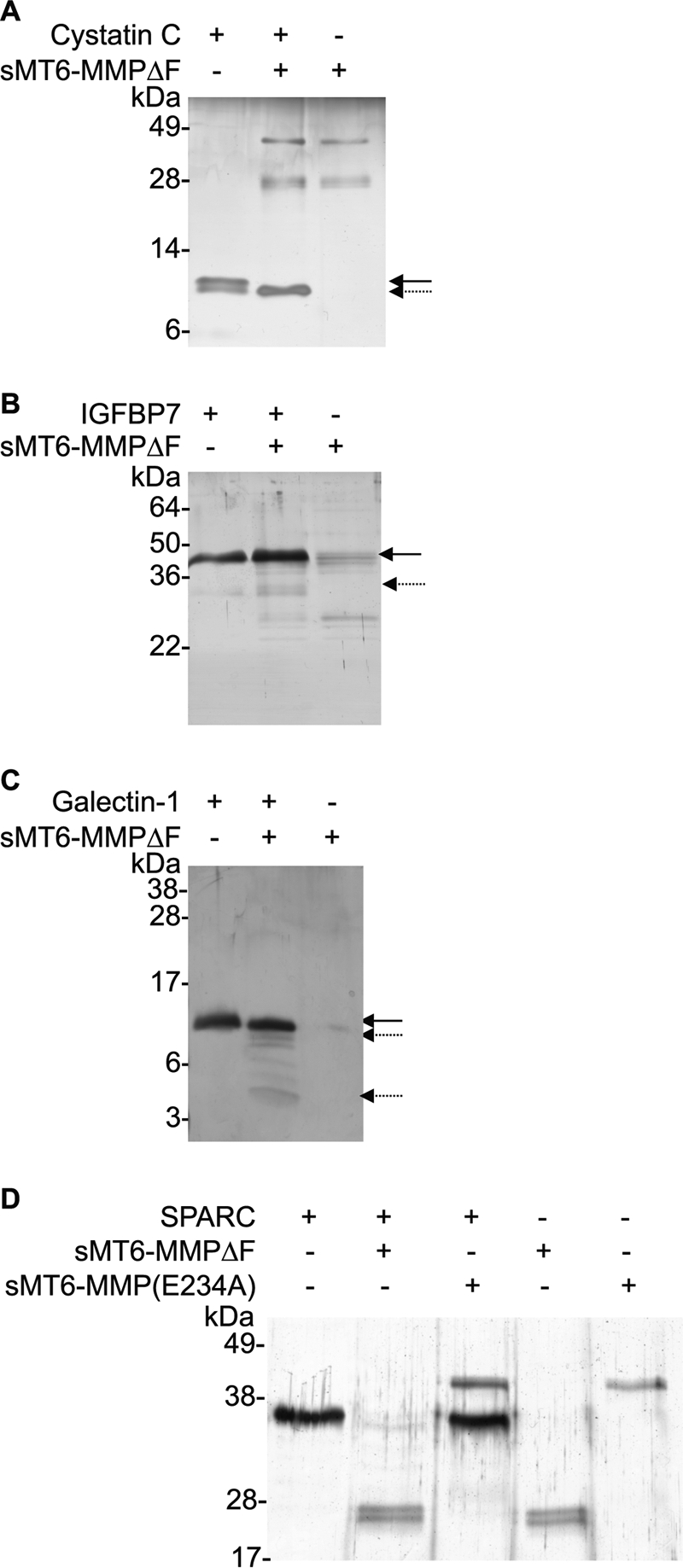
The neutrophil-specific protease membrane-type 6 matrix metalloproteinase (MT6-MMP)/MMP-25/leukolysin is implicated in multiple sclerosis and cancer yet remains poorly characterized. To characterize the biological roles of MT6-MMP, it is critical to identify its substrates for which only seven are currently known. Here, we biochemically characterized MT6-MMP, profiled its tissue inhibitor of metalloproteinase inhibitory spectrum, performed degradomics analyses, and screened 26 chemokines for cleavage using matrix-assisted laser desorption/ionization time-of-flight (MALDI-TOF) mass spectrometry. MT6-MMP processes seven each of the CXC and CC chemokine subfamilies. Notably, cleavage of the neutrophil chemoattractant CXCL5 activates the chemokine, thereby increasing its agonist activity, indicating a feed-forward mechanism for neutrophil recruitment. Likewise, cleavage also activated CCL15 and CCL23 to increase monocyte recruitment. Utilizing the proteomics approach proteomic identification of cleavage site specificity (PICS), we identified 286 peptidic cleavage sites spanning from P6 to P6' from which an unusual glutamate preference in P1 was identified. The degradomics screen terminal amine isotopic labeling of substrates (TAILS), which enriches for neo-N-terminal peptides of cleaved substrates, was used to identify 58 new native substrates in fibroblast secretomes after incubation with MT6-MMP. Vimentin, cystatin C, galectin-1, IGFBP-7, and secreted protein, acidic and rich in cysteine (SPARC) were among those substrates we biochemically confirmed. An extracellular "moonlighting" form of vimentin is a chemoattractant for THP-1 cells, but MT6-MMP cleavage abolished monocyte recruitment. Unexpectedly, the MT6-MMP-cleaved vimentin potently stimulated phagocytosis, which was not a property of the full-length protein. Hence, MT6-MMP regulates neutrophil and monocyte chemotaxis and by generating "eat-me" signals upon vimentin cleavage potentially increases phagocytic removal of neutrophils to resolve inflammation.
中性粒细胞特异性蛋白酶膜型 6 基质金属蛋白酶(MT6-MMP)/MMP-25/白细胞溶解素与多发性硬化症和癌症有关,但仍知之甚少。为了阐明 MT6-MMP 的生物学作用,关键是要确定其目前仅知的七种底物。在这里,我们通过生化方法对 MT6-MMP 进行了表征,分析了其组织抑制剂的抑制谱,进行了降解组学分析,并使用基质辅助激光解吸/电离飞行时间(MALDI-TOF)质谱法筛选了 26 种趋化因子进行切割。MT6-MMP 对 CXC 和 CC 趋化因子亚家族的每种趋化因子进行了切割。值得注意的是,对中性粒细胞趋化因子 CXCL5 的切割激活了趋化因子,从而增加了其激动剂活性,表明这是一种用于中性粒细胞募集的正反馈机制。同样,切割也激活了 CCL15 和 CCL23 以增加单核细胞的募集。利用蛋白质组学方法肽裂解位点特异性鉴定(PICS),我们从 P6 到 P6' 鉴定出 286 个肽裂解位点,其中 P1 位置的谷氨酸偏好性是不寻常的。降解组学筛选末端胺同位素标记的底物(TAILS)用于鉴定 MT6-MMP 孵育后成纤维细胞分泌组中 58 种新的天然底物,这些底物在新的 N 端肽段被富集。其中包括波形蛋白、半胱氨酸蛋白酶抑制剂 C、半乳糖凝集素-1、IGFBP-7 和富含半胱氨酸的酸性分泌蛋白(SPARC)等。我们通过生物化学方法证实了其中的一些。波形蛋白的一种细胞外“兼职”形式是 THP-1 细胞的趋化因子,但 MT6-MMP 切割会破坏单核细胞的募集。出乎意料的是,MT6-MMP 切割的波形蛋白强烈刺激吞噬作用,而全长蛋白没有这种特性。因此,MT6-MMP 调节中性粒细胞和单核细胞的趋化性,并通过在波形蛋白切割时产生“吃我”信号,可能会增加吞噬细胞对中性粒细胞的清除,从而消除炎症。