Department of Mechanical Design Engineering, National Formosa University, No. 64, Wunhua Rd., Huwei Township, Yunlin County 632, Taiwan.
Sensors (Basel). 2012;12(1):534-48. doi: 10.3390/s120100534. Epub 2012 Jan 5.
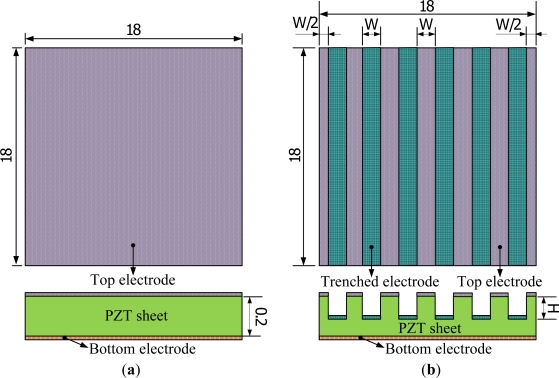
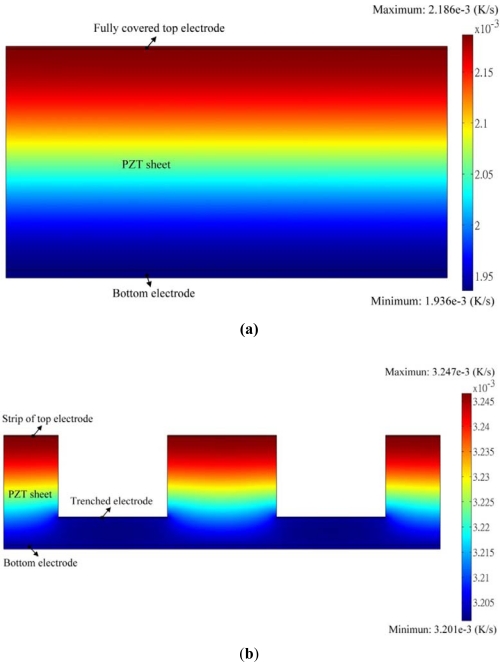
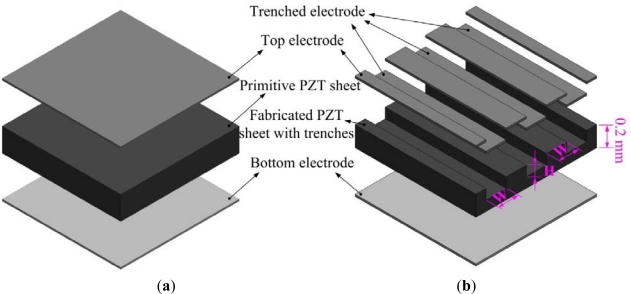
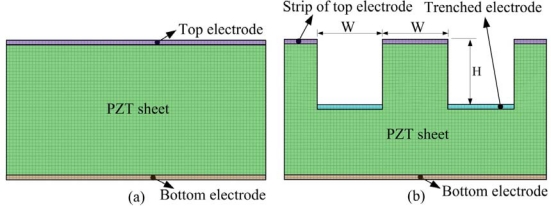
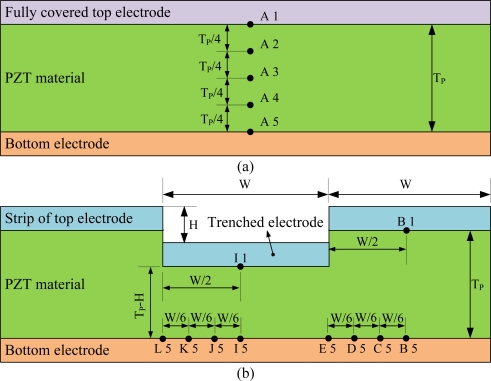
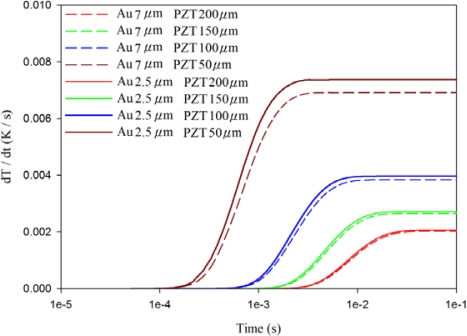
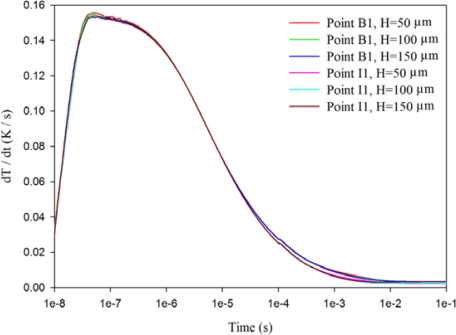
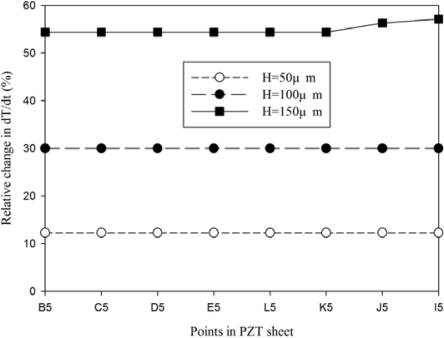
This study proposes trenching piezoelectric (PZT) material in a thicker PZT pyroelectric cell to improve the temperature variation rate to enhance the efficiency of thermal energy-harvesting conversion by pyroelectricity. A thicker pyroelectric cell is beneficial in generating electricity pyroelectrically, but it hinders rapid temperature variations. Therefore, the PZT sheet was fabricated to produce deeper trenches to cause lateral temperature gradients induced by the trenched electrode, enhancing the temperature variation rate under homogeneous heat irradiation. When the trenched electrode type with an electrode width of 200 μm and a cutting depth of 150 μm was used to fabricate a PZT pyroelectric cell with a 200 μm thick PZT sheet, the temperature variation rate was improved by about 55%. Therefore, the trenched electrode design did indeed enhance the temperature variation rate and the efficiency of pyroelectric energy converters.
本研究提出在较厚的 PZT 热释电单元中开槽压电(PZT)材料,以提高温度变化率,通过热释电提高热能收集转换效率。较厚的热释电单元有利于产生电能,但会阻碍快速的温度变化。因此,制造了 PZT 薄片以产生更深的槽,以引起由开槽电极引起的横向温度梯度,在均匀的热辐射下提高温度变化率。当使用具有 200μm 宽和 150μm 深的开槽电极来制造具有 200μm 厚 PZT 薄片的 PZT 热释电单元时,温度变化率提高了约 55%。因此,开槽电极设计确实提高了温度变化率和热释电能量转换器的效率。