Department of Mechanical Design Engineering, National Formosa University, No. 64, Wunhua Rd., Huwei Township, Yunlin County 632, Taiwan.
Smart Machine and Intelligent Manufacturing Research Center, National Formosa University, No. 64, Wunhua Rd., Huwei Township, Yunlin County 632, Taiwan.
Sensors (Basel). 2018 Oct 3;18(10):3320. doi: 10.3390/s18103320.
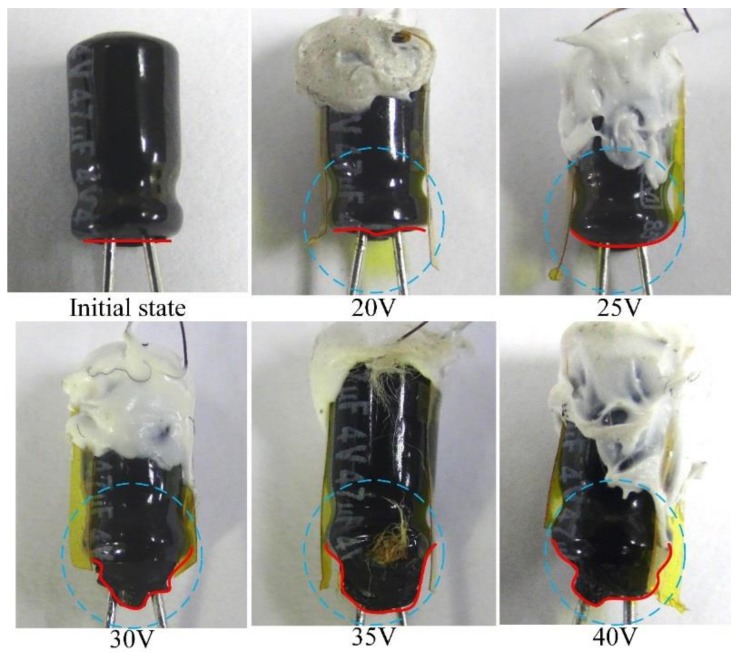
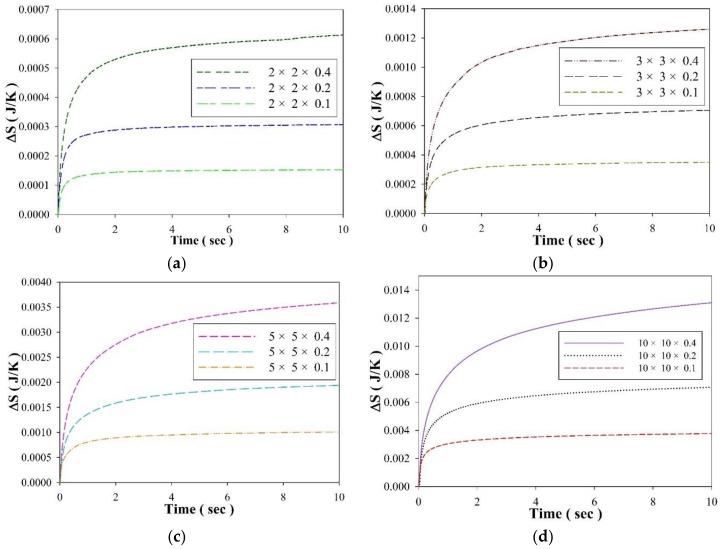
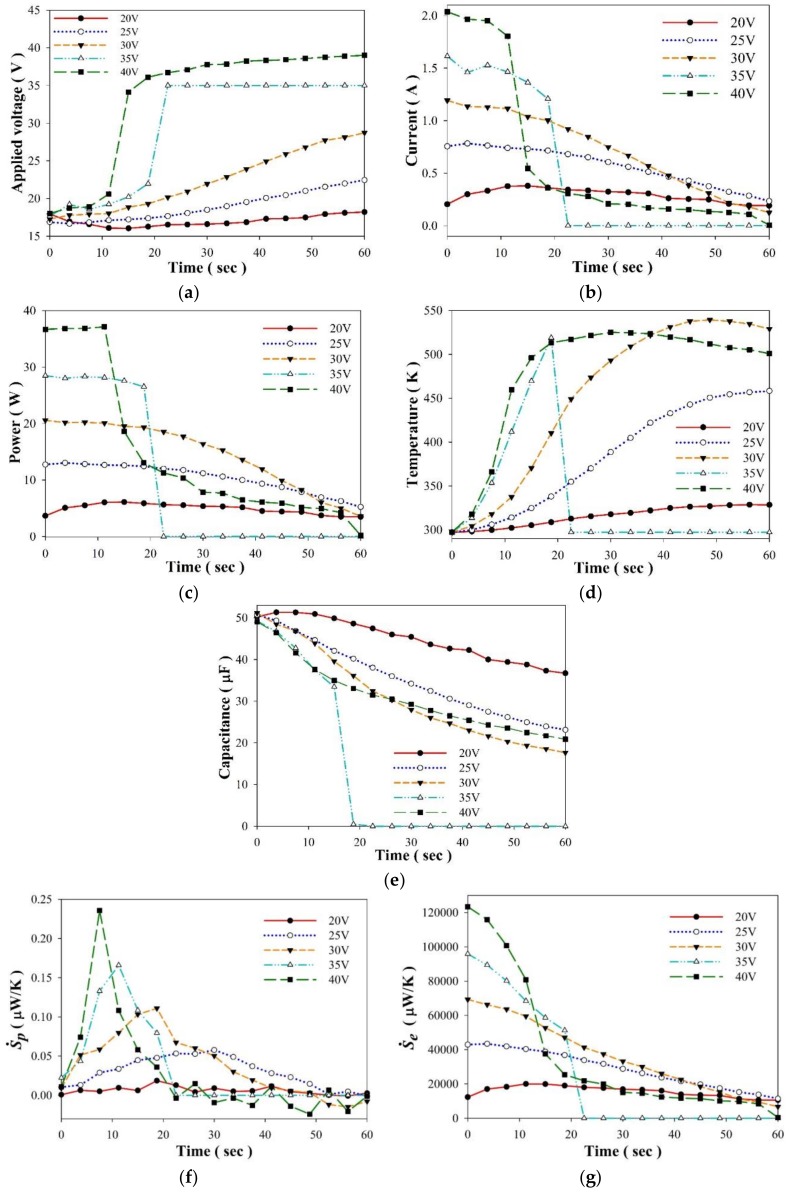
Entropy generation in irreversible processes is a critical issue that affects the failure and aging of electrical, chemical or mechanical systems. The promotion of energy conversion efficiency needs to reduce energy losses, namely to decrease entropy generation. A pyroelectric type of entropy detector is proposed to monitor energy conversion processes in real time. The entropy generation rate can be derived from the induced pyroelectric current, temperature, thermal capacity, pyroelectric coefficient and electrode area. It is profitable to design entropy detectors to maintain a small thermal capacity while pyroelectric sensors minimize geometrical dimensions. Moreover, decreasing the electrode area of the PZT cells could avoid affecting the entropy variation of the measured objects, but the thickness of the cells has to be greatly reduced to promote the temperature variation rate and strengthen the electrical signals. A commercial capacitor with a capacitance of 47 μF and a maximum endured voltage of 4 V were used to estimate the entropy to act as an indicator of the capacitors' time-to-failure. The threshold time was evaluated by using the entropy generation rates at about 7.5 s, 11.25 s, 20 s and 30 s for the applied voltages of 40 V, 35 V, 30 V and 25 V respectively, while using a PZT cell with dimensions of 3 mm square and a thickness of 200 μm.
不可逆过程中的熵产生是一个关键问题,它会影响电气、化学或机械系统的失效和老化。提高能量转换效率需要减少能量损失,即减少熵产生。本文提出了一种热释电型熵探测器,用于实时监测能量转换过程。熵产生率可以通过感应的热释电电流、温度、热容、热释电系数和电极面积来推导。设计熵探测器时,保持小的热容,同时热释电传感器最小化几何尺寸是有利的。此外,减小 PZT 单元的电极面积可以避免影响被测物体的熵变化,但必须大大减小单元的厚度,以促进温度变化率并增强电信号。使用一个电容为 47 μF、最大耐受电压为 4 V 的商用电容器来估计熵,作为电容器失效时间的指标。通过使用施加电压为 40 V、35 V、30 V 和 25 V 时的熵产生率分别约为 7.5 s、11.25 s、20 s 和 30 s 来评估阈值时间,同时使用尺寸为 3 mm 见方和厚度为 200 μm 的 PZT 单元。