Laboratory of Developmental Systems Biology, Genetics and Developmental Biology Center, National Heart Lung and Blood Institute, National Institutes of Health, Bethesda, MD 20892, USA.
Development. 2012 Apr;139(8):1457-66. doi: 10.1242/dev.069005. Epub 2012 Feb 29.
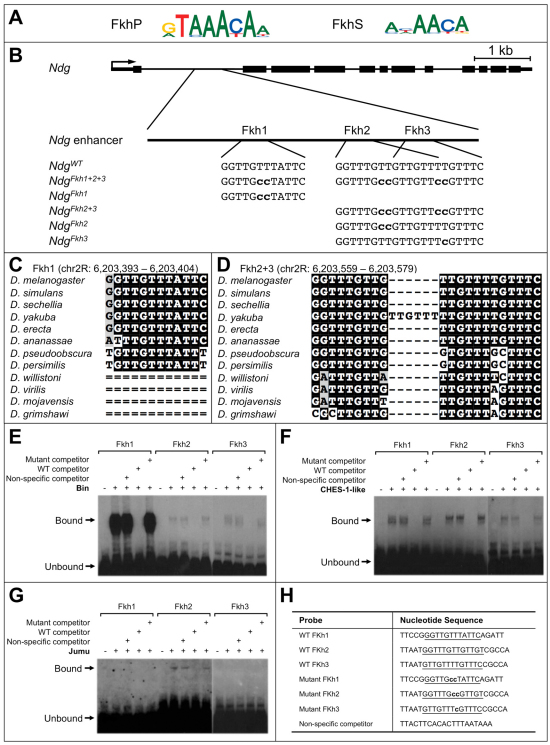
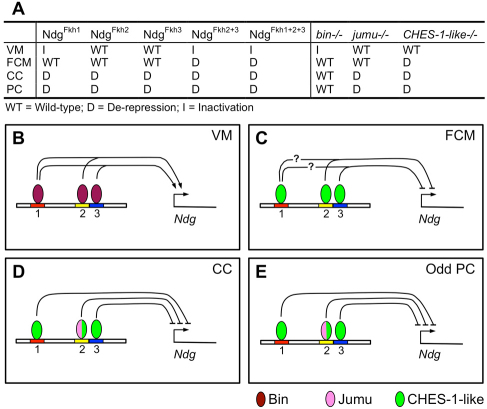
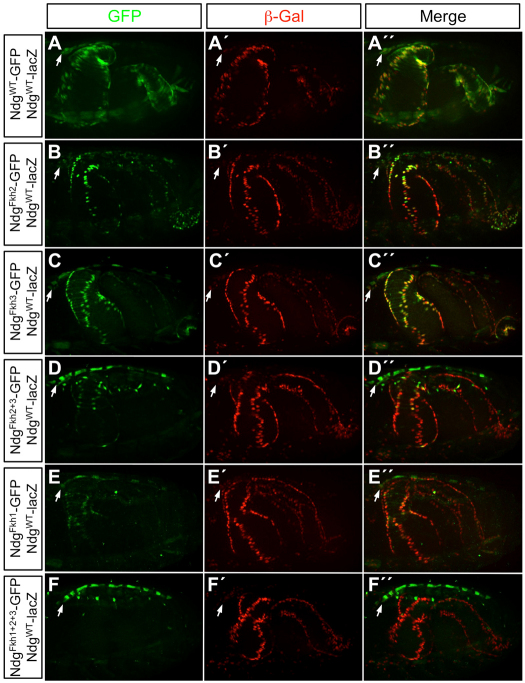
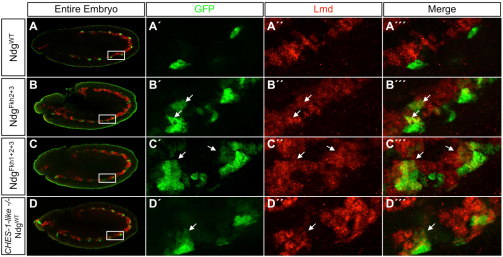
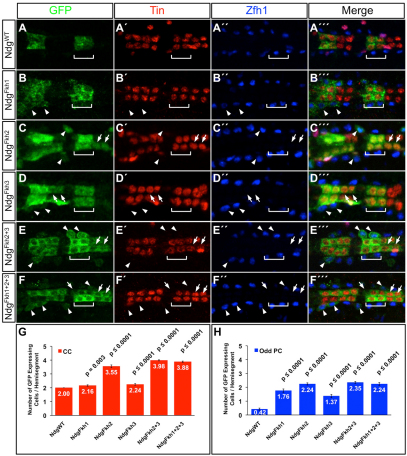
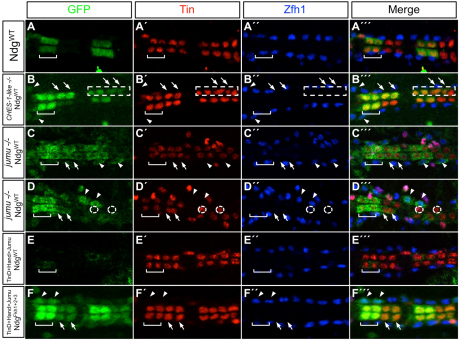
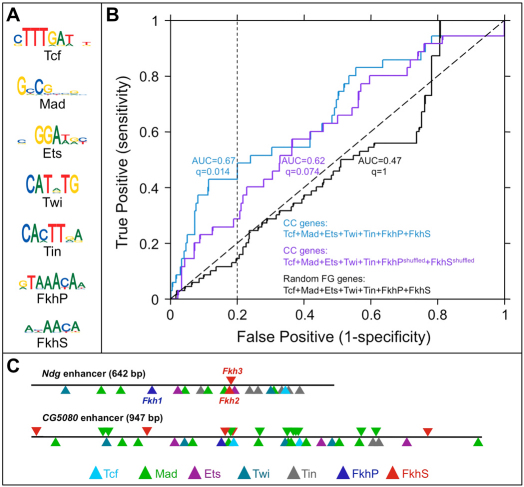
A common theme in developmental biology is the repeated use of the same gene in diverse spatial and temporal domains, a process that generally involves transcriptional regulation mediated by multiple separate enhancers, each with its own arrangement of transcription factor (TF)-binding sites and associated activities. Here, by contrast, we show that the expression of the Drosophila Nidogen (Ndg) gene at different embryonic stages and in four mesodermal cell types is governed by the binding of multiple cell-specific Forkhead (Fkh) TFs - including Biniou (Bin), Checkpoint suppressor homologue (CHES-1-like) and Jumeau (Jumu) - to three functionally distinguishable Fkh-binding sites in the same enhancer. Whereas Bin activates the Ndg enhancer in the late visceral musculature, CHES-1-like cooperates with Jumu to repress this enhancer in the heart. CHES-1-like also represses the Ndg enhancer in a subset of somatic myoblasts prior to their fusion to form multinucleated myotubes. Moreover, different combinations of Fkh sites, corresponding to two different sequence specificities, mediate the particular functions of each TF. A genome-wide scan for the occurrence of both classes of Fkh domain recognition sites in association with binding sites for known cardiac TFs showed an enrichment of combinations containing the two Fkh motifs in putative enhancers found within the noncoding regions of genes having heart expression. Collectively, our results establish that different cell-specific members of a TF family regulate the activity of a single enhancer in distinct spatiotemporal domains, and demonstrate how individual binding motifs for a TF class can differentially influence gene expression.
发育生物学的一个共同主题是在不同的空间和时间域中重复使用相同的基因,这个过程通常涉及由多个独立的增强子介导的转录调控,每个增强子都有其自己的转录因子(TF)结合位点排列和相关活性。相比之下,在这里我们展示了果蝇 Nidogen(Ndg)基因在不同胚胎阶段和四个中胚层细胞类型中的表达是由多个细胞特异性 Forkhead(Fkh)TFs 的结合所控制的 - 包括 Biniou(Bin)、Checkpoint suppressor homologue(CHES-1-like)和 Jumeau(Jumu) - 到相同增强子中的三个功能上可区分的 Fkh 结合位点。虽然 Bin 在晚期内脏肌肉中激活 Ndg 增强子,但 CHES-1-like 与 Jumu 合作在心脏中抑制该增强子。CHES-1-like 还在形成多核肌管之前的一部分体节肌肉母细胞中抑制 Ndg 增强子。此外,不同的 Fkh 位点组合,对应于两种不同的序列特异性,介导每个 TF 的特定功能。在与已知心脏 TF 的结合位点相关的全基因组扫描中,发现两个 Fkh 结构域识别位点类别的出现与心脏表达基因的非编码区域内的假定增强子中富含包含两个 Fkh 基序的组合。总的来说,我们的结果表明,TF 家族的不同细胞特异性成员在不同的时空域中调节单个增强子的活性,并展示了 TF 类的单个结合基序如何以不同的方式影响基因表达。