Medical Research Institute, College of Medicine, Dentistry, and Nursing, University of Dundee, Dundee, Scotland.
PLoS One. 2012;7(2):e31827. doi: 10.1371/journal.pone.0031827. Epub 2012 Feb 22.
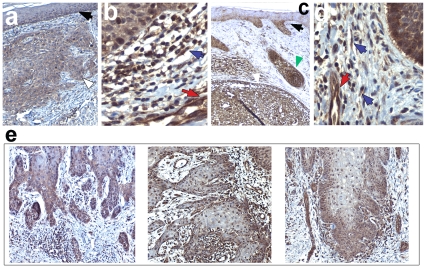
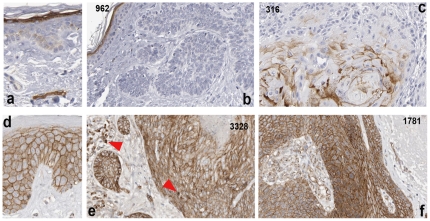
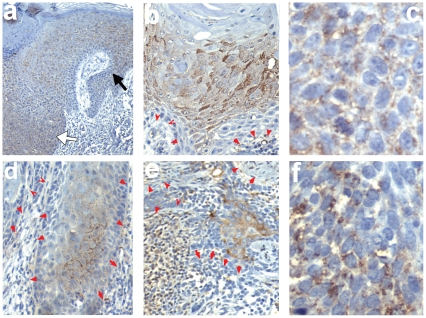
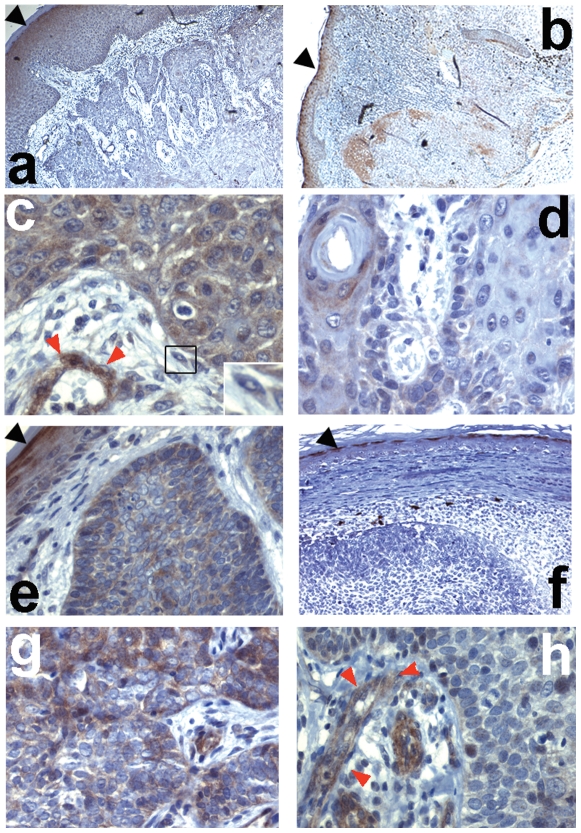
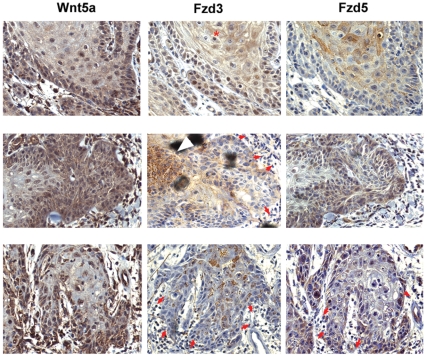
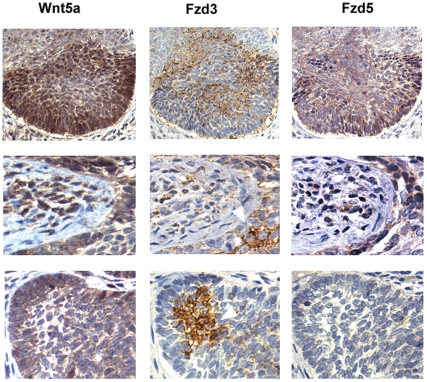
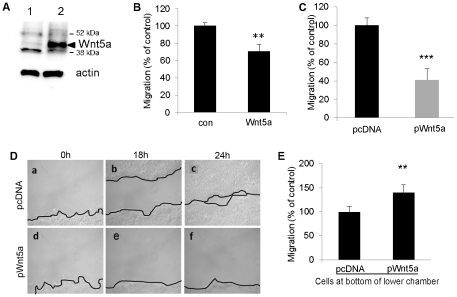
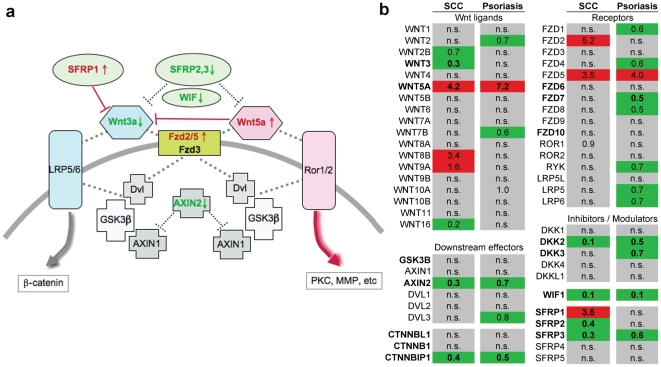
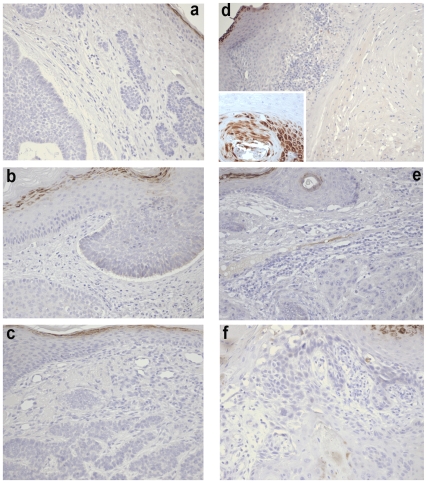
Wnt5a is one of the so-called non-canonical Wnt ligands which do not act through β-catenin. In normal development, Wnt5a is secreted and directs the migration of target cells along concentration gradients. The effect of Wnt5a on target cells is regulated by many factors, including the expression level of inhibitors and receptors. Dysregulated Wnt5a signalling facilitates invasion of multiple tumor types into adjacent tissue. However, the expression and distribution of Wnt5a in cutaneous squamous cell carcinoma (SCC) and basal cell carcinoma (BCC), as well as the effect of Wnt5a on keratinocyte migration has not been studied in detail to date. We here report that Wnt5a is upregulated in SCC and BCC and localised to the leading edge of tumors, as well as tumor-associated fibroblasts. The Wnt5a-triggered bundling of its receptor Fzd3 provides evidence of Wnt5a concentration gradients projecting into the tumor. In vitro migration assays show that Wnt5a concentration gradients determine its effect on keratinoctye migration: While chemotactic migration is inhibited by Wnt5a present in homogenous concentrations, it is enhanced in the presence of a Wnt5a gradient. Expression profiling of the Wnt pathway shows that the upregulation of Wnt5a in SCC is coupled to repression of canonical Wnt signalling. This is confirmed by immunohistochemistry showing lack of nuclear β-catenin, as well as absent accumulation of Axin2. Since both types of Wnt signalling act mutually antogonistically at multiple levels, the concurrent repression of canonical Wnt signalling suggests hyper-active Wnt5a signal transduction. Significantly, this combination of gene dysregulation is not observed in the benign hyperproliferative inflammatory skin disease psoriasis. Collectively, our data strongly suggest that Wnt5a signalling contributes to tissue invasion by non-melanoma skin cancer.
Wnt5a 是所谓的非经典 Wnt 配体之一,不通过 β-连环蛋白起作用。在正常发育过程中,Wnt5a 被分泌并沿浓度梯度引导靶细胞迁移。Wnt5a 对靶细胞的作用受许多因素调节,包括抑制剂和受体的表达水平。Wnt5a 信号的失调促进了多种肿瘤类型向邻近组织的侵袭。然而,Wnt5a 在皮肤鳞状细胞癌 (SCC) 和基底细胞癌 (BCC) 中的表达和分布,以及 Wnt5a 对角质形成细胞迁移的影响尚未得到详细研究。我们在这里报告,Wnt5a 在 SCC 和 BCC 中上调,并定位于肿瘤的前沿以及肿瘤相关的成纤维细胞。Wnt5a 触发其受体 Fzd3 的聚集为 Wnt5a 浓度梯度投射到肿瘤中的提供了证据。体外迁移实验表明,Wnt5a 浓度梯度决定了其对角质形成细胞迁移的影响:虽然 Wnt5a 均匀浓度存在时抑制趋化性迁移,但存在 Wnt5a 梯度时会增强。Wnt 通路的表达谱显示,SCC 中 Wnt5a 的上调与经典 Wnt 信号的抑制相关。免疫组化显示缺乏核 β-连环蛋白以及 Axin2 的缺失积累证实了这一点。由于两种类型的 Wnt 信号在多个水平上相互拮抗作用,经典 Wnt 信号的同时抑制提示 Wnt5a 信号转导过度活跃。重要的是,这种基因失调的组合在良性过度增殖性炎症性皮肤病银屑病中观察不到。总的来说,我们的数据强烈表明 Wnt5a 信号有助于非黑色素瘤皮肤癌的组织侵袭。