Department of Biomedical Engineering, Faculty of Engineering, Shahed University, Tehran, Iran.
PLoS One. 2012;7(2):e32357. doi: 10.1371/journal.pone.0032357. Epub 2012 Feb 27.
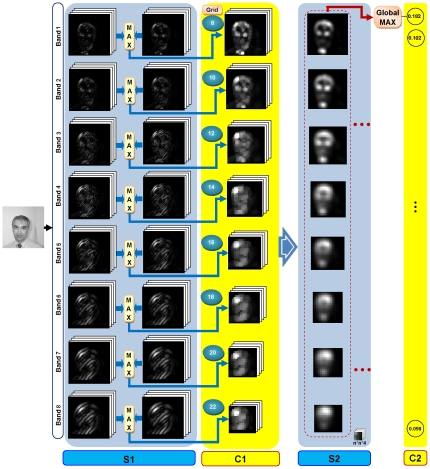
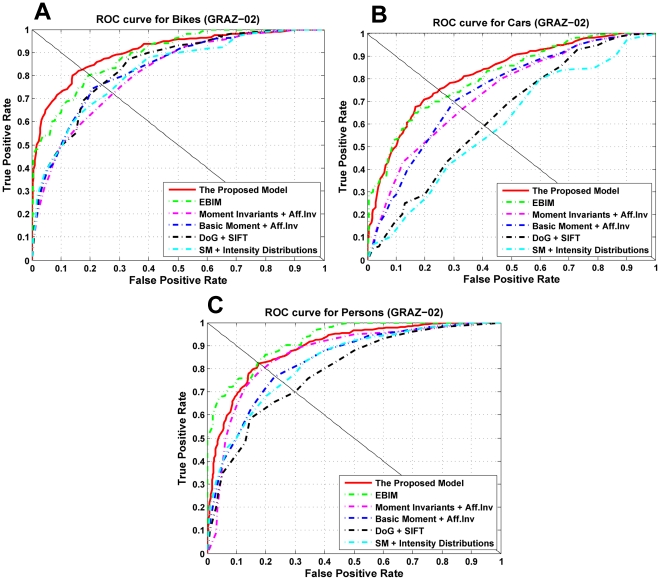
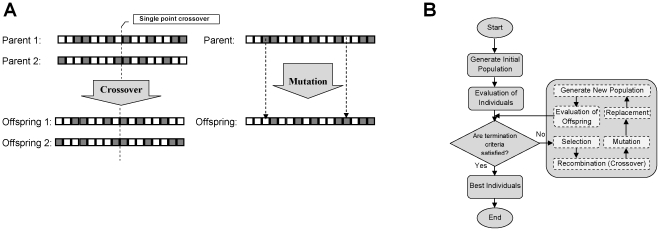
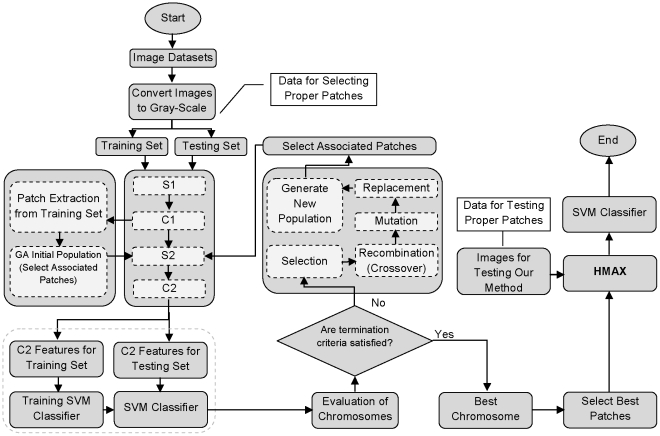
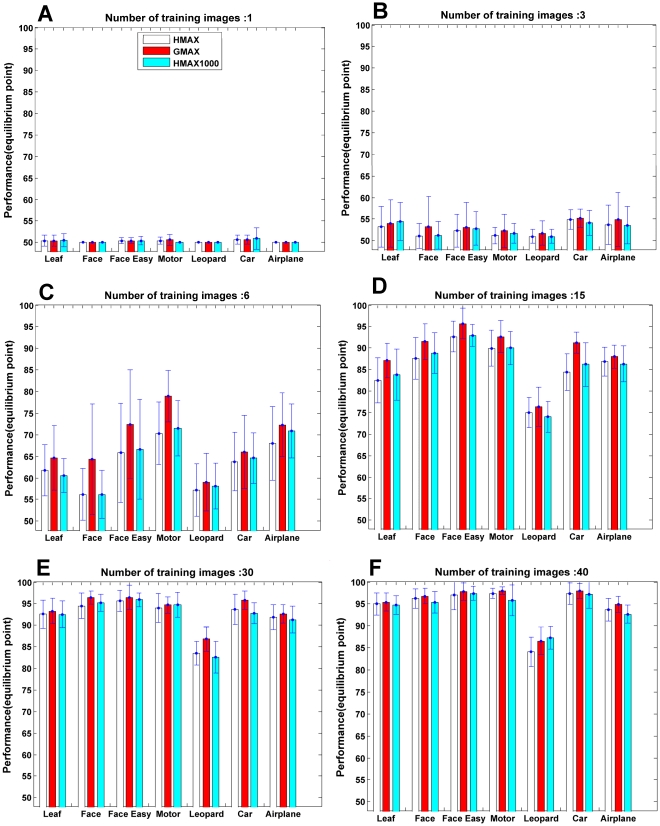
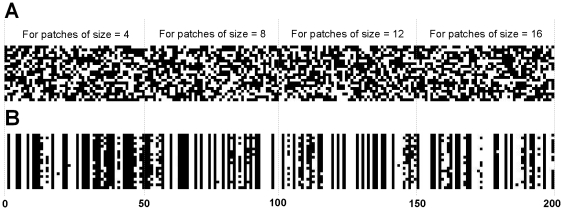
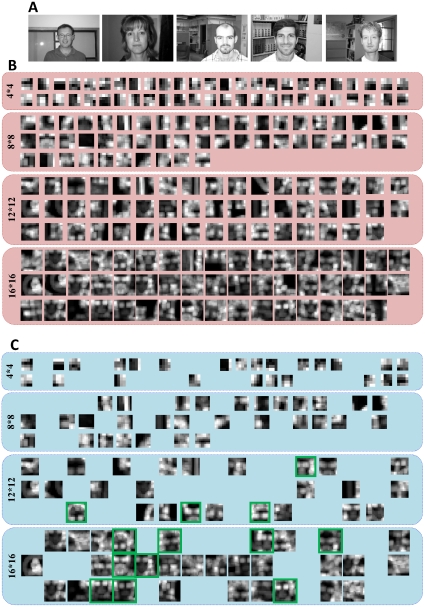
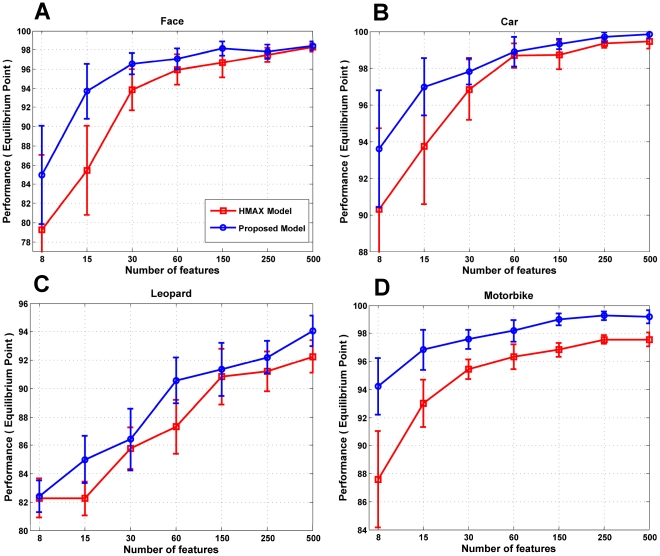
Humans can effectively and swiftly recognize objects in complex natural scenes. This outstanding ability has motivated many computational object recognition models. Most of these models try to emulate the behavior of this remarkable system. The human visual system hierarchically recognizes objects in several processing stages. Along these stages a set of features with increasing complexity is extracted by different parts of visual system. Elementary features like bars and edges are processed in earlier levels of visual pathway and as far as one goes upper in this pathway more complex features will be spotted. It is an important interrogation in the field of visual processing to see which features of an object are selected and represented by the visual cortex. To address this issue, we extended a hierarchical model, which is motivated by biology, for different object recognition tasks. In this model, a set of object parts, named patches, extracted in the intermediate stages. These object parts are used for training procedure in the model and have an important role in object recognition. These patches are selected indiscriminately from different positions of an image and this can lead to the extraction of non-discriminating patches which eventually may reduce the performance. In the proposed model we used an evolutionary algorithm approach to select a set of informative patches. Our reported results indicate that these patches are more informative than usual random patches. We demonstrate the strength of the proposed model on a range of object recognition tasks. The proposed model outperforms the original model in diverse object recognition tasks. It can be seen from the experiments that selected features are generally particular parts of target images. Our results suggest that selected features which are parts of target objects provide an efficient set for robust object recognition.
人类能够有效地快速识别复杂自然场景中的物体。这种出色的能力激发了许多计算对象识别模型的灵感。这些模型大多试图模仿这个卓越系统的行为。人类视觉系统在几个处理阶段中分层识别物体。在这些阶段中,视觉系统的不同部分提取出一组具有递增复杂度的特征。早期阶段处理像条和边缘这样的基本特征,而在视觉通路的上层,会发现更复杂的特征。视觉处理领域的一个重要问题是,视觉皮层选择和表示物体的哪些特征。为了解决这个问题,我们扩展了一个受生物学启发的分层模型,用于不同的对象识别任务。在这个模型中,一组对象部分,称为补丁,在中间阶段提取。这些对象部分用于模型的训练过程,在对象识别中起着重要作用。这些补丁是从图像的不同位置随机选择的,这可能导致提取非区分性补丁,最终可能会降低性能。在提出的模型中,我们使用了一种进化算法来选择一组信息丰富的补丁。我们的报告结果表明,这些补丁比通常的随机补丁更具信息量。我们在一系列对象识别任务中展示了所提出模型的优势。与原始模型相比,所提出的模型在各种对象识别任务中表现更好。从实验中可以看出,所选特征通常是目标图像的特定部分。我们的结果表明,所选特征是目标对象的一部分,为鲁棒的对象识别提供了有效的特征集。