School of Bioengineering, Chongqing University, Chongqing, China.
PLoS One. 2012;7(2):e32428. doi: 10.1371/journal.pone.0032428. Epub 2012 Feb 23.
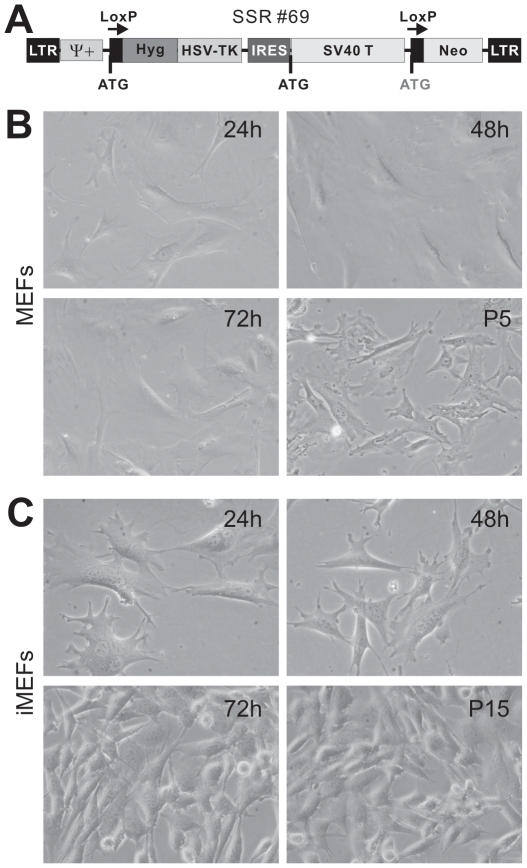
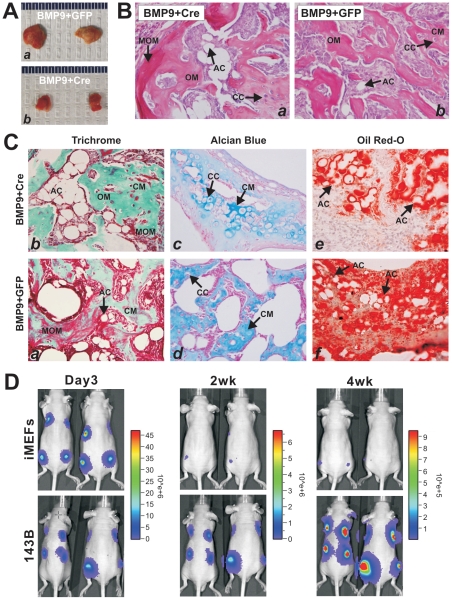
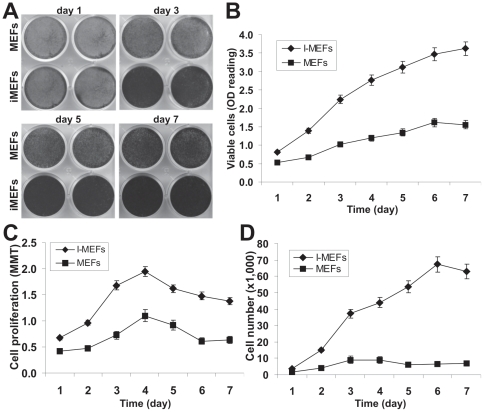
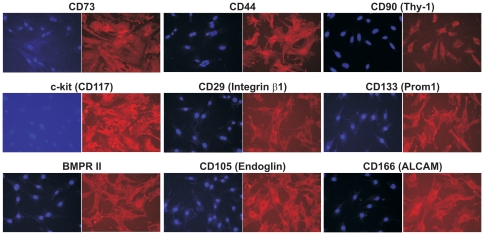
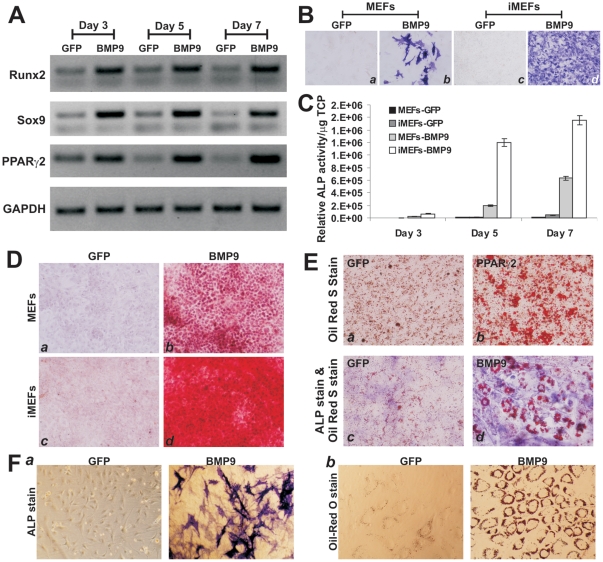
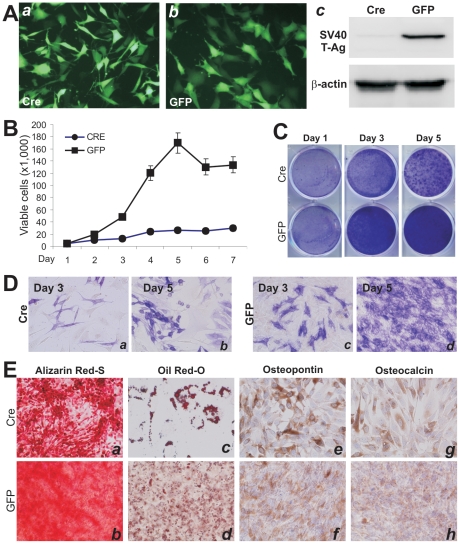
Mesenchymal stem cells (MSCs) are multipotent cells which reside in many tissues and can give rise to multiple lineages including bone, cartilage and adipose. Although MSCs have attracted significant attention for basic and translational research, primary MSCs have limited life span in culture which hampers MSCs' broader applications. Here, we investigate if mouse mesenchymal progenitors can be conditionally immortalized with SV40 large T antigen and maintain long-term cell proliferation without compromising their multipotency. Using the system which expresses SV40 large T antigen flanked with Cre/loxP sites, we demonstrate that mouse embryonic fibroblasts (MEFs) can be efficiently immortalized by SV40 large T antigen. The conditionally immortalized MEFs (iMEFs) exhibit an enhanced proliferative activity and maintain long-term cell proliferation, which can be reversed by Cre recombinase. The iMEFs express most MSC markers and retain multipotency as they can differentiate into osteogenic, chondrogenic and adipogenic lineages under appropriate differentiation conditions in vitro and in vivo. The removal of SV40 large T reduces the differentiation potential of iMEFs possibly due to the decreased progenitor expansion. Furthermore, the iMEFs are apparently not tumorigenic when they are subcutaneously injected into athymic nude mice. Thus, the conditionally immortalized iMEFs not only maintain long-term cell proliferation but also retain the ability to differentiate into multiple lineages. Our results suggest that the reversible immortalization strategy using SV40 large T antigen may be an efficient and safe approach to establishing long-term cell culture of primary mesenchymal progenitors for basic and translational research, as well as for potential clinical applications.
间充质干细胞(MSCs)是多能细胞,存在于许多组织中,可以产生包括骨、软骨和脂肪在内的多种谱系。尽管间充质干细胞因其基础和转化研究而受到广泛关注,但原代 MSCs 在培养中的寿命有限,这限制了它们的更广泛应用。在这里,我们研究了是否可以使用 SV40 大 T 抗原对鼠间充质祖细胞进行条件性永生化,同时保持长期细胞增殖而不损害其多能性。使用表达 SV40 大 T 抗原的系统,其侧翼带有 Cre/loxP 位点,我们证明 SV40 大 T 抗原可以有效地永生化鼠胚胎成纤维细胞(MEFs)。条件性永生化的 MEFs(iMEFs)表现出增强的增殖活性并保持长期细胞增殖,这可以通过 Cre 重组酶逆转。iMEFs 表达大多数 MSC 标志物,并保持多能性,因为它们可以在体外和体内适当的分化条件下分化为成骨、软骨和成脂谱系。SV40 大 T 的去除可能会降低 iMEFs 的分化潜能,因为祖细胞的扩增减少。此外,当将 iMEFs 皮下注射到无胸腺裸鼠中时,它们显然没有致瘤性。因此,条件性永生化的 iMEFs 不仅可以保持长期细胞增殖,而且还可以保持分化为多个谱系的能力。我们的结果表明,使用 SV40 大 T 抗原的可逆永生化策略可能是一种有效且安全的方法,可用于建立基础和转化研究以及潜在临床应用的原代间充质祖细胞的长期细胞培养。