G3 (Bethesda). 2011 Dec;1(7):627-35. doi: 10.1534/g3.111.000976. Epub 2011 Dec 1.
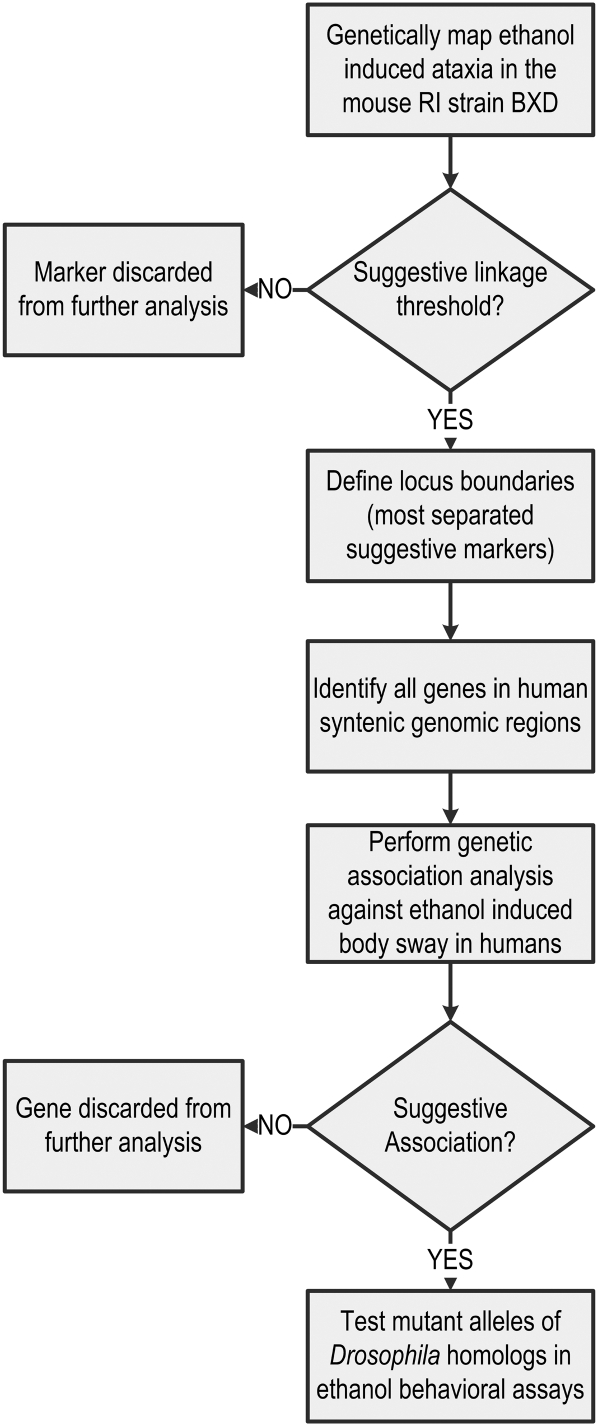
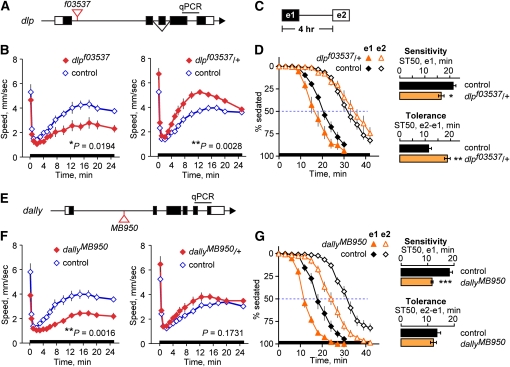
Alcohol use disorders are influenced by many interacting genetic and environmental factors. Highlighting this complexity is the observation that large genome-wide association experiments have implicated many genes with weak statistical support. Experimental model systems, cell culture and animal, have identified many genes and pathways involved in ethanol response, but their applicability to the development of alcohol use disorders in humans is undetermined. To overcome the limitations of any single experimental system, the analytical strategy used here was to identify genes that exert common phenotypic effects across multiple experimental systems. Specifically, we (1) performed a mouse linkage analysis to identify quantitative trait loci that influence ethanol-induced ataxia; (2) performed a human genetic association analysis of the mouse-identified loci against ethanol-induced body sway, a phenotype that is not only comparable to the mouse ethanol-ataxia phenotype but is also a genetically influenced endophenotype of alcohol use disorders; (3) performed behavioral genetic experiments in Drosophila showing that fly homologs of GPC5, the member of the glypican gene family implicated by both the human and mouse genetic analyses, influence the fly's response to ethanol; and (4) discovered data from the literature demonstrating that the genetically implicated gene's expression is not only temporally and spatially consistent with involvement in ethanol-induced behaviors but is also modulated by ethanol. The convergence of these data provides strong support to the hypothesis that GPC5 is involved in cellular and organismal ethanol response and the etiology of alcohol use disorders in humans.
酒精使用障碍受许多相互作用的遗传和环境因素影响。突出这种复杂性的是观察到,大型全基因组关联实验已经暗示了许多具有弱统计支持的基因。实验模型系统,包括细胞培养和动物,已经确定了许多参与乙醇反应的基因和途径,但它们在人类酒精使用障碍的发展中的适用性尚不确定。为了克服任何单一实验系统的限制,这里使用的分析策略是确定对多个实验系统产生共同表型效应的基因。具体来说,我们 (1) 进行了小鼠连锁分析,以确定影响乙醇诱导共济失调的数量性状基因座;(2) 对小鼠鉴定的基因座进行了人类遗传关联分析,以对抗乙醇诱导的身体摆动,这种表型不仅与小鼠乙醇共济失调表型相当,而且也是酒精使用障碍的遗传影响内表型;(3) 在果蝇中进行了行为遗传学实验,表明果蝇同源物 GPC5(glypican 基因家族的成员,同时被人类和小鼠遗传分析所涉及)影响果蝇对乙醇的反应;和 (4) 发现了文献中的数据,证明遗传上涉及的基因的表达不仅在时间和空间上与参与乙醇诱导的行为一致,而且还受到乙醇的调节。这些数据的收敛为 GPC5 参与细胞和机体乙醇反应以及人类酒精使用障碍的病因提供了强有力的支持。