Department of Primary and Community Care, Radboud University Nijmegen Medical Center, PO Box 9101 6500HB Nijmegen, The Netherlands.
BMJ. 2012 Mar 2;344:e615. doi: 10.1136/bmj.e615.
To determine the relative costs, effects, and cost effectiveness of selected interventions to control cataract, trachoma, refractive error, hearing loss, meningitis and chronic otitis media.
Cost effectiveness analysis of or combined strategies for controlling vision and hearing loss by means of a lifetime population model.
Two World Health Organization sub-regions of the world where vision and hearing loss are major burdens: sub-Saharan Africa and South East Asia.
Biological and behavioural parameters from clinical and observational studies and population based surveys. Intervention effects and resource inputs based on published reports, expert opinion, and the WHO-CHOICE database.
Cost per disability adjusted life year (DALY) averted, expressed in international dollars ($Int) for the year 2005.
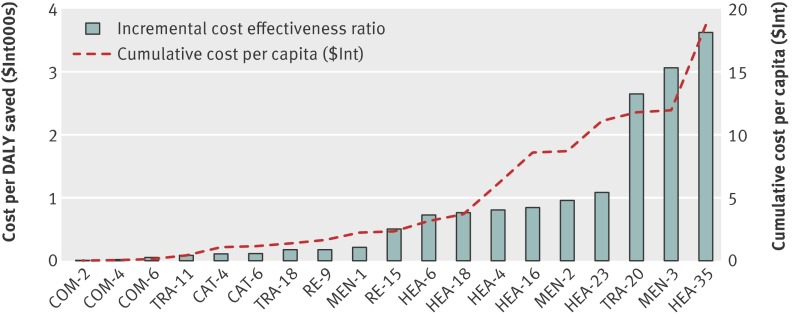
Treatment of chronic otitis media, extracapsular cataract surgery, trichiasis surgery, treatment for meningitis, and annual screening of schoolchildren for refractive error are among the most cost effective interventions to control hearing and vision impairment, with the cost per DALY averted <$Int285 in both regions. Screening of both schoolchildren (annually) and adults (every five years) for hearing loss costs around $Int1000 per DALY averted. These interventions can be considered highly cost effective. Mass treatment with azithromycin to control trachoma can be considered cost effective in the African but not the South East Asian sub-region.
Vision and hearing impairment control interventions are generally cost effective. To decide whether substantial investments in these interventions is warranted, this finding should be considered in relation to the economic attractiveness of other, existing or new, interventions in health.
确定控制白内障、沙眼、屈光不正、听力损失、脑膜炎和慢性中耳炎的几种干预措施的相对成本、效果和成本效益。
通过终生人口模型对控制视力和听力损失的综合策略进行成本效益分析。
世界卫生组织两个视力和听力损失负担沉重的次区域:撒哈拉以南非洲和东南亚。
临床和观察研究以及基于人群的调查中的生物学和行为参数。干预效果和资源投入基于已发表的报告、专家意见和世卫组织 CHOICE 数据库。
每避免一个残疾调整生命年(DALY)的成本,以 2005 年的国际元($Int)表示。
治疗慢性中耳炎、囊外白内障手术、倒睫手术、脑膜炎治疗以及对学龄儿童进行年度屈光不正筛查是控制听力和视力障碍最具成本效益的干预措施之一,在两个地区,每避免一个 DALY 的成本均低于$Int285。对学龄儿童(每年)和成人(每五年)进行听力损失筛查,每避免一个 DALY 的成本约为$Int1000。这些干预措施可被认为具有高度成本效益。在非洲,大规模使用阿奇霉素治疗沙眼可被认为具有成本效益,但在东南亚次区域则不然。
视力和听力障碍控制干预措施通常具有成本效益。为了确定对这些干预措施进行大量投资是否合理,应根据其他现有或新的卫生干预措施在经济上的吸引力,将这一发现与这些干预措施的经济吸引力结合起来考虑。