Department of Microbiology and Immunology, The University of Texas Medical Branch, Galveston, Texas, USA.
PLoS Negl Trop Dis. 2012;6(2):e1529. doi: 10.1371/journal.pntd.0001529. Epub 2012 Feb 28.
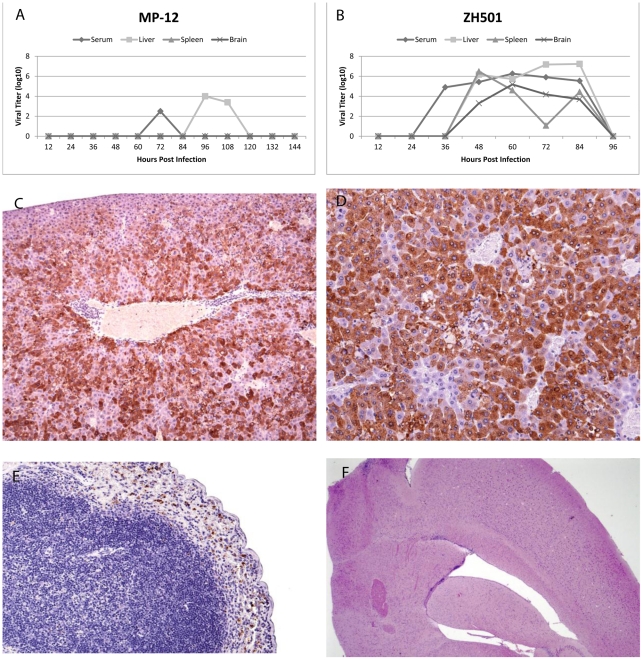
Rift Valley fever virus (RVFV) is a major human and animal pathogen associated with severe disease including hemorrhagic fever or encephalitis. RVFV is endemic to parts of Africa and the Arabian Peninsula, but there is significant concern regarding its introduction into non-endemic regions and the potentially devastating effect to livestock populations with concurrent infections of humans. To date, there is little detailed data directly comparing the host response to infection with wild-type or vaccine strains of RVFV and correlation with viral pathogenesis. Here we characterized clinical and systemic immune responses to infection with wild-type strain ZH501 or IND vaccine strain MP-12 in the C57BL/6 mouse. Animals infected with live-attenuated MP-12 survived productive viral infection with little evidence of clinical disease and minimal cytokine response in evaluated tissues. In contrast, ZH501 infection was lethal, caused depletion of lymphocytes and platelets and elicited a strong, systemic cytokine response which correlated with high virus titers and significant tissue pathology. Lymphopenia and platelet depletion were indicators of disease onset with indications of lymphocyte recovery correlating with increases in G-CSF production. RVFV is hepatotropic and in these studies significant clinical and histological data supported these findings; however, significant evidence of a pro-inflammatory response in the liver was not apparent. Rather, viral infection resulted in a chemokine response indicating infiltration of immunoreactive cells, such as neutrophils, which was supported by histological data. In brains of ZH501 infected mice, a significant chemokine and pro-inflammatory cytokine response was evident, but with little pathology indicating meningoencephalitis. These data suggest that RVFV pathogenesis in mice is associated with a loss of liver function due to liver necrosis and hepatitis yet the long-term course of disease for those that might survive the initial hepatitis is neurologic in nature which is supported by observations of human disease and the BALB/c mouse model.
裂谷热病毒(RVFV)是一种主要的人畜共患病病原体,与严重疾病有关,包括出血热或脑炎。RVFV在非洲和阿拉伯半岛的部分地区流行,但人们非常担心它会传播到非流行地区,以及对同时感染人类的牲畜种群造成潜在的破坏性影响。迄今为止,关于野生型或疫苗株 RVFV 感染的宿主反应及其与病毒发病机制的相关性,直接比较的详细数据很少。在这里,我们描述了 C57BL/6 小鼠感染野生型 ZH501 株或 IND 疫苗株 MP-12 的临床和系统免疫反应。感染减毒活疫苗 MP-12 的动物能够成功感染病毒,但几乎没有临床疾病的证据,且评估组织中的细胞因子反应也很小。相比之下,ZH501 感染是致命的,导致淋巴细胞和血小板耗竭,并引发强烈的全身性细胞因子反应,这与高病毒滴度和显著的组织病理学相关。淋巴细胞减少和血小板减少是疾病发作的指标,并且淋巴细胞恢复的迹象与 G-CSF 产生的增加相关。RVFV 具有嗜肝性,在这些研究中,显著的临床和组织学数据支持这些发现;然而,肝脏中明显的促炎反应并不明显。相反,病毒感染导致趋化因子反应,表明免疫反应细胞(如中性粒细胞)的浸润,这得到了组织学数据的支持。在 ZH501 感染的小鼠大脑中,明显的趋化因子和促炎细胞因子反应是明显的,但几乎没有病理学表明脑膜脑炎。这些数据表明,RVFV 在小鼠中的发病机制与肝脏坏死和肝炎导致的肝功能丧失有关,但那些可能从初始肝炎中幸存下来的疾病的长期病程是神经源性的,这得到了人类疾病和 BALB/c 小鼠模型的观察结果的支持。