Seattle Children’s Research Institute. University of Washington, Seattle, WA, USA.
Sci Rep. 2012;2:295. doi: 10.1038/srep00295. Epub 2012 Mar 2.
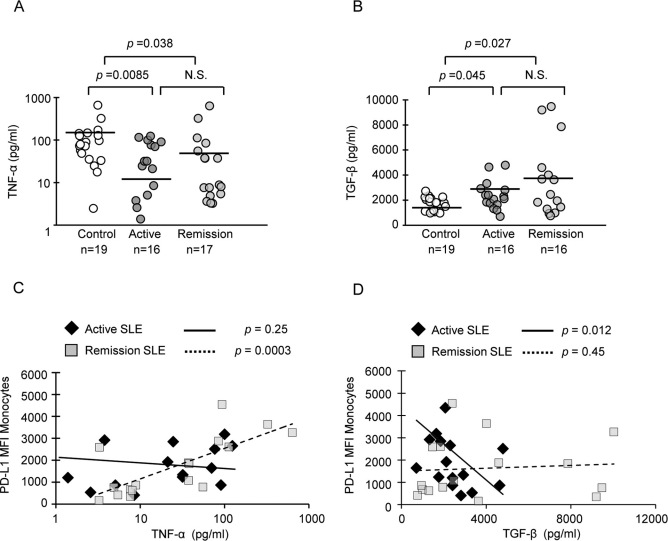
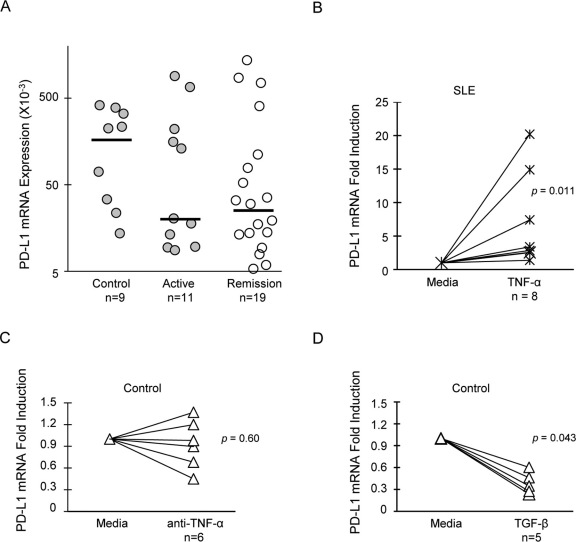
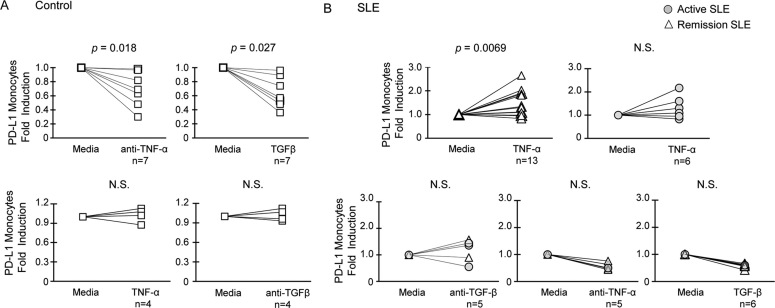
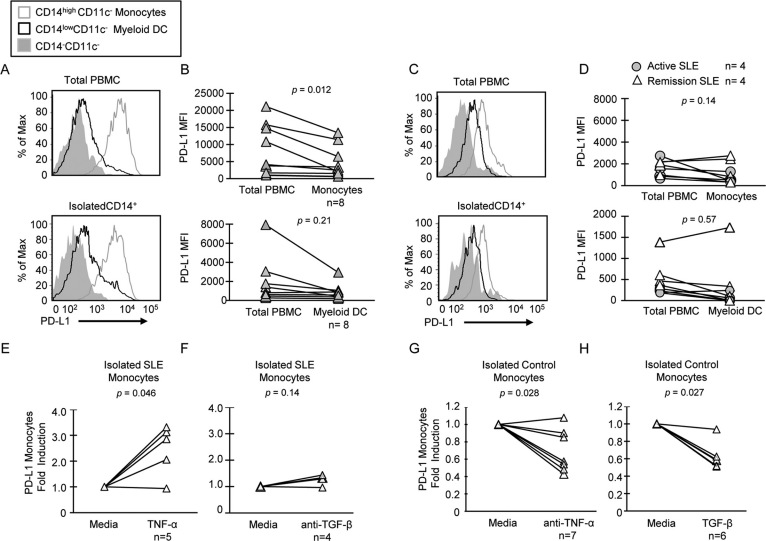
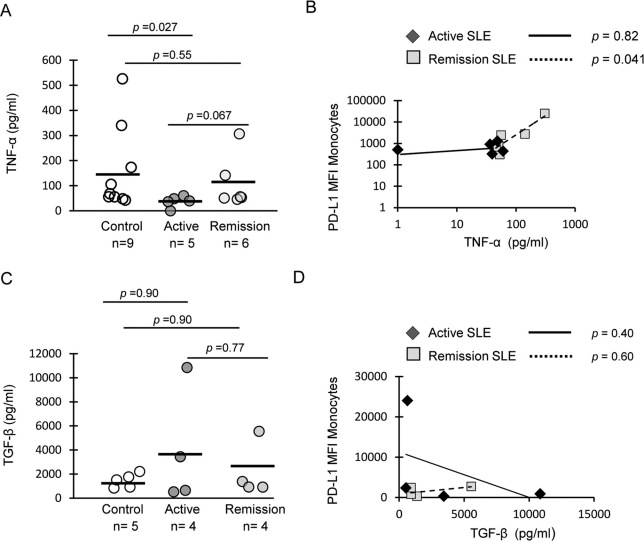
Monocytes in patients with systemic lupus erythematosus (SLE) are hyperstimulatory for T lymphocytes. We previously found that the normal program for expression of a negative costimulatory molecule programmed death ligand-1 (PD-L1) is defective in SLE patients with active disease. Here, we investigated the mechanism for PD-L1 dysregulation on lupus monocytes. We found that PD-L1 expression on cultured SLE monocytes correlated with TNF-α expression. Exogenous TNF-α restored PD-L1 expression on lupus monocytes. Conversely, TGF-β inversely correlated with PD-L1 in SLE and suppressed expression of PD-L1 on healthy monocytes. Therefore, PD-L1 expression in monocytes is regulated by opposing actions of TNF-α and TGF-β. As PD-L1 functions to fine tune lymphocyte activation, dysregulation of cytokines resulting in reduced expression could lead to loss of peripheral T cell tolerance.
系统性红斑狼疮(SLE)患者的单核细胞对 T 淋巴细胞具有超刺激性。我们之前发现,在处于活动期的 SLE 患者中,程序性死亡配体 1(PD-L1)这一负性共刺激分子的正常表达程序存在缺陷。在此,我们研究了狼疮单核细胞中 PD-L1 失调的机制。我们发现,培养的 SLE 单核细胞上的 PD-L1 表达与 TNF-α 表达相关。外源性 TNF-α 可恢复狼疮单核细胞上的 PD-L1 表达。相反,TGF-β 在 SLE 中与 PD-L1 呈负相关,并抑制健康单核细胞上 PD-L1 的表达。因此,单核细胞上的 PD-L1 表达受 TNF-α和 TGF-β 的拮抗作用调节。由于 PD-L1 可调节淋巴细胞的激活,细胞因子失调导致其表达减少可能导致外周 T 细胞耐受丧失。