Department of Life Sciences, and Agricultural Biotechnology Center, National Chung Hsing University, Taichung, Taiwan.
PLoS One. 2012;7(2):e32812. doi: 10.1371/journal.pone.0032812. Epub 2012 Feb 29.
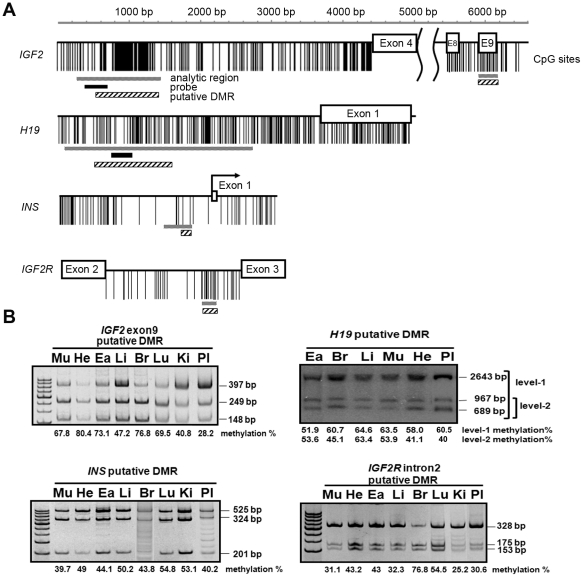
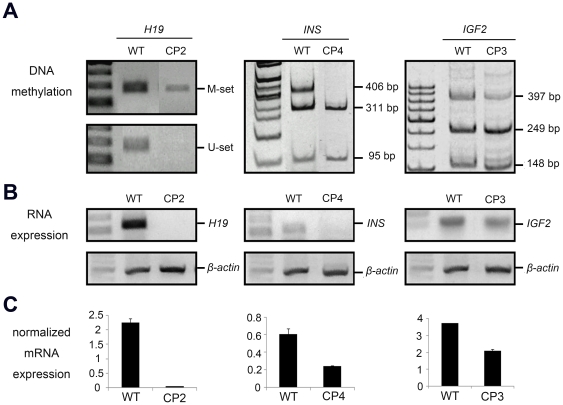
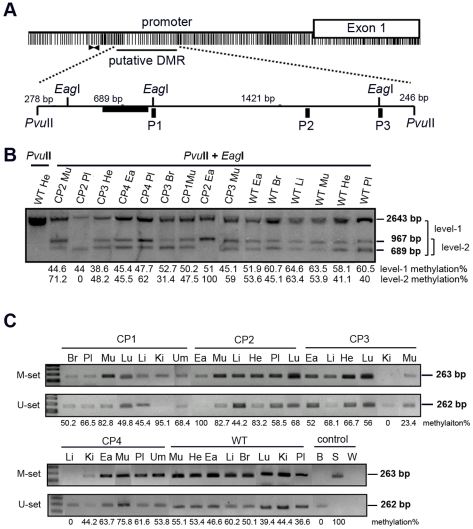
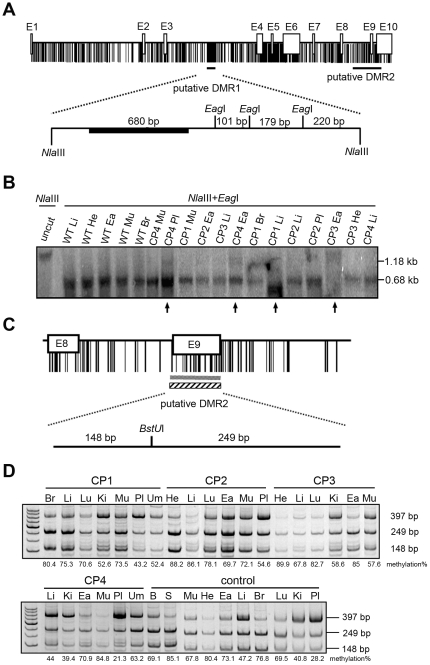
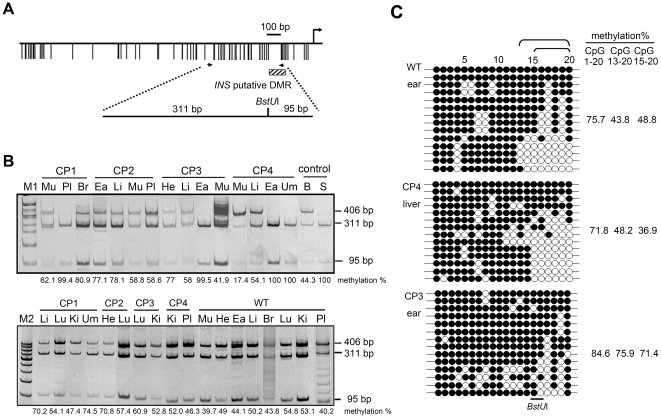
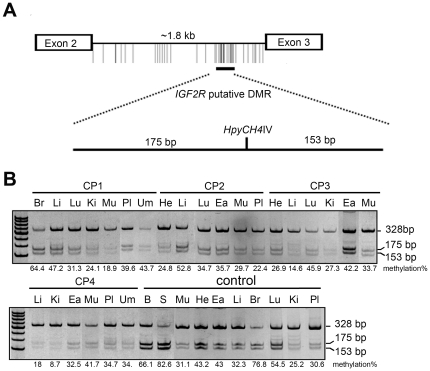
DNA methylation is a major epigenetic modification in the mammalian genome that regulates crucial aspects of gene function. Mammalian cloning by somatic cell nuclear transfer (SCNT) often results in gestational or neonatal failure with only a small proportion of manipulated embryos producing live births. Many of the embryos that survive to term later succumb to a variety of abnormalities that are likely due to inappropriate epigenetic reprogramming. Aberrant methylation patterns of imprinted genes in cloned cattle and mice have been elucidated, but few reports have analyzed the cloned pig genome. Four surviving cloned sows that were created by ear fibroblast nuclear transfer, each with a different life span and multiple organ defects, such as heart defects and bone growth delay, were used as epigenetic study materials. First, we identified four putative differential methylation regions (DMR) of imprinted genes in the wild-type pig genome, including two maternally imprinted loci (INS and IGF2) and two paternally imprinted loci (H19 and IGF2R). Aberrant DNA methylation, either hypermethylation or hypomethylation, commonly appeared in H19 (45% of imprinted loci hypermethylated vs. 30% hypomethylated), IGF2 (40% vs. 0%), INS (50% vs. 5%), and IGF2R (15% vs. 45%) in multiple tissues from these four cloned sows compared with wild-type pigs. Our data suggest that aberrant epigenetic modifications occur frequently in the genome of cloned swine. Even with successful production of cloned swine that avoid prenatal or postnatal death, the perturbation of methylation in imprinted genes still exists, which may be one of reason for their adult pathologies and short life. Understanding the aberrant pattern of gene imprinting would permit improvements in future cloning techniques.
DNA 甲基化是哺乳动物基因组中的一种主要表观遗传修饰,调节基因功能的关键方面。通过体细胞核移植(SCNT)进行哺乳动物克隆常常导致妊娠或新生儿失败,只有一小部分操作的胚胎产生活产。许多存活到足月的胚胎后来死于各种异常,这可能是由于表观遗传重新编程不当。已阐明克隆牛和小鼠中印迹基因的异常甲基化模式,但很少有报道分析克隆猪的基因组。使用 4 头通过耳成纤维细胞核转移创建的存活克隆母猪作为表观遗传研究材料,每头母猪的寿命和多个器官缺陷不同,如心脏缺陷和骨骼生长延迟。首先,我们在野生型猪基因组中鉴定了四个印迹基因的假定差异甲基化区域(DMR),包括两个母源印迹基因(INS 和 IGF2)和两个父源印迹基因(H19 和 IGF2R)。在这些 4 头克隆母猪的多个组织中,H19(45%的印迹基因过度甲基化与 30%的低甲基化)、IGF2(40%与 0%)、INS(50%与 5%)和 IGF2R(15%与 45%)中经常出现异常的 DNA 甲基化,与野生型猪相比。我们的数据表明,异常的表观遗传修饰在克隆猪的基因组中经常发生。即使成功生产出避免产前或产后死亡的克隆猪,印迹基因中甲基化的扰动仍然存在,这可能是它们成年后出现病理学和寿命较短的原因之一。了解基因印迹的异常模式将允许对未来的克隆技术进行改进。