Department of Pediatrics, Emory University School of Medicine, Atlanta, GA, USA.
Science. 2012 Mar 9;335(6073):1188-93. doi: 10.1126/science.1217550.
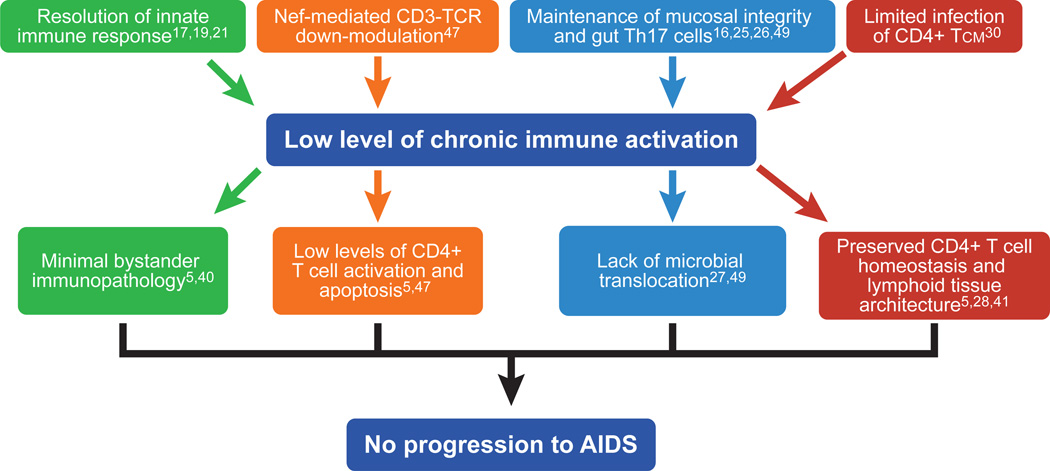
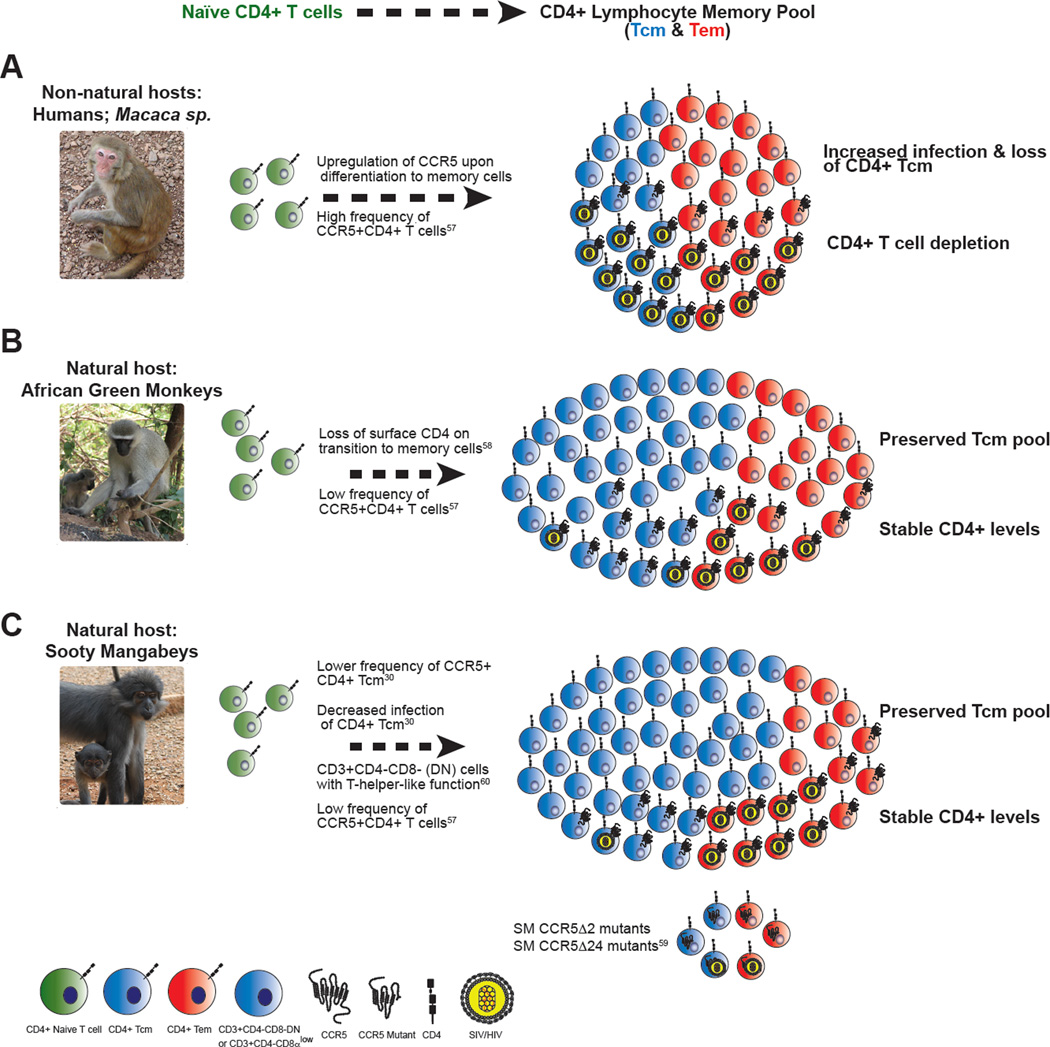
Many species of African nonhuman primates are naturally infected with simian immunodeficiency viruses (SIVs) in the wild and in captivity. In contrast to HIV-infected humans, these natural SIV hosts typically do not develop AIDS, despite chronic infection with a highly replicating virus. In this Review, we discuss the most recent advances on the mechanisms of protection from disease progression in natural SIV hosts, with emphasis on how they differ from pathogenic HIV/SIV infections of humans and rhesus macaques. These mechanisms include: (i) resolution of immune activation after acute infection, (ii) restricted pattern of target cell infection, and (iii) protection from mother-to-infant transmission. We highlight the areas that should be pursued in future studies, focusing on potential applications for the treatment and prevention of HIV infection.
许多非洲非人灵长类动物在野外和圈养环境中自然感染猴免疫缺陷病毒(SIV)。与感染 HIV 的人类不同,这些天然 SIV 宿主通常不会发展为艾滋病,尽管它们持续感染具有高度复制能力的病毒。在这篇综述中,我们讨论了自然 SIV 宿主中防止疾病进展的机制的最新进展,重点讨论了它们与人类和恒河猴的致病性 HIV/SIV 感染有何不同。这些机制包括:(i)急性感染后免疫激活的解决,(ii)靶细胞感染模式受限,以及(iii)防止母婴传播。我们强调了未来研究中应关注的领域,重点关注 HIV 感染治疗和预防的潜在应用。