Colon Cancer Genetics Group and Academic Coloproctology, Institute of Genetics and Molecular Medicine, University of Edinburgh and Medical Research Council Human Genetics Unit, Western General Hospital Edinburgh, United Kingdom.
Gastroenterology. 2012 Jun;142(7):1504-15.e3. doi: 10.1053/j.gastro.2012.02.050. Epub 2012 Mar 6.
BACKGROUND & AIMS: Aspirin reduces the incidence of and mortality from colorectal cancer (CRC) by unknown mechanisms. Cancer cells have defects in signaling via the mechanistic target of rapamycin (mTOR), which regulates proliferation. We investigated whether aspirin affects adenosine monophosphate-activated protein kinase (AMPK) and mTOR signaling in CRC cells.
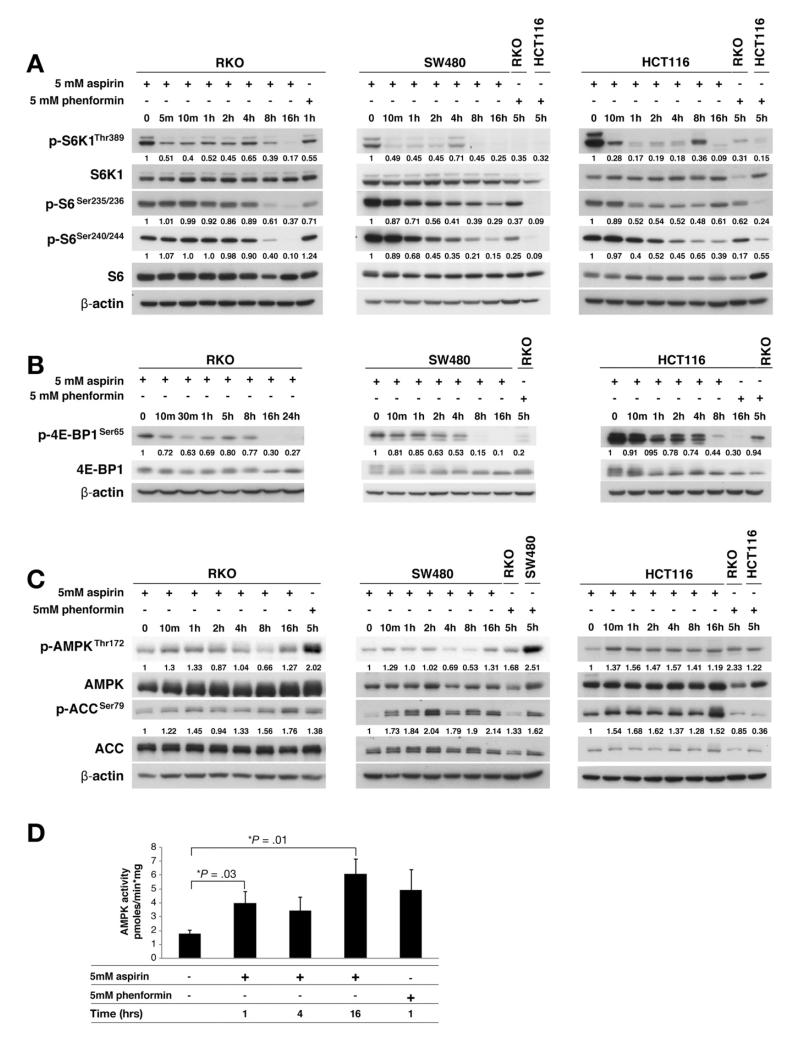
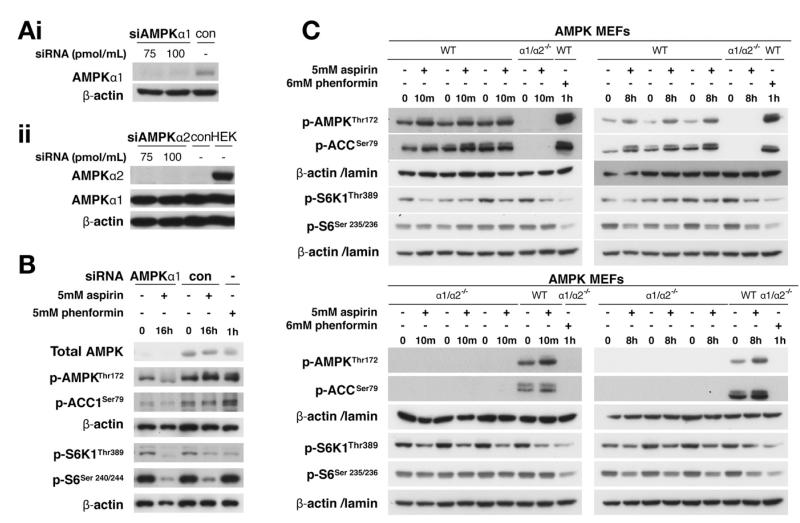
The effects of aspirin on mTOR signaling, the ribosomal protein S6, S6 kinase 1 (S6K1), and eukaryotic translation initiation factor 4E binding protein 1 (4E-BP1) were examined in CRC cells by immunoblotting. Phosphorylation of AMPK was measured; the effects of loss of AMPKα on the aspirin-induced effects of mTOR were determined using small interfering RNA (siRNA) in CRC cells and in AMPK(α1/α2-/-) mouse embryonic fibroblasts. LC3 and ULK1 were used as markers of autophagy. We analyzed rectal mucosa samples from patients given 600 mg aspirin, once daily for 1 week.
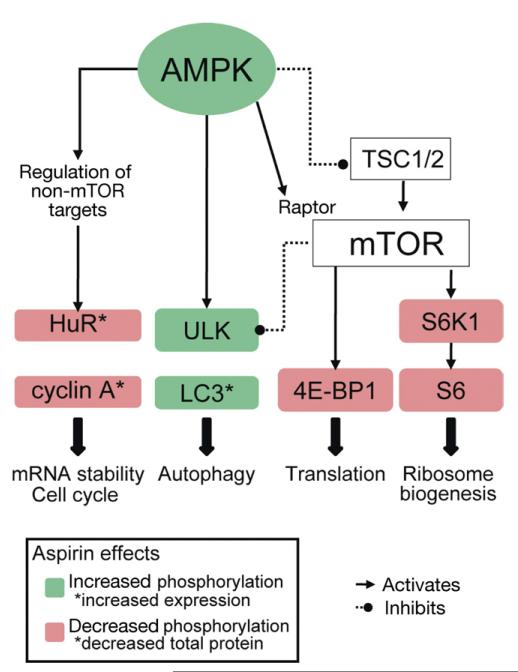
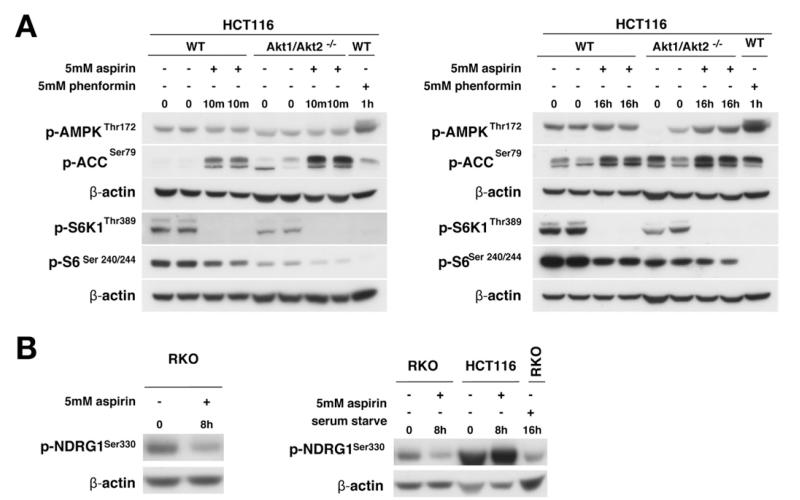
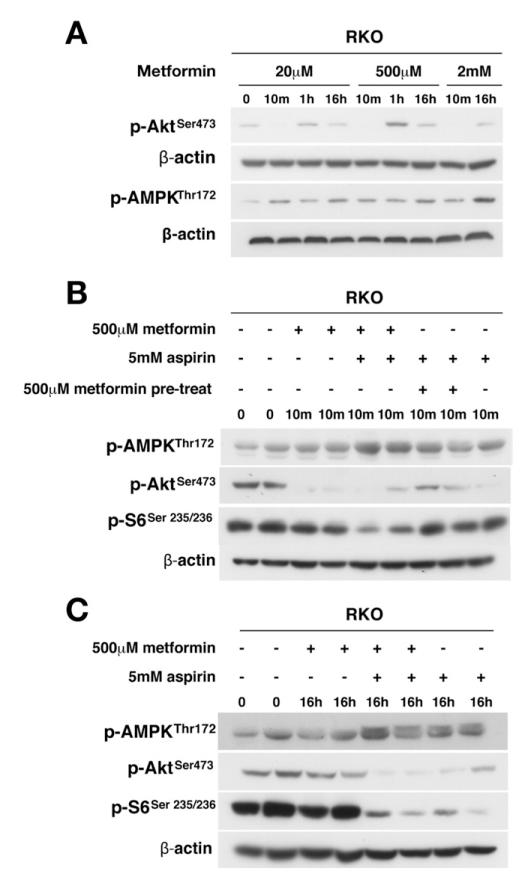
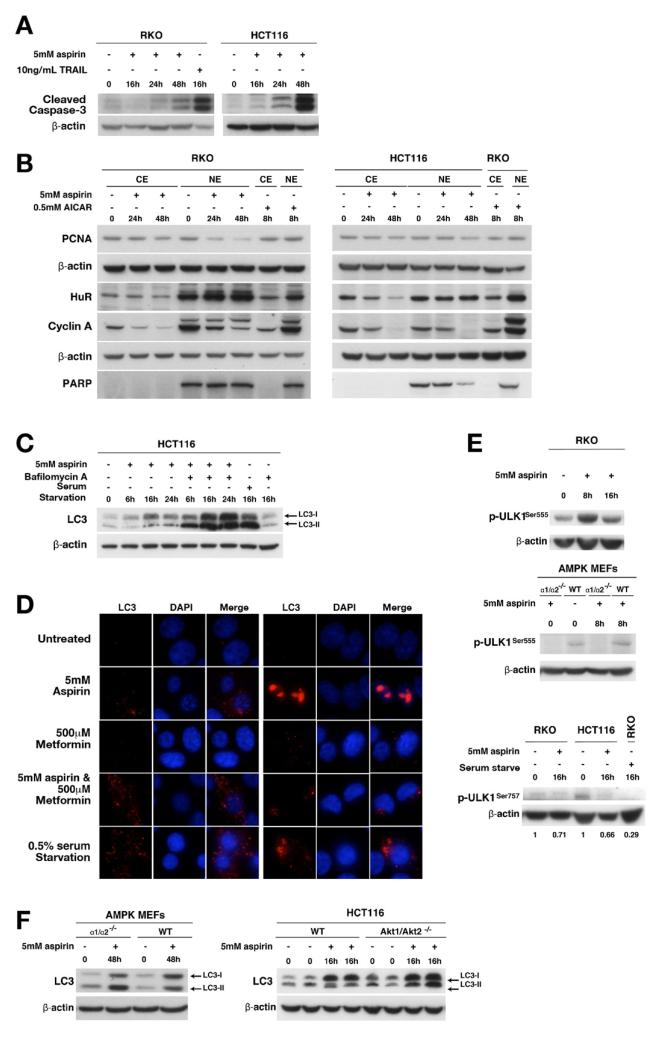
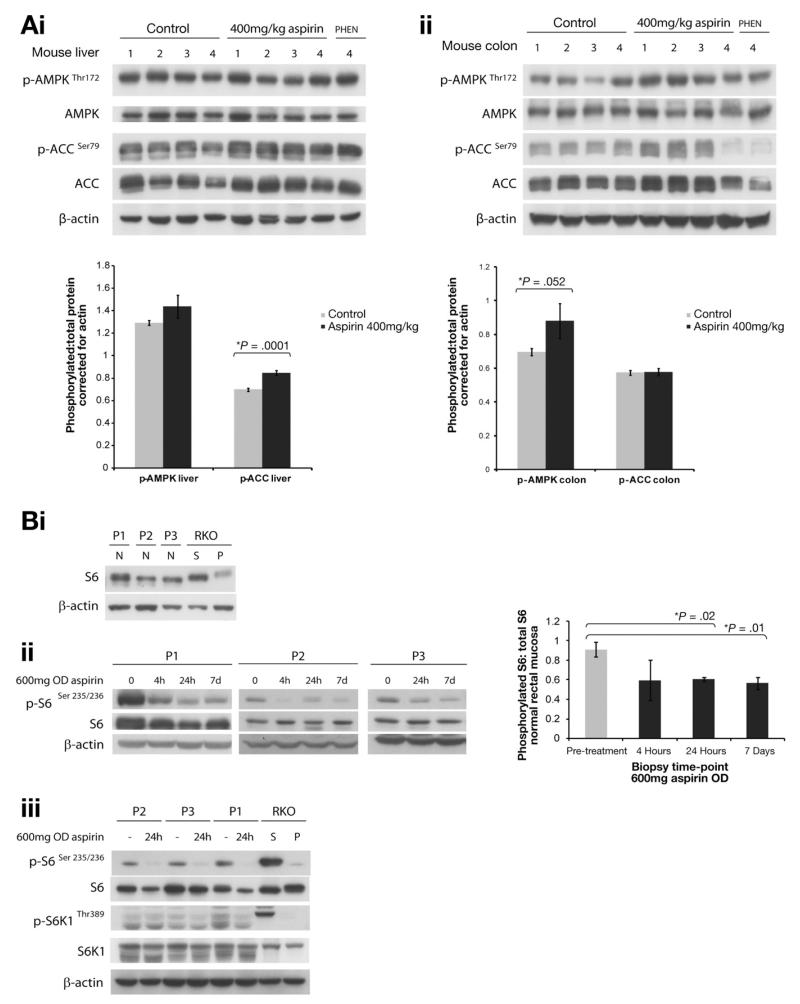
Aspirin reduced mTOR signaling in CRC cells by inhibiting the mTOR effectors S6K1 and 4E-BP1. Aspirin changed nucleotide ratios and activated AMPK in CRC cells. mTOR was still inhibited by aspirin in CRC cells after siRNA knockdown of AMPKα, indicating AMPK-dependent and AMPK-independent mechanisms of aspirin-induced inhibition of mTOR. Aspirin induced autophagy, a feature of mTOR inhibition. Aspirin and metformin (an activator of AMPK) increased inhibition of mTOR and Akt, as well as autophagy in CRC cells. Rectal mucosal samples from patients given aspirin had reduced phosphorylation of S6K1 and S6.
Aspirin is an inhibitor of mTOR and an activator of AMPK, targeting regulators of intracellular energy homeostasis and metabolism. These could contribute to its protective effects against development of CRC.
阿司匹林通过未知机制降低结直肠癌(CRC)的发病率和死亡率。癌细胞在雷帕霉素(mTOR)的机械靶标信号传导中存在缺陷,该信号传导调节增殖。我们研究了阿司匹林是否会影响 CRC 细胞中的腺苷单磷酸激活蛋白激酶(AMPK)和 mTOR 信号。
通过免疫印迹法检测阿司匹林对 CRC 细胞中 mTOR 信号、核糖体蛋白 S6、S6 激酶 1(S6K1)和真核翻译起始因子 4E 结合蛋白 1(4E-BP1)的影响。测量 AMPK 的磷酸化;使用 CRC 细胞和 AMPK(α1/α2-/-)小鼠胚胎成纤维细胞中的小干扰 RNA(siRNA)确定 AMPKα 缺失对阿司匹林诱导的 mTOR 作用的影响。LC3 和 ULK1 用作自噬的标志物。我们分析了给予 600mg 阿司匹林,每日一次,连续 1 周的患者的直肠粘膜样本。
阿司匹林通过抑制 mTOR 效应物 S6K1 和 4E-BP1 来减少 CRC 细胞中的 mTOR 信号。阿司匹林改变核苷酸比并激活 CRC 细胞中的 AMPK。在 AMPKα 的 siRNA 敲低后,阿司匹林仍能抑制 CRC 细胞中的 mTOR,表明阿司匹林诱导的 mTOR 抑制存在 AMPK 依赖和非依赖机制。阿司匹林诱导自噬,这是 mTOR 抑制的特征。阿司匹林和二甲双胍(AMPK 的激活剂)增加了 CRC 细胞中 mTOR 和 Akt 的抑制以及自噬。给予阿司匹林的患者的直肠粘膜样本中 S6K1 和 S6 的磷酸化减少。
阿司匹林是 mTOR 的抑制剂和 AMPK 的激活剂,靶向细胞内能量稳态和代谢的调节剂。这些可能有助于其预防 CRC 发展的保护作用。