Howard Hughes Medical Institute, Department of Biology, Stanford University, Stanford, California, USA.
Nat Methods. 2012 Mar 11;9(4):391-5. doi: 10.1038/nmeth.1929.
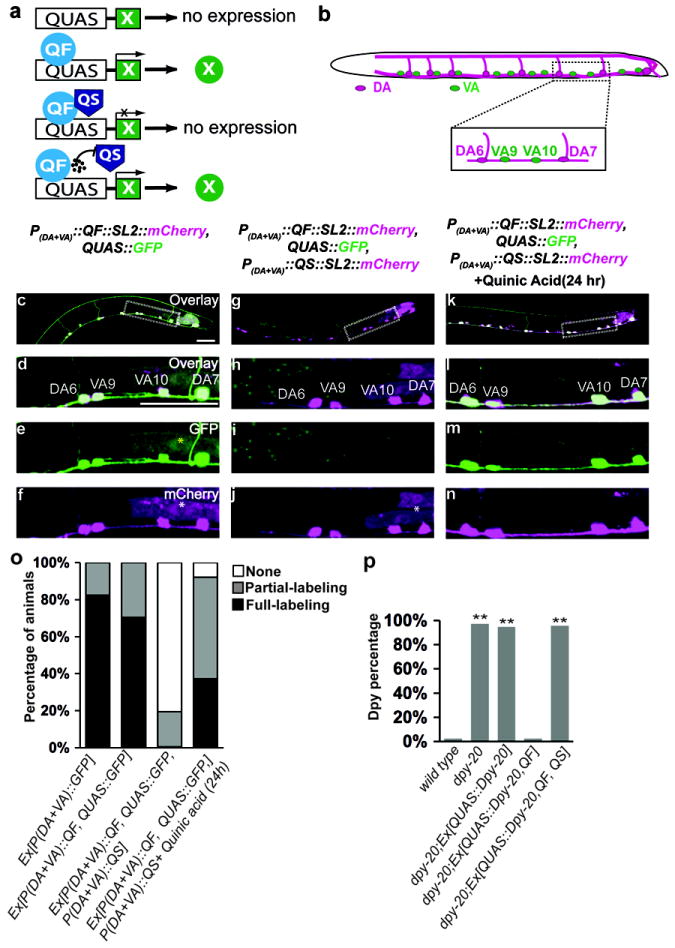
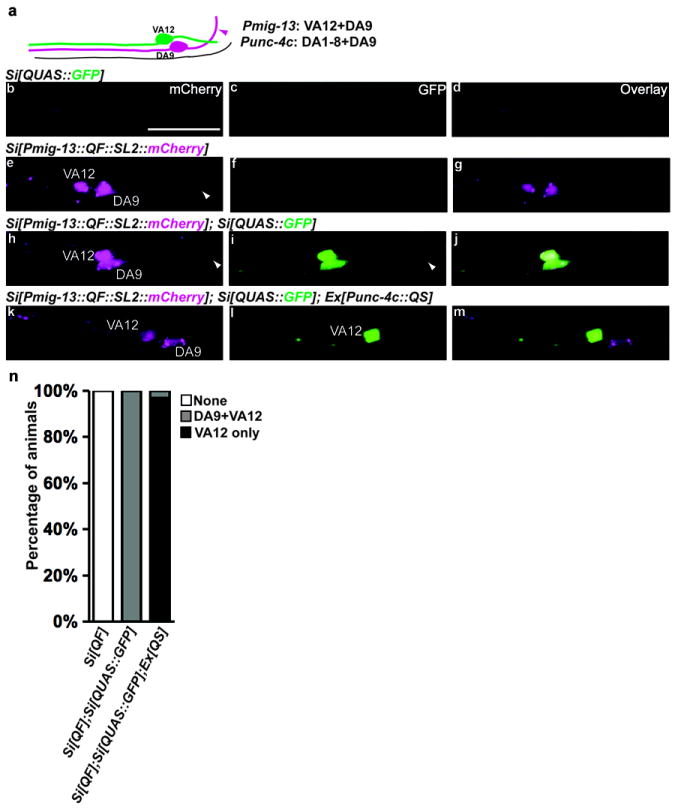
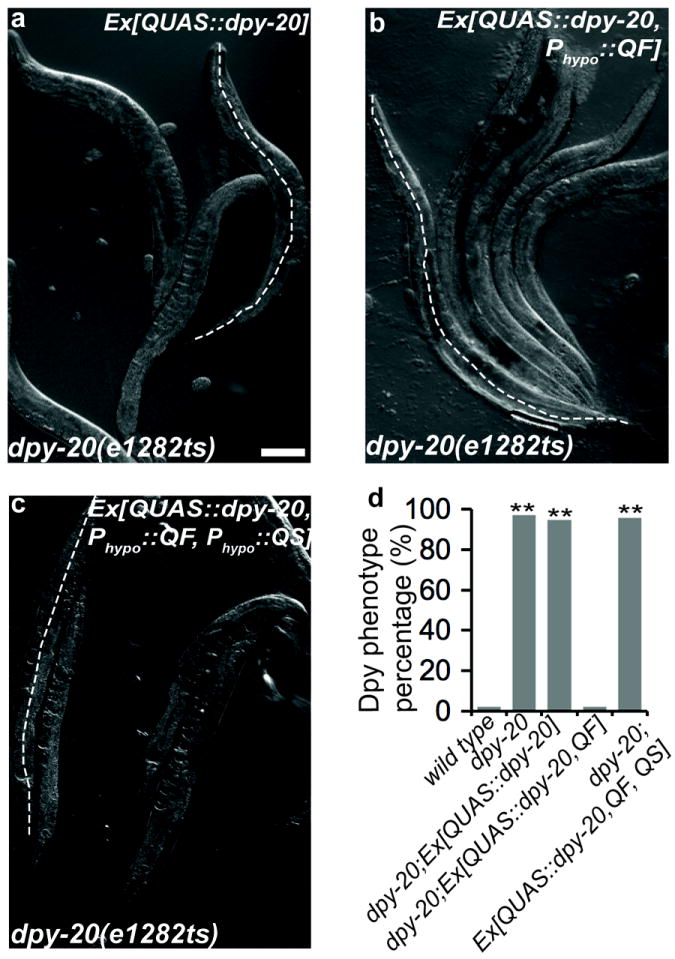
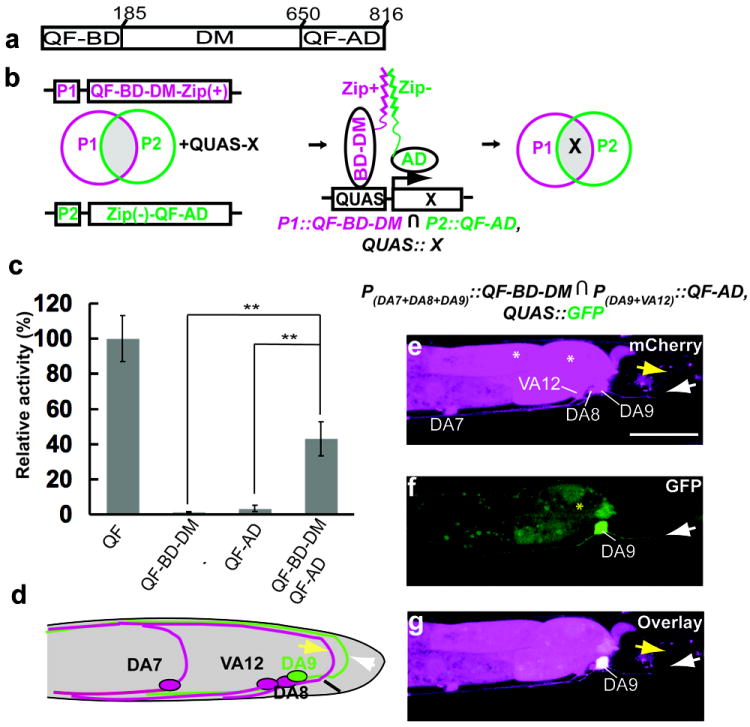
We established a transcription-based binary gene expression system in Caenorhabditis elegans using the recently developed Q system. This system, derived from genes in Neurospora crassa, uses the transcriptional activator QF to induce the expression of target genes. Activation can be efficiently suppressed by the transcriptional repressor QS, and suppression can be relieved by the nontoxic small molecule quinic acid. We used QF, QS and quinic acid to achieve temporal and spatial control of transgene expression in various tissues in C. elegans. We also developed a split Q system, in which we separated QF into two parts encoding its DNA-binding and transcription-activation domains. Each domain showed negligible transcriptional activity when expressed alone, but expression of both reconstituted QF activity, providing additional combinatorial power to control gene expression.
我们利用最近开发的 Q 系统在秀丽隐杆线虫中建立了基于转录的二元基因表达系统。该系统源自粗糙脉孢菌中的基因,使用转录激活子 QF 诱导靶基因的表达。转录抑制剂 QS 可有效地抑制激活,而无毒的小分子奎尼酸可解除抑制。我们使用 QF、QS 和奎尼酸在秀丽隐杆线虫的各种组织中实现了转基因表达的时空控制。我们还开发了一个分裂 Q 系统,其中我们将 QF 分成两个部分,分别编码其 DNA 结合和转录激活结构域。当单独表达时,每个结构域的转录活性都很小,但表达两者重新构成了 QF 的活性,为控制基因表达提供了额外的组合能力。