Department of Biochemistry and Ion Channel Research Unit, Duke University Medical Center, 2 Genome Court, Durham, North Carolina 27710, USA.
Nature. 2012 Mar 11;483(7390):489-93. doi: 10.1038/nature10882.
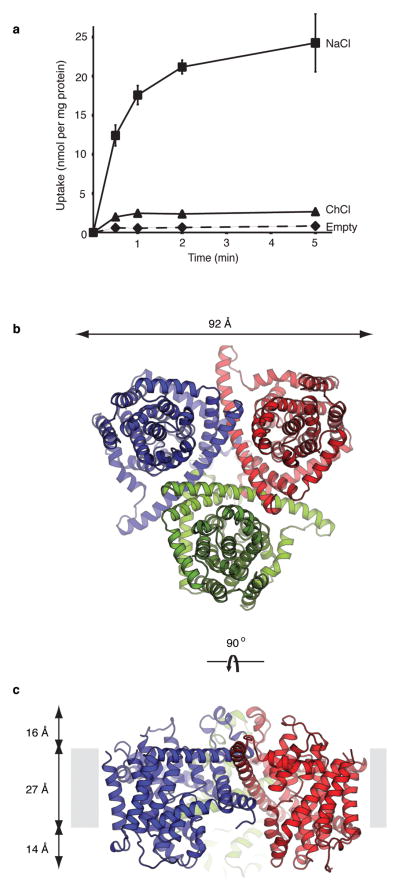
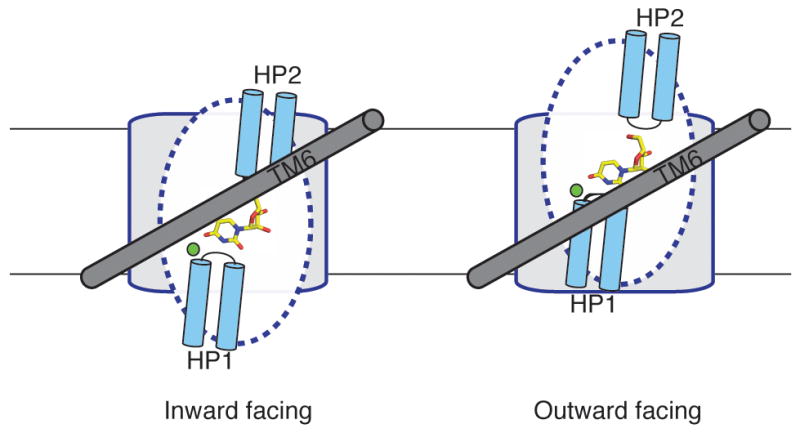
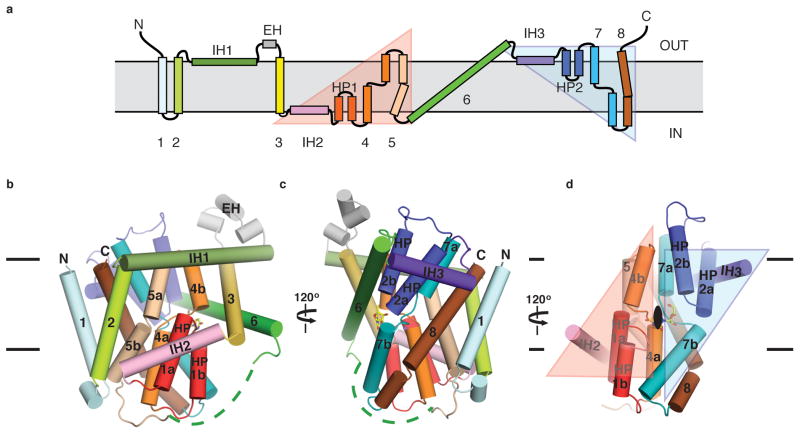
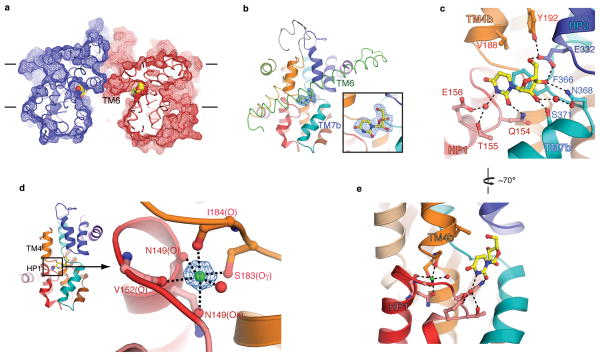
Nucleosides are required for DNA and RNA synthesis, and the nucleoside adenosine has a function in a variety of signalling processes. Transport of nucleosides across cell membranes provides the major source of nucleosides in many cell types and is also responsible for the termination of adenosine signalling. As a result of their hydrophilic nature, nucleosides require a specialized class of integral membrane proteins, known as nucleoside transporters (NTs), for specific transport across cell membranes. In addition to nucleosides, NTs are important determinants for the transport of nucleoside-derived drugs across cell membranes. A wide range of nucleoside-derived drugs, including anticancer drugs (such as Ara-C and gemcitabine) and antiviral drugs (such as zidovudine and ribavirin), have been shown to depend, at least in part, on NTs for transport across cell membranes. Concentrative nucleoside transporters, members of the solute carrier transporter superfamily SLC28, use an ion gradient in the active transport of both nucleosides and nucleoside-derived drugs against their chemical gradients. The structural basis for selective ion-coupled nucleoside transport by concentrative nucleoside transporters is unknown. Here we present the crystal structure of a concentrative nucleoside transporter from Vibrio cholerae in complex with uridine at 2.4 Å. Our functional data show that, like its human orthologues, the transporter uses a sodium-ion gradient for nucleoside transport. The structure reveals the overall architecture of this class of transporter, unravels the molecular determinants for nucleoside and sodium binding, and provides a framework for understanding the mechanism of nucleoside and nucleoside drug transport across cell membranes.
核苷是 DNA 和 RNA 合成所必需的,核苷腺苷在各种信号转导过程中具有功能。核苷穿过细胞膜的转运为许多细胞类型中的核苷提供了主要来源,并且负责终止腺苷信号。由于其亲水性,核苷需要一类特殊的整合膜蛋白,称为核苷转运体(NTs),才能特异性地穿过细胞膜进行转运。除了核苷之外,NTs 还是核苷衍生药物穿过细胞膜转运的重要决定因素。广泛的核苷衍生药物,包括抗癌药物(如阿糖胞苷和吉西他滨)和抗病毒药物(如齐多夫定和利巴韦林),已经表明至少部分依赖 NTs 进行跨细胞膜转运。协同核苷转运体是溶质载体转运蛋白超家族 SLC28 的成员,利用离子梯度在主动转运核苷和核苷衍生药物时对抗它们的化学梯度。协同核苷转运体选择性离子偶联核苷转运的结构基础尚不清楚。在这里,我们展示了霍乱弧菌协同核苷转运体与尿苷复合物的 2.4Å 晶体结构。我们的功能数据表明,与人类同源物一样,该转运体利用钠离子梯度进行核苷转运。该结构揭示了此类转运体的整体架构,阐明了核苷和钠离子结合的分子决定因素,并为理解核苷和核苷药物穿过细胞膜转运的机制提供了框架。