Dubrovin Evgeniy V, Fedyukina Galina N, Kraevsky Sergey V, Ignatyuk Tatiana E, Yaminsky Igor V, Ignatov Sergei G
M.V. Lomonosov Moscow State University, 1/2 Leninskie gory, Moscow, 119991, Russia.
Open Microbiol J. 2012;6:22-8. doi: 10.2174/1874285801206010022. Epub 2012 Feb 23.
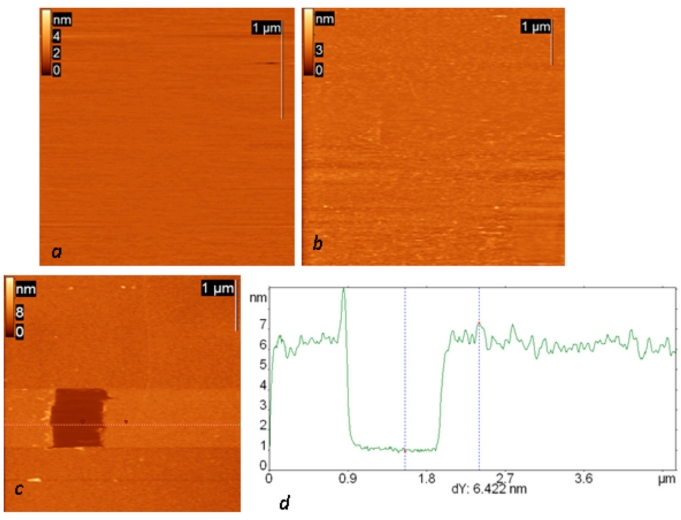
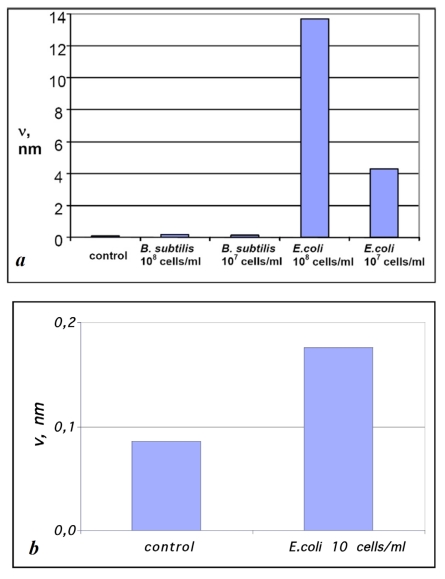
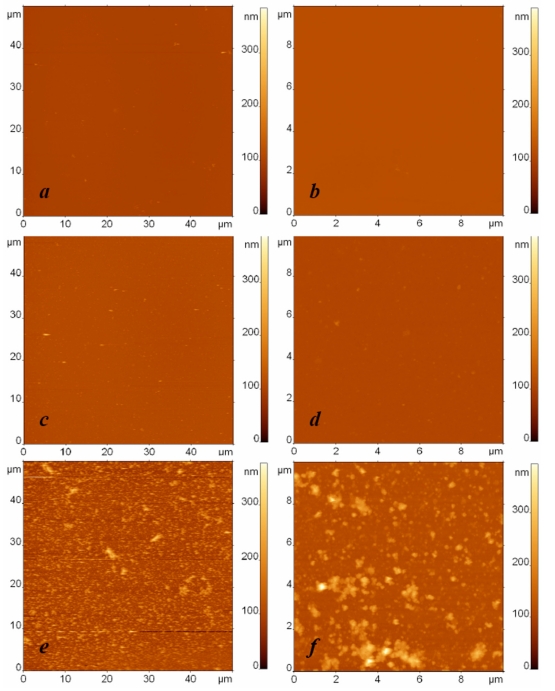
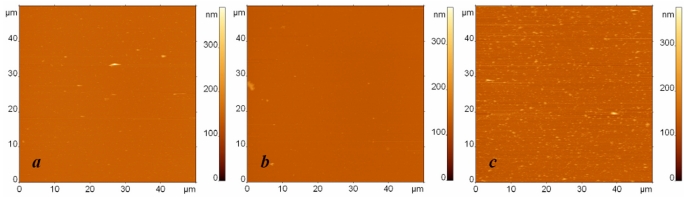
Biointerfaces with a highly sensitive surface designed for specific interaction with biomolecules are essential approaches for providing advanced biochemical and biosensor assays. For the first time, we have introduced a simple AFM-based recognition system capable of visualizing specific bacterial nanofragments and identifying the corresponding bacterial type. For this we developed AFM-adjusted procedures for preparing IgG-based surfaces and subsequently exposing them to antigens. The AFM images reveal the specific binding of Escherichia coli cell fragments to the prepared biofunctional surfaces. Moreover, the binding of bacterial cell fragments to the affinity surfaces can be characterized quantitatively, indicating a 30-fold to 80-fold increase in the quantity of bound antigenic material in the case of a specific antigen-antibody pair. Our results demonstrate significant opportunities for developing reliable sensing procedures for detecting pathogenic bacteria, and the cell can still be identified after it is completely destroyed.
具有专为与生物分子进行特异性相互作用而设计的高敏感表面的生物界面,是提供先进生化和生物传感器检测的重要方法。我们首次引入了一种基于原子力显微镜(AFM)的简单识别系统,该系统能够可视化特定的细菌纳米片段并识别相应的细菌类型。为此,我们开发了AFM调整程序,用于制备基于免疫球蛋白G(IgG)的表面,随后将其暴露于抗原。AFM图像揭示了大肠杆菌细胞片段与制备的生物功能表面的特异性结合。此外,细菌细胞片段与亲和表面的结合可以进行定量表征,这表明在特定抗原-抗体对的情况下,结合的抗原物质数量增加了30至80倍。我们的结果表明,开发用于检测病原菌的可靠传感程序具有重大机遇,并且细胞在完全破坏后仍可被识别。