Department of Neurobiology and the Pittsburgh Center for Pain Research, University of Pittsburgh, Pittsburgh, PA, United States.
Curr Opin Neurobiol. 2012 Aug;22(4):631-9. doi: 10.1016/j.conb.2012.02.010. Epub 2012 Mar 10.
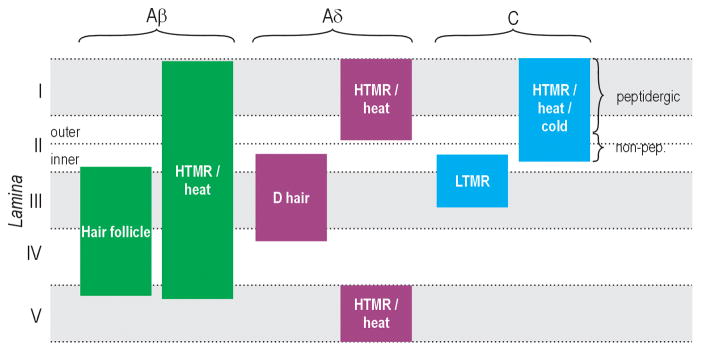
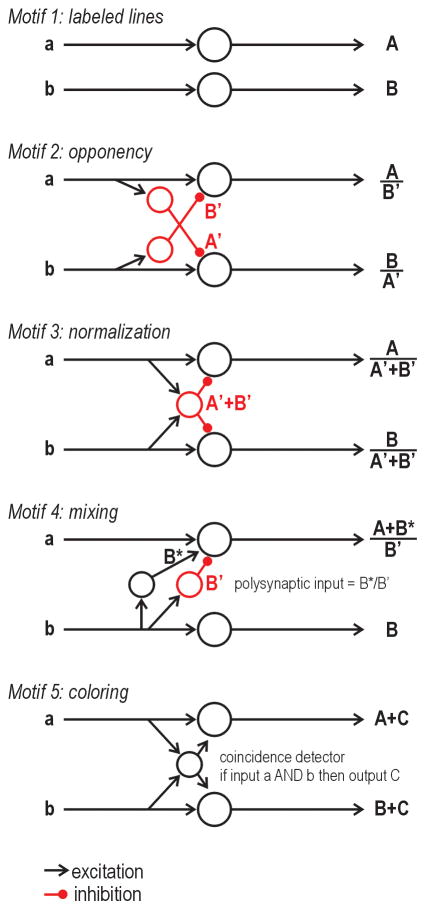
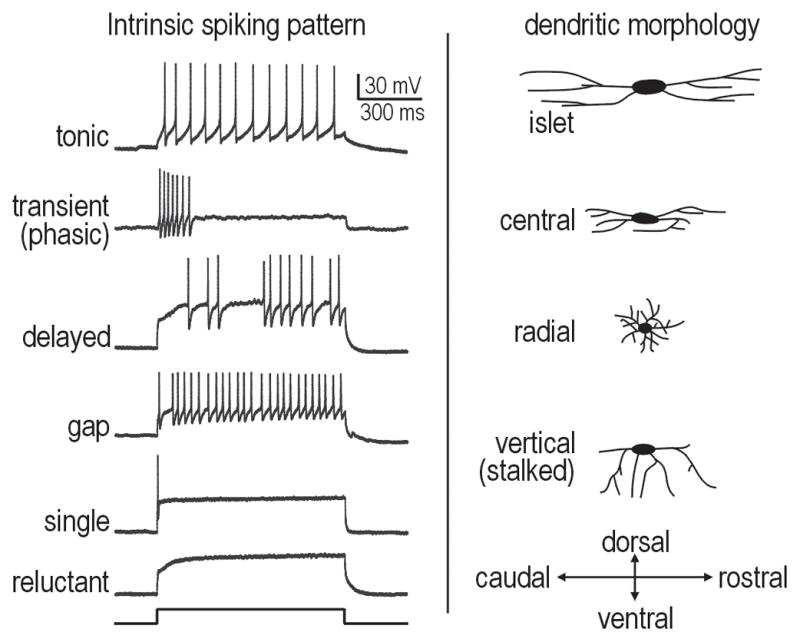
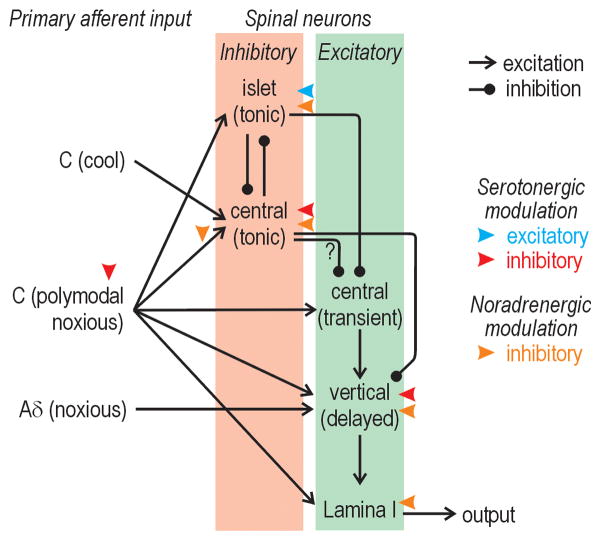
Pain, itch, heat, cold, and touch represent different percepts arising from somatosensory input. How stimuli give rise to these percepts has been debated for over a century. Recent work supports the view that primary afferents are highly specialized to transduce and encode specific stimulus modalities. However, cross-modal interactions (e.g. inhibition or exacerbation of pain by touch) support convergence rather than specificity in central circuits. We outline how peripheral specialization together with central convergence could enable spinal microcircuits to combine inputs from distinctly specialized, co-activated afferents and to modulate the output signals thus formed through computations like normalization. These issues will be discussed alongside recent advances in our understanding of microcircuitry in the superficial dorsal horn.
疼痛、瘙痒、热、冷和触摸代表了来自躯体感觉输入的不同感觉。刺激如何产生这些感觉已经争论了一个多世纪。最近的工作支持这样一种观点,即初级传入神经高度专门化,以转换和编码特定的刺激模式。然而,跨模态相互作用(例如触觉抑制或加剧疼痛)支持中枢回路中的收敛而不是特异性。我们概述了外周专门化与中枢收敛如何使脊髓微循环能够组合来自明显专门化、共同激活的传入神经的输入,并通过归一化等计算来调节由此形成的输出信号。这些问题将与我们对背角浅层微电路理解的最新进展一起讨论。