Cancer Gene Therapy Group, Molecular Cancer Biology Program, Haartman Institute, University of Helsinki, Helsinki, Finland.
PLoS One. 2012;7(3):e32871. doi: 10.1371/journal.pone.0032871. Epub 2012 Mar 7.
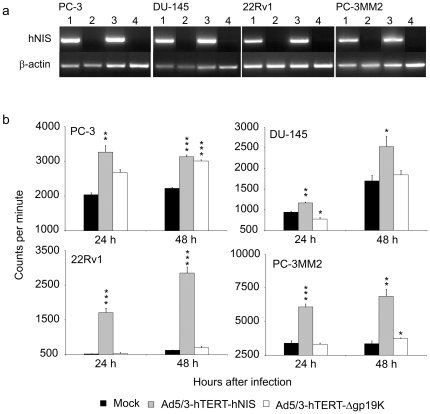
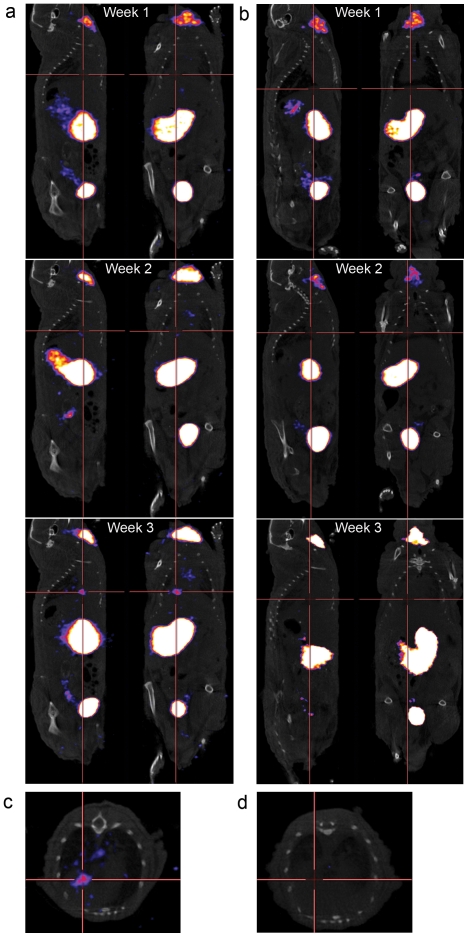
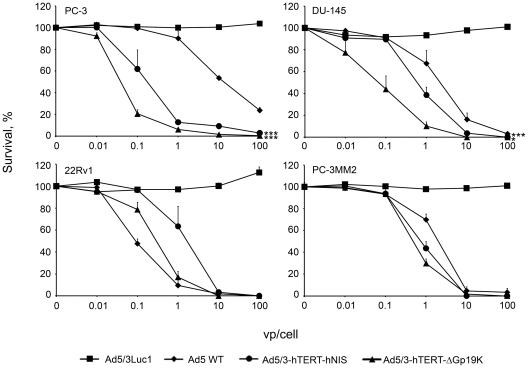
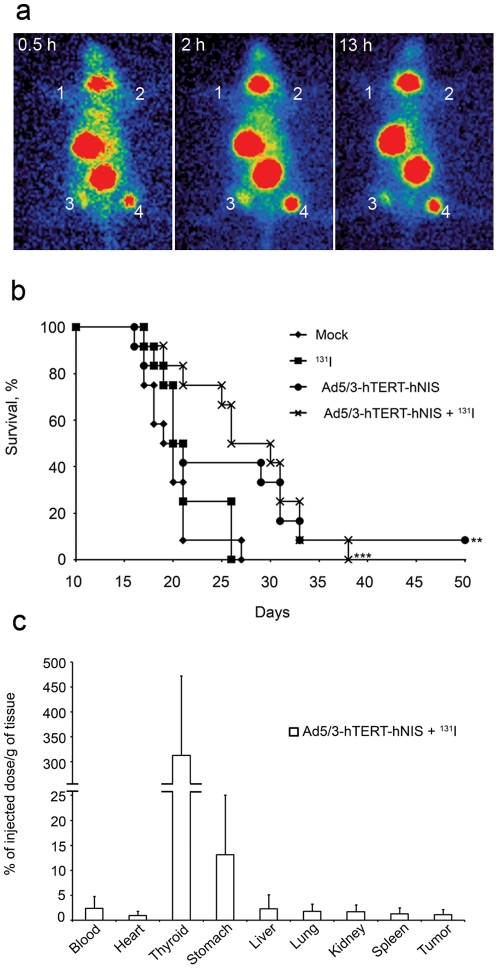
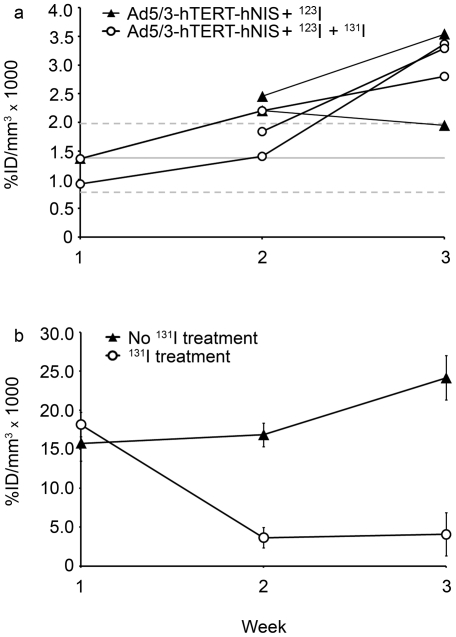
Oncolytic adenoviruses can be engineered for better tumor selectivity, gene delivery and be armed for imaging and concentrating radionuclides into tumors for synergistic oncolysis. We constructed Ad5/3-hTERT-hNIS where replication is controlled by hTERT-promoter. Ad5/3-hTERT-hNIS expresses hNIS for imaging of transgene expression and for treatment of infected tumors by radioiodine. Ad5/3-hTERT-hNIS efficiently killed prostate cancer cells and induced iodine uptake in vitro and in vivo after intratumoral virus administration. Survival of mice treated with intravenous Ad5/3-hTERT-hNIS significantly prolonged survival over mock or radioiodine only but the combination of virus with radioiodine was not more effective than virus alone. Temporal and spatial changes in hNIS-expression during therapy were detected with SPECT, demonstrating feasibility of evaluation of the combination therapy with hNIS-expressing adenoviruses and radioiodide.
溶瘤腺病毒可通过工程设计提高肿瘤选择性、基因传递效率,并可携带放射性核素进行成像,从而将放射性核素集中到肿瘤部位,以实现协同溶瘤作用。我们构建了受 hTERT 启动子控制复制的 Ad5/3-hTERT-hNIS,该病毒表达 hNIS 用于转基因表达的成像,并通过放射性碘治疗感染的肿瘤。Ad5/3-hTERT-hNIS 能够有效杀伤前列腺癌细胞,并在肿瘤内给予病毒后在体外和体内诱导碘摄取。与假处理或仅放射性碘处理相比,静脉注射 Ad5/3-hTERT-hNIS 治疗的小鼠的存活率显著延长,但病毒联合放射性碘治疗并不比单独使用病毒更有效。通过 SPECT 检测治疗过程中 hNIS 表达的时空变化,证明了用表达 hNIS 的腺病毒和放射性碘进行联合治疗评估的可行性。