Fakultät für Chemie, Universität Duisburg-Essen, 45117 Essen, Germany.
Beilstein J Nanotechnol. 2012;3:65-74. doi: 10.3762/bjnano.3.8. Epub 2012 Jan 26.
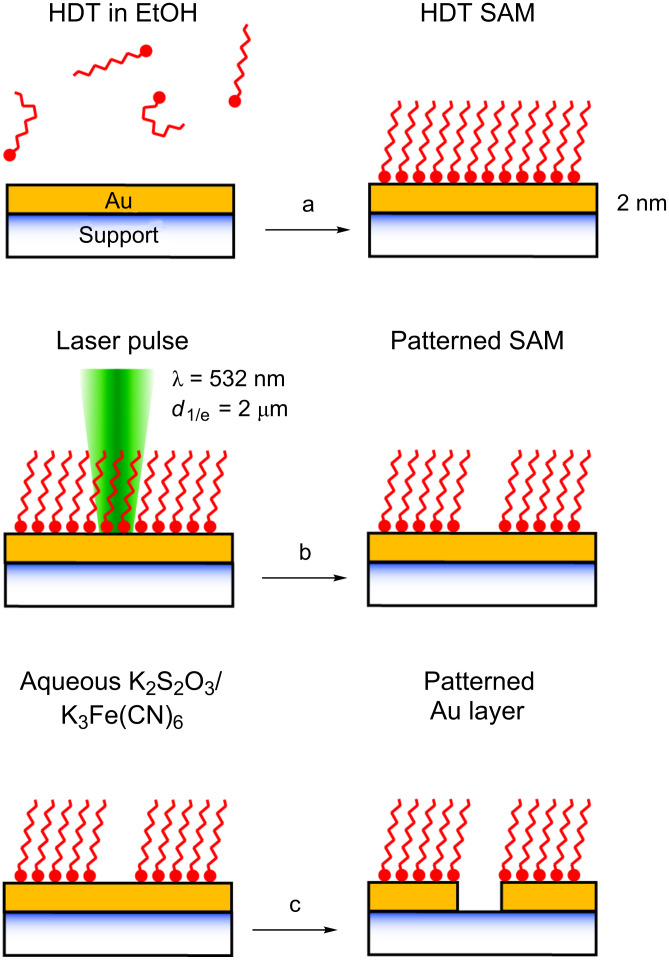
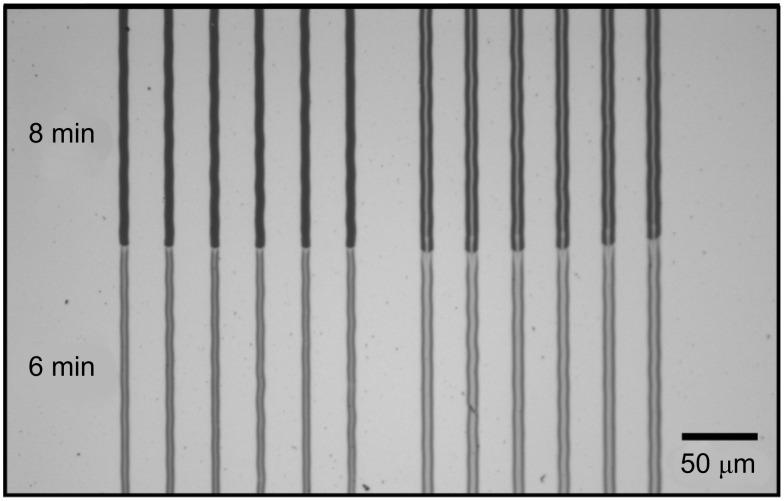
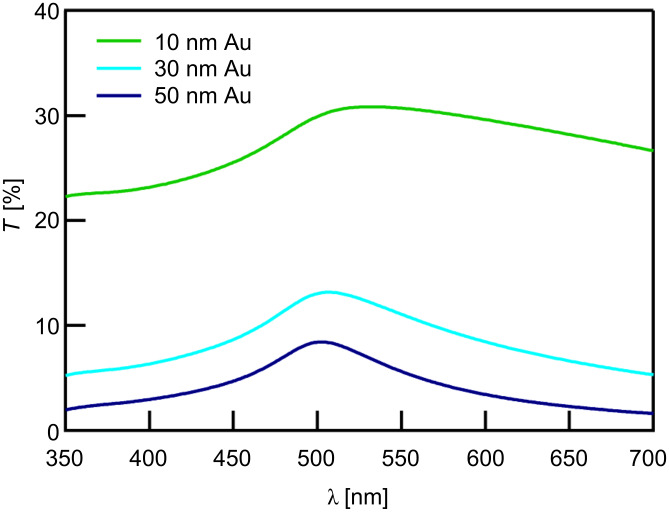
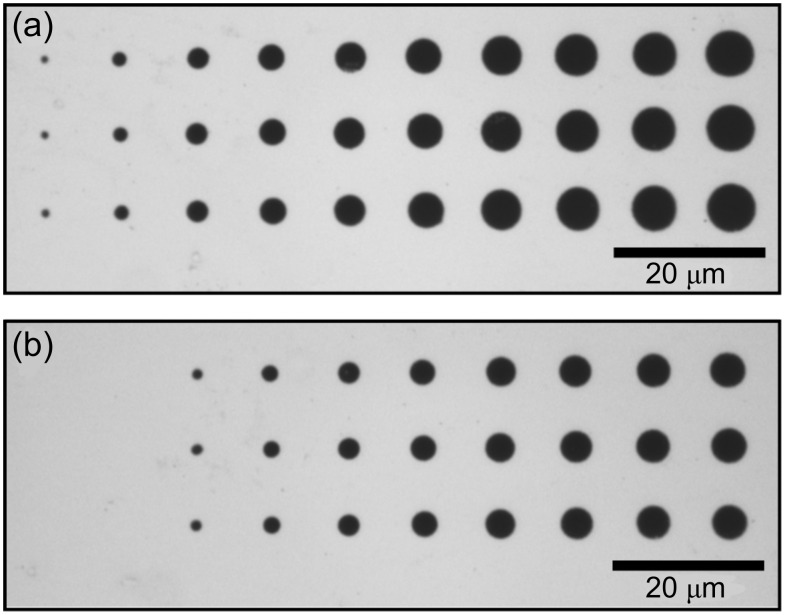
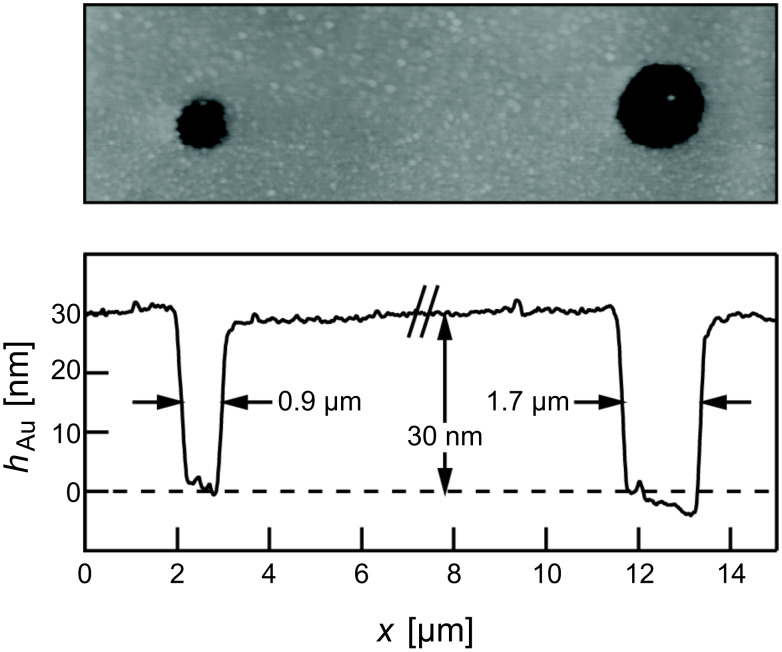
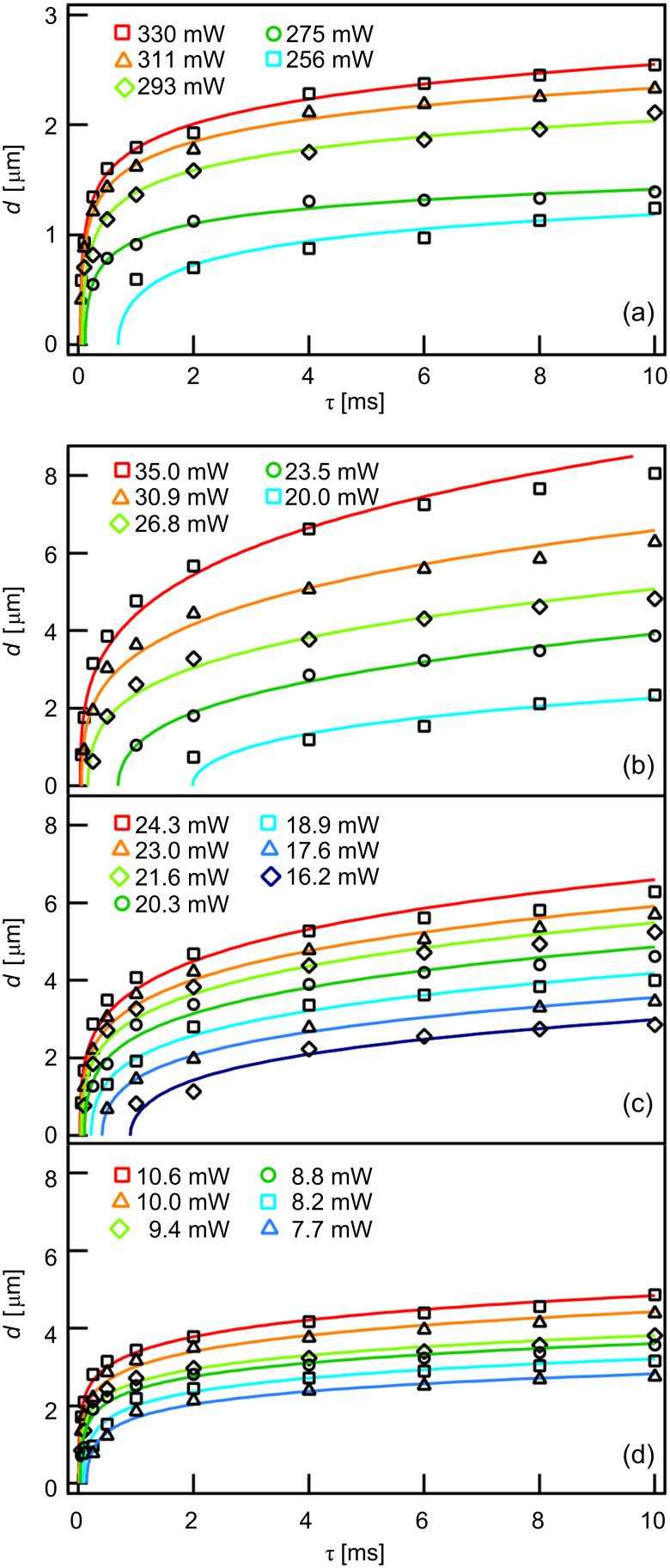
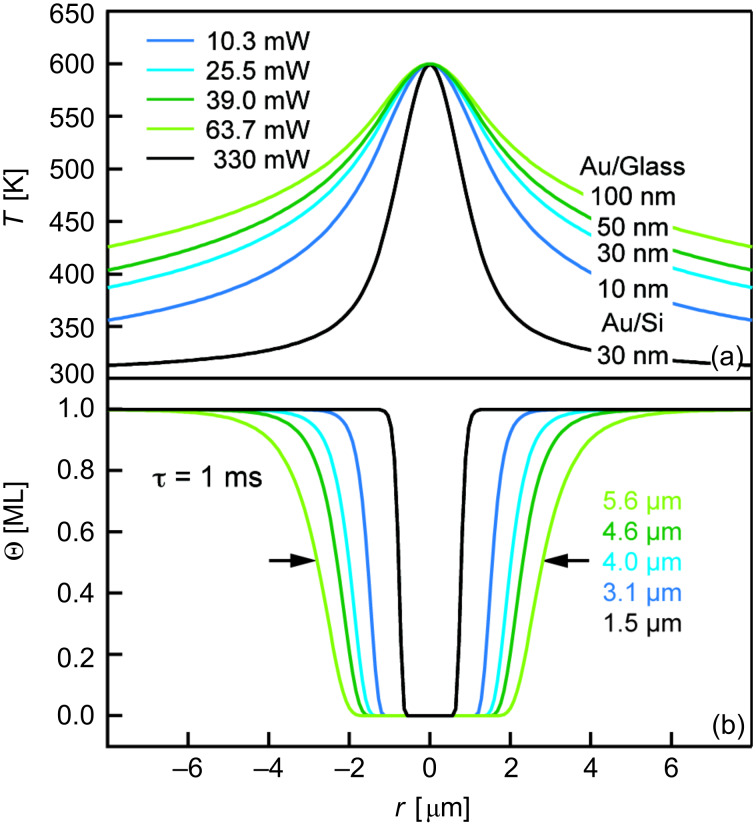
In recent years, self-assembled monolayers (SAMs) have been demonstrated to provide promising new approaches to nonlinear laser processing. Most notably, because of their ultrathin nature, indirect excitation mechanisms can be exploited in order to fabricate subwavelength structures. In photothermal processing, for example, microfocused lasers are used to locally heat the substrate surface and initiate desorption or decomposition of the coating. Because of the strongly temperature-dependent desorption kinetics, the overall process is highly nonlinear in the applied laser power. For this reason, subwavelength patterning is feasible employing ordinary continuous-wave lasers. The lateral resolution, generally, depends on both the type of the organic monolayer and the nature of the substrate. In previous studies we reported on photothermal patterning of distinct types of SAMs on Si supports. In this contribution, a systematic study on the impact of the substrate is presented. Alkanethiol SAMs on Au-coated glass and silicon substrates were patterned by using a microfocused laser beam at a wavelength of 532 nm. Temperature calculations and thermokinetic simulations were carried out in order to clarify the processes that determine the performance of the patterning technique. Because of the strongly temperature-dependent thermal conductivity of Si, surface-temperature profiles on Au/Si substrates are very narrow ensuring a particularly high lateral resolution. At a 1/e spot diameter of 2 µm, fabrication of subwavelength structures with diameters of 300-400 nm is feasible. Rapid heat dissipation, though, requires high laser powers. In contrast, patterning of SAMs on Au/glass substrates is strongly affected by the largely distinct heat conduction within the Au film and in the glass support. This results in broad surface temperature profiles. Hence, minimum structure sizes are larger when compared with respective values on Au/Si substrates. The required laser powers, though, are more than one order of magnitude lower. Also, the laser power needed for patterning decreases with decreasing Au layer thickness. These results demonstrate the impact of the substrate on the overall patterning process and provide new perspectives in photothermal laser patterning of ultrathin organic coatings.
近年来,自组装单层(SAMs)已被证明为非线性激光加工提供了很有前途的新方法。最值得注意的是,由于其超薄的性质,可以利用间接激励机制来制造亚波长结构。例如,在光热处理中,使用微聚焦激光局部加热基底表面,引发涂层的解吸或分解。由于解吸动力学强烈依赖于温度,因此整体过程在应用的激光功率下具有高度的非线性。出于这个原因,采用普通连续波激光器就可以实现亚波长图案化。横向分辨率通常取决于有机单层的类型和基底的性质。在之前的研究中,我们报道了在 Si 基底上不同类型的 SAM 的光热图案化。在本研究中,我们介绍了对基底影响的系统研究。在 532nm 波长下,使用微聚焦激光束对 Au 涂覆玻璃和硅基底上的烷硫醇 SAM 进行了图案化。为了阐明决定图案化技术性能的过程,进行了温度计算和热动力学模拟。由于 Si 的热导率强烈依赖于温度,因此 Au/Si 基底上的表面温度分布非常狭窄,确保了特别高的横向分辨率。在 1/e 光斑直径为 2µm 的情况下,可以制造直径为 300-400nm 的亚波长结构。然而,快速散热需要高激光功率。相比之下,SAM 在 Au/玻璃基底上的图案化受到 Au 膜内和玻璃基底内传热的强烈影响。这导致表面温度分布变宽。因此,与在 Au/Si 基底上的相应值相比,最小结构尺寸更大。然而,所需的激光功率低一个数量级以上。此外,图案化所需的激光功率随 Au 层厚度的减小而降低。这些结果表明了基底对整体图案化过程的影响,并为超薄膜有机涂层的光热激光图案化提供了新的视角。