Department of Surgery, Physiology, and Markey Cancer Center, University of Kentucky, Lexington, KY 40536-0298, USA.
J Gerontol A Biol Sci Med Sci. 2012 Oct;67(10):1043-8. doi: 10.1093/gerona/gls009. Epub 2012 Mar 26.
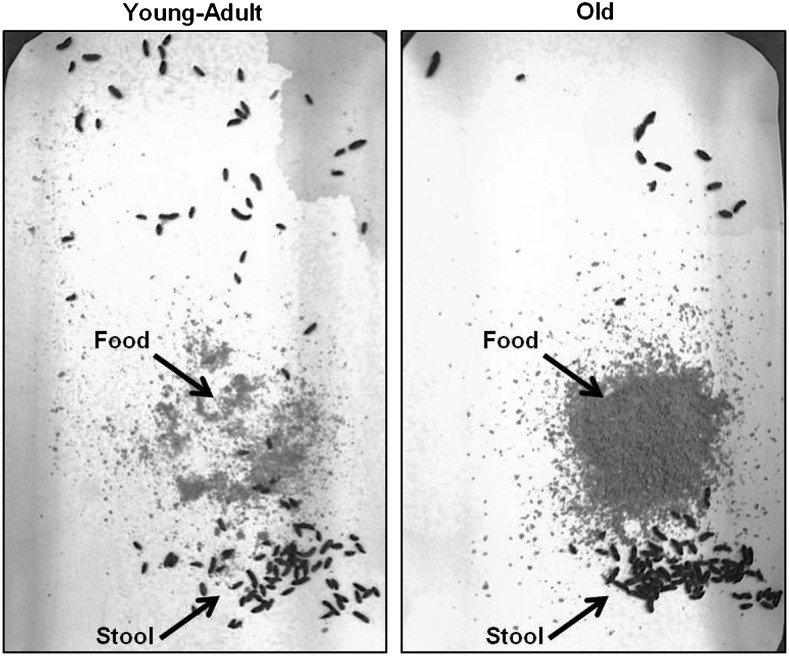
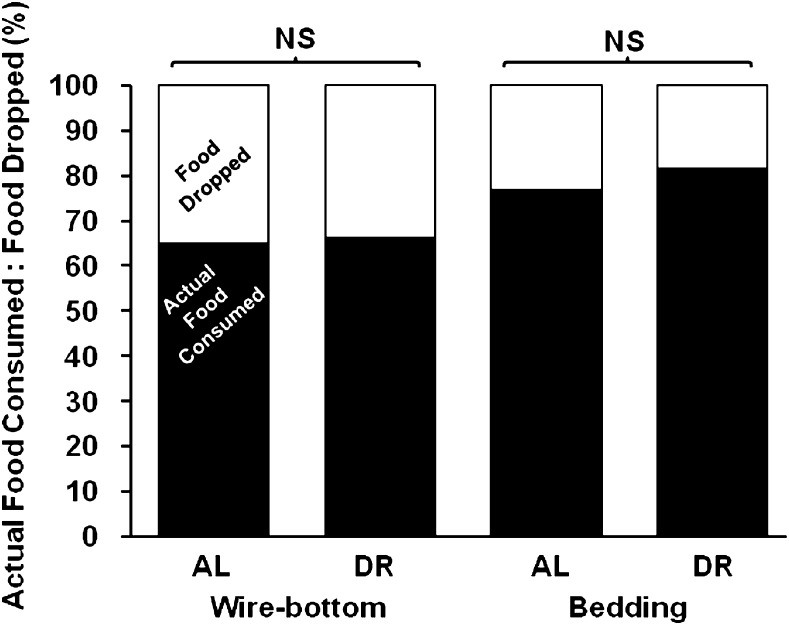
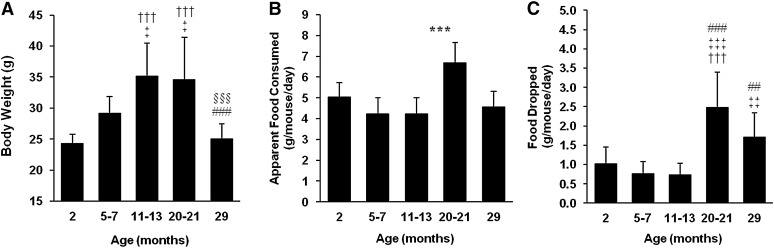
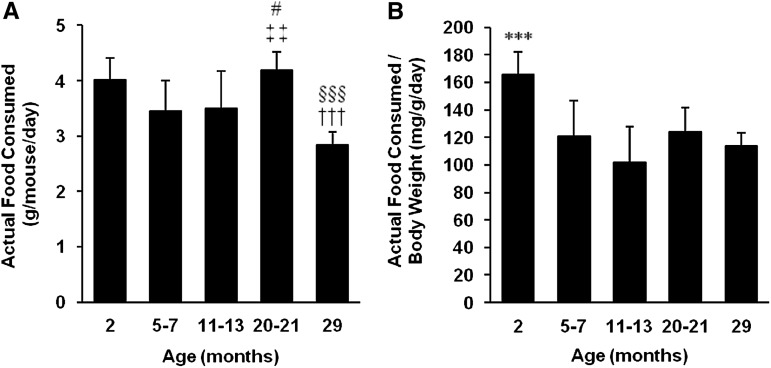
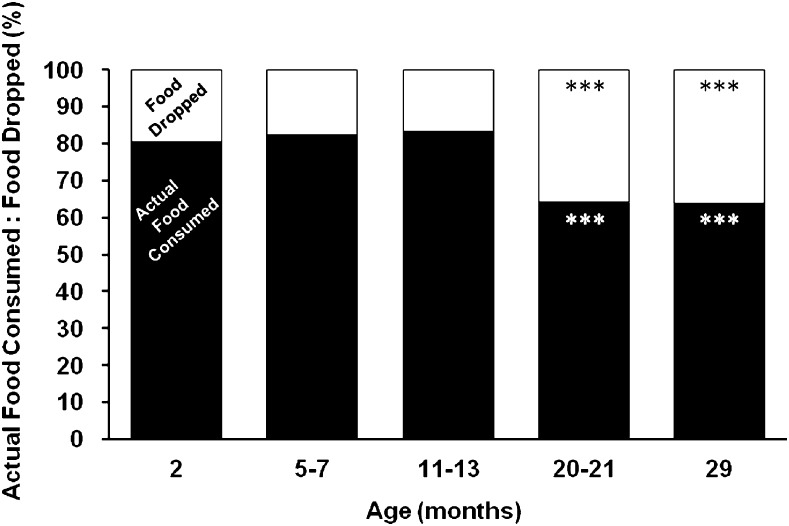
It is widely accepted that food consumption in humans declines with advanced age; however, data from mice remain controversial. Based on our previous observation that mice spill a considerable amount of food while eating, we hypothesized that increased food spillage in old mice masks actual food intake. To investigate whether mice exhibit age-associated declines in food consumption, we evaluated the actual food consumption of C57BL/6 mice at various ages by measuring both the amount of food in the food receptacle and the amount dropped to the cage bottom during feeding. We found that old mice dropped significantly more food (36% ± 8%) than young mice (18% ± 5%), which led to overestimations of food consumption, particularly in old mice. Although actual food consumption decreased in very old mice, food intake per body weight did not significantly change. These findings suggest that caution should be taken to accurately quantify food consumption by aged animals.
人们普遍认为,随着年龄的增长,人类的食物摄入量会下降;然而,来自老鼠的数据仍然存在争议。基于我们之前观察到老鼠在进食时会洒出大量食物,我们假设老年老鼠食物溢出的增加掩盖了实际的食物摄入量。为了研究老鼠是否表现出与年龄相关的食物摄入量下降,我们通过测量食物容器中的食物量和喂食过程中掉落到底部的食物量,评估了不同年龄的 C57BL/6 老鼠的实际食物摄入量。我们发现,老年老鼠掉落的食物明显多于年轻老鼠(36%±8%比 18%±5%),这导致了食物摄入量的高估,尤其是在老年老鼠中。尽管非常老的老鼠的实际食物摄入量有所下降,但每单位体重的食物摄入量并没有显著变化。这些发现表明,在准确量化老年动物的食物摄入量时应谨慎。