Department of Medicine, New York University School of Medicine, NYU Langone Medical Center, 550 First Avenue, OBV A606, New York, NY 10016, USA.
BMC Microbiol. 2012 Mar 27;12:49. doi: 10.1186/1471-2180-12-49.
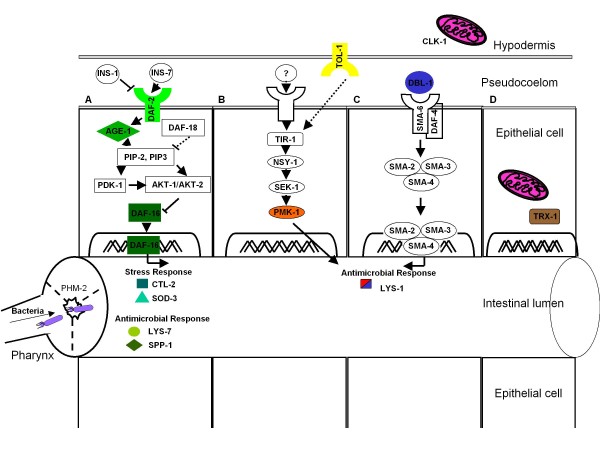
A powerful approach to understanding complex processes such as aging is to use model organisms amenable to genetic manipulation, and to seek relevant phenotypes to measure. Caenorhabditis elegans is particularly suited to studies of aging, since numerous single-gene mutations have been identified that affect its lifespan; it possesses an innate immune system employing evolutionarily conserved signaling pathways affecting longevity. As worms age, bacteria accumulate in the intestinal tract. However, quantitative relationships between worm genotype, lifespan, and intestinal lumen bacterial load have not been examined. We hypothesized that gut immunity is less efficient in older animals, leading to enhanced bacterial accumulation, reducing longevity. To address this question, we evaluated the ability of worms to control bacterial accumulation as a functional marker of intestinal immunity.
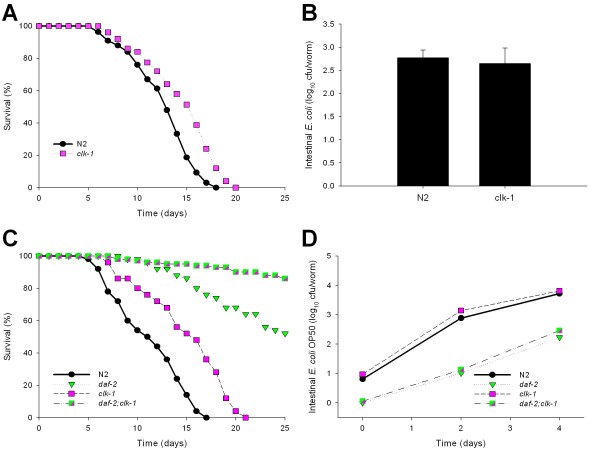
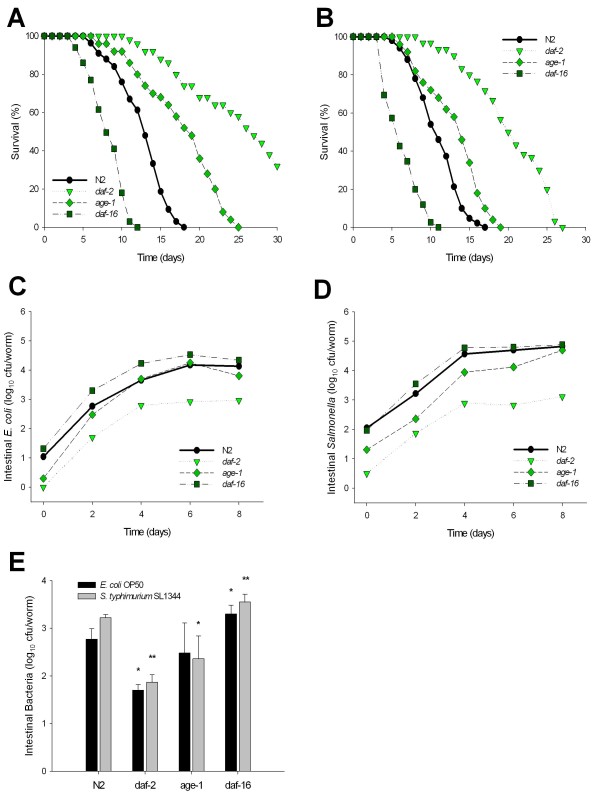
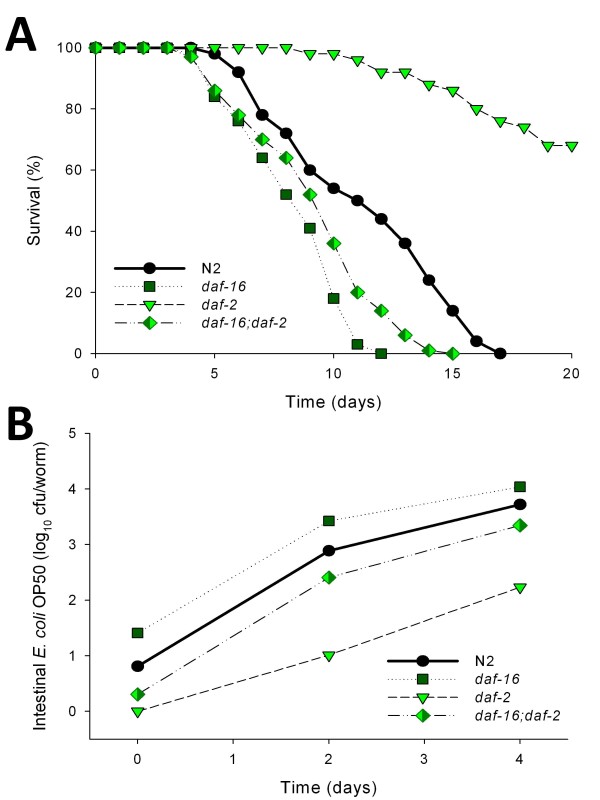
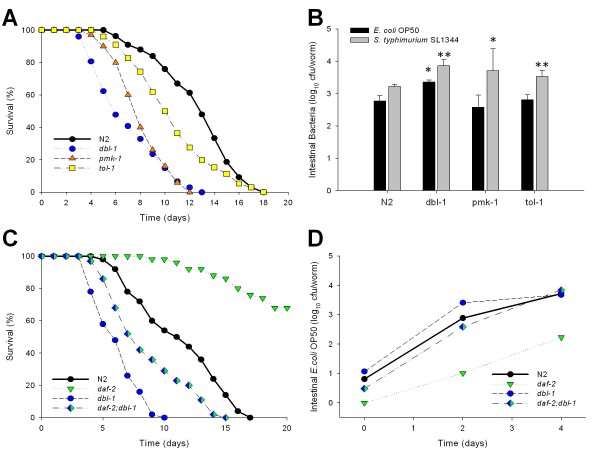
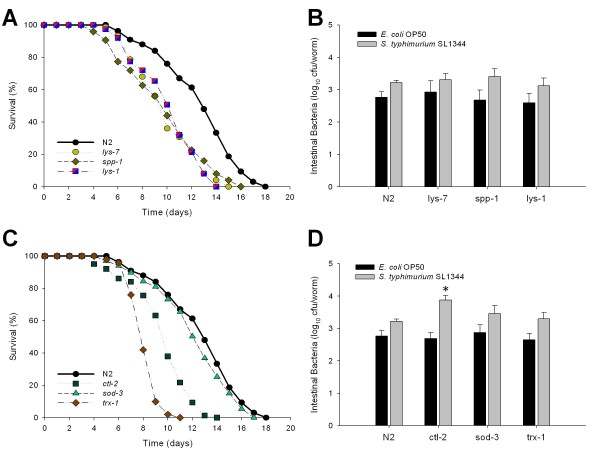
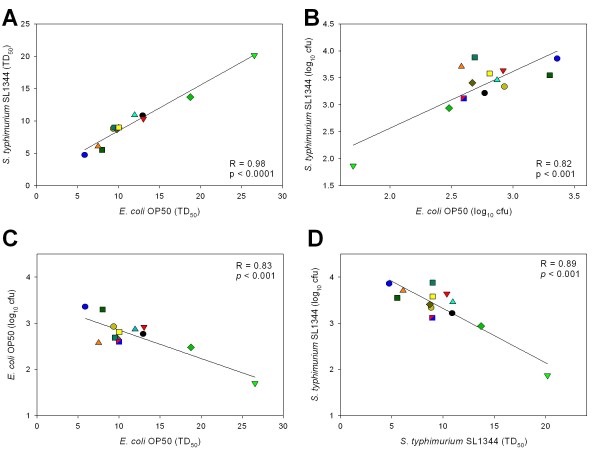
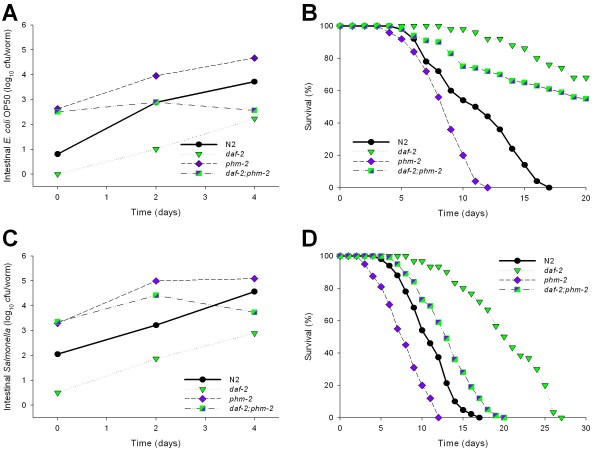
We show that as adult worms age, several C. elegans genotypes show diminished capacity to control intestinal bacterial accumulation. We provide evidence that intestinal bacterial load, regulated by gut immunity, is an important causative factor of lifespan determination; the effects are specified by bacterial strain, worm genotype, and biologic age, all acting in concert.
In total, these studies focus attention on the worm intestine as a locus that influences longevity in the presence of an accumulating bacterial population. Further studies defining the interplay between bacterial species and host immunity in C. elegans may provide insights into the general mechanisms of aging and age-related diseases.
理解衰老等复杂过程的一种有力方法是使用易于遗传操作的模式生物,并寻找相关的表型来进行测量。秀丽隐杆线虫特别适合于衰老研究,因为已经鉴定出许多影响其寿命的单基因突变;它具有先天免疫系统,采用影响寿命的进化保守信号通路。随着蠕虫的衰老,细菌在肠道中积累。然而,蠕虫基因型、寿命和肠道腔细菌负荷之间的定量关系尚未被研究过。我们假设肠道免疫功能在老年动物中效率较低,导致细菌积累增加,从而降低寿命。为了解决这个问题,我们评估了蠕虫控制细菌积累的能力,作为肠道免疫功能的一个功能标记。
我们发现,随着成年蠕虫的衰老,几种秀丽隐杆线虫基因型控制肠道细菌积累的能力下降。我们提供的证据表明,肠道细菌负荷受肠道免疫调节,是决定寿命的一个重要原因;这些影响由细菌菌株、蠕虫基因型和生物年龄共同作用决定。
总的来说,这些研究将注意力集中在蠕虫肠道上,肠道作为一个影响在积累的细菌群存在下寿命的位置。进一步研究定义秀丽隐杆线虫中细菌种类和宿主免疫之间的相互作用,可能为衰老和与年龄相关的疾病的一般机制提供见解。