Miles Gregory D, Seiler Michael, Rodriguez Lorna, Rajagopal Gunaretnam, Bhanot Gyan
The Cancer Institute of New Jersey, New Brunswick, NJ, USA.
BMC Res Notes. 2012 Mar 27;5:164. doi: 10.1186/1756-0500-5-164.
MicroRNAs are a class of noncoding RNA molecules that co-regulate the expression of multiple genes via mRNA transcript degradation or translation inhibition. Since they often target entire pathways, they may be better drug targets than genes or proteins. MicroRNAs are known to be dysregulated in many tumours and associated with aggressive or poor prognosis phenotypes. Since they regulate mRNA in a tissue specific manner, their functional mRNA targets are poorly understood. In previous work, we developed a method to identify direct mRNA targets of microRNA using patient matched microRNA/mRNA expression data using an anti-correlation signature. This method, applied to clear cell Renal Cell Carcinoma (ccRCC), revealed many new regulatory pathways compromised in ccRCC. In the present paper, we apply this method to identify dysregulated microRNA/mRNA mechanisms in ovarian cancer using data from The Cancer Genome Atlas (TCGA).
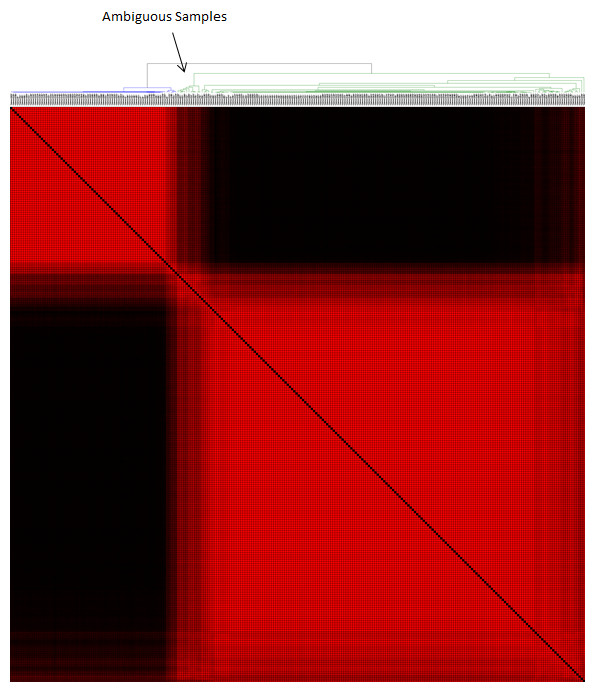
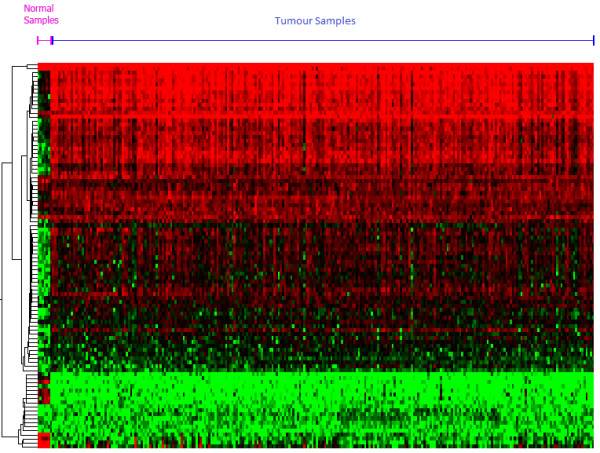
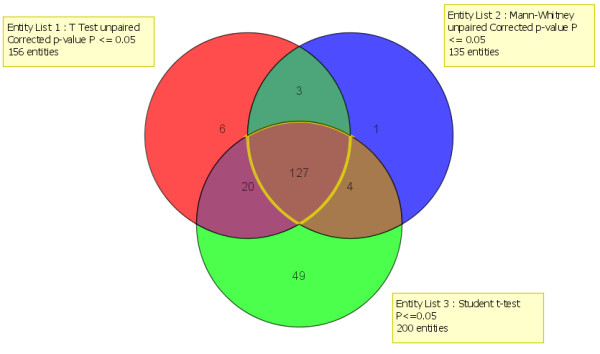
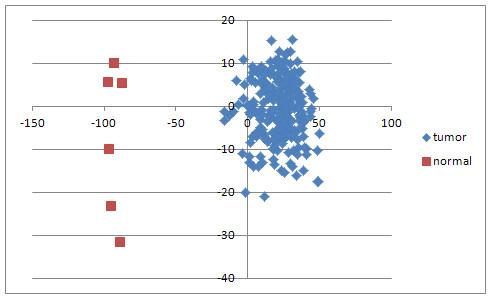
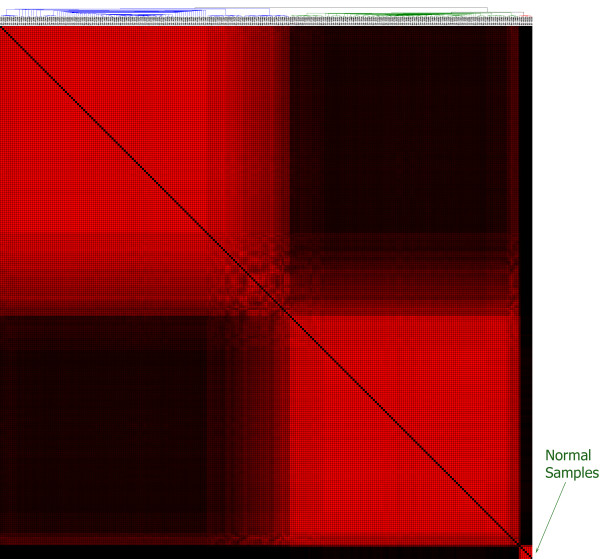
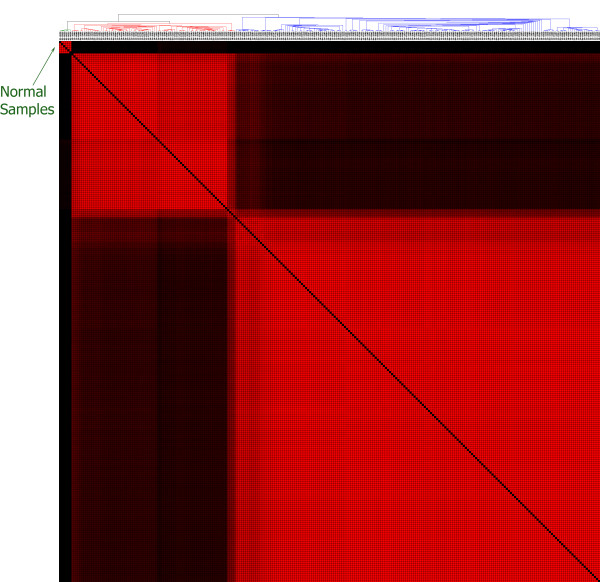
TCGA Microarray data was normalized and samples whose class labels (tumour or normal) were ambiguous with respect to consensus ensemble K-Means clustering were removed. Significantly anti-correlated and correlated genes/microRNA differentially expressed between tumour and normal samples were identified. TargetScan was used to identify gene targets of microRNA.
We identified novel microRNA/mRNA mechanisms in ovarian cancer. For example, the expression level of RAD51AP1 was found to be strongly anti-correlated with the expression of hsa-miR-140-3p, which was significantly down-regulated in the tumour samples. The anti-correlation signature was present separately in the tumour and normal samples, suggesting a direct causal dysregulation of RAD51AP1 by hsa-miR-140-3p in the ovary. Other pairs of potentially biological relevance include: hsa-miR-145/E2F3, hsa-miR-139-5p/TOP2A, and hsa-miR-133a/GCLC. We also identified sets of positively correlated microRNA/mRNA pairs that are most likely result from indirect regulatory mechanisms.
Our findings identify novel microRNA/mRNA relationships that can be verified experimentally. We identify both generic microRNA/mRNA regulation mechanisms in the ovary as well as specific microRNA/mRNA controls which are turned on or off in ovarian tumours. Our results suggest that the disease process uses specific mechanisms which may be significant for their utility as early detection biomarkers or in the development of microRNA therapies in treating ovarian cancers. The positively correlated microRNA/mRNA pairs suggest the existence of novel regulatory mechanisms that proceed via intermediate states (indirect regulation) in ovarian tumorigenesis.
微小RNA是一类非编码RNA分子,通过信使核糖核酸(mRNA)转录降解或翻译抑制共同调节多个基因的表达。由于它们通常靶向整个信号通路,因此它们可能比基因或蛋白质更适合作为药物靶点。已知微小RNA在许多肿瘤中表达失调,并与侵袭性或预后不良的表型相关。由于它们以组织特异性方式调节mRNA,其功能性mRNA靶点尚不清楚。在之前的研究中,我们开发了一种方法,利用患者匹配的微小RNA/mRNA表达数据和反相关特征来识别微小RNA的直接mRNA靶点。将该方法应用于透明细胞肾细胞癌(ccRCC),揭示了ccRCC中许多受损的新调控通路。在本文中,我们应用该方法,利用癌症基因组图谱(TCGA)的数据来识别卵巢癌中失调的微小RNA/mRNA机制。
对TCGA微阵列数据进行标准化处理,去除那些在共识集成K均值聚类中类别标签(肿瘤或正常)不明确的样本。识别肿瘤样本和正常样本之间差异表达的显著反相关和相关基因/微小RNA。使用TargetScan来识别微小RNA的基因靶点。
我们在卵巢癌中发现了新的微小RNA/mRNA机制。例如,发现RAD51相关蛋白1(RAD51AP1)的表达水平与hsa-miR-140-3p的表达呈强烈反相关,hsa-miR-140-3p在肿瘤样本中显著下调。反相关特征分别存在于肿瘤样本和正常样本中,表明hsa-miR-140-3p在卵巢中对RAD51AP1有直接的因果失调作用。其他具有潜在生物学相关性的配对包括:hsa-miR-145/E2F3、hsa-miR-139-5p/拓扑异构酶IIα(TOP2A)和hsa-miR-133a/谷胱甘肽合成酶(GCLC)。我们还识别出了一组正相关的微小RNA/mRNA配对,它们很可能是间接调控机制的结果。
我们的研究结果确定了可以通过实验验证的新的微小RNA/mRNA关系。我们识别出了卵巢中一般的微小RNA/mRNA调控机制以及在卵巢肿瘤中开启或关闭的特定微小RNA/mRNA调控。我们的结果表明,疾病过程利用了特定机制,这些机制对于它们作为早期检测生物标志物的效用或在卵巢癌微小RNA治疗开发中的效用可能具有重要意义。正相关的微小RNA/mRNA配对表明在卵巢肿瘤发生过程中存在通过中间状态(间接调控)进行的新调控机制。