Department of Pharmacology and Chemical Biology, University of Pittsburgh School of Medicine, Pittsburgh, Pennsylvania, United States of America.
PLoS One. 2012;7(3):e32597. doi: 10.1371/journal.pone.0032597. Epub 2012 Mar 22.
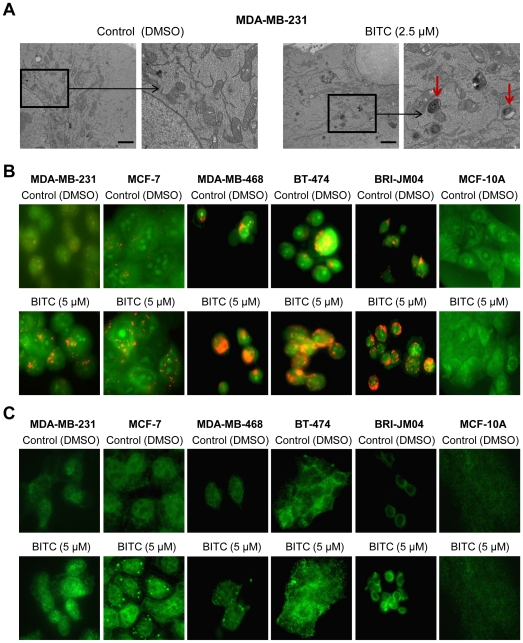
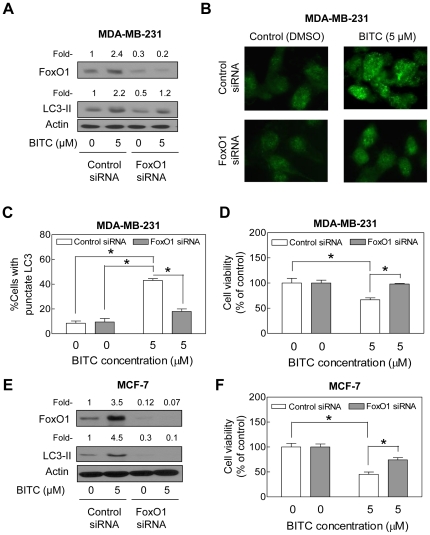
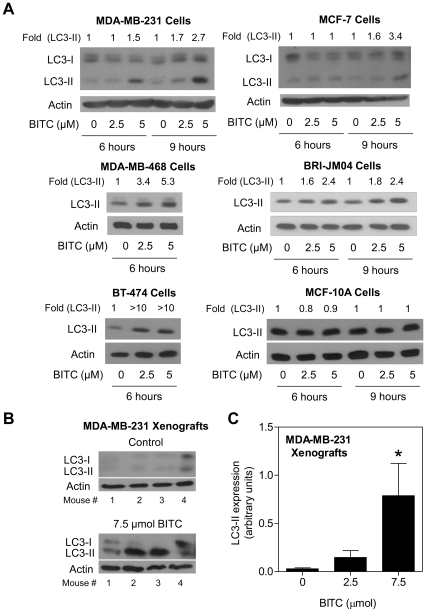
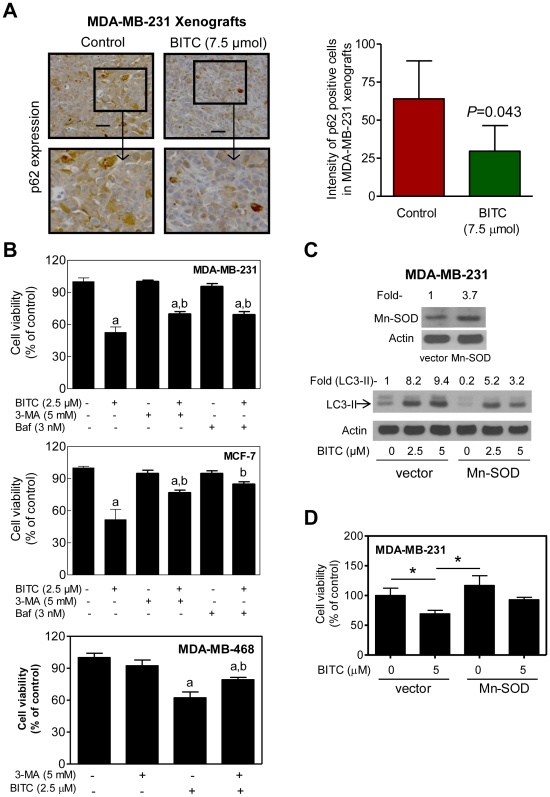
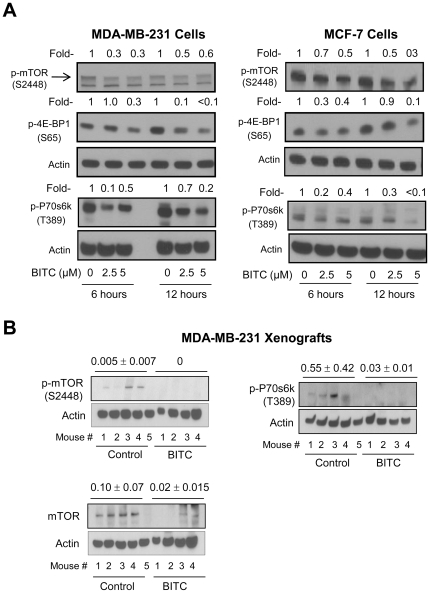
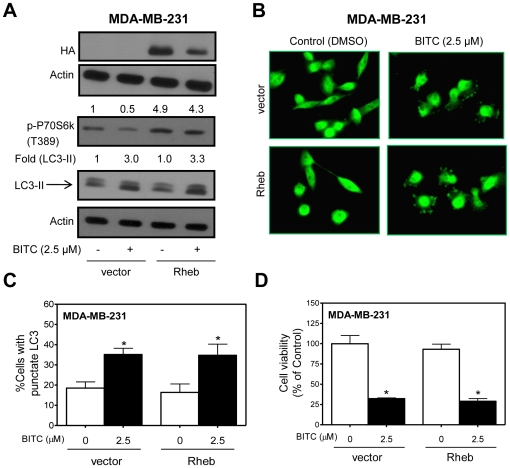
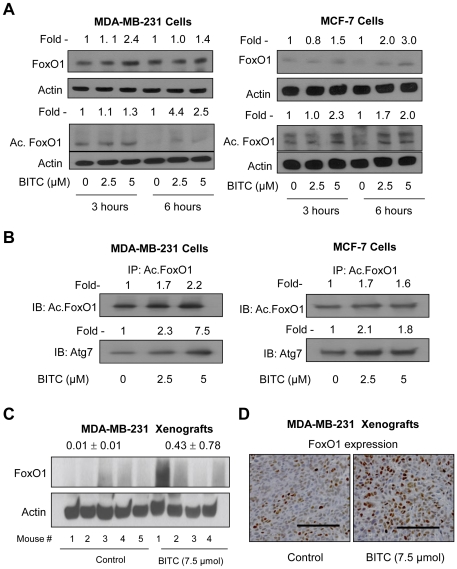
Benzyl isothiocyanate (BITC), a constituent of edible cruciferous vegetables, inhibits growth of breast cancer cells but the mechanisms underlying growth inhibitory effect of BITC are not fully understood. Here, we demonstrate that BITC treatment causes FoxO1-mediated autophagic death in cultured human breast cancer cells. The BITC-treated breast cancer cells (MDA-MB-231, MCF-7, MDA-MB-468, BT-474, and BRI-JM04) and MDA-MB-231 xenografts from BITC-treated mice exhibited several features characteristic of autophagy, including appearance of double-membrane vacuoles (transmission electron microscopy) and acidic vesicular organelles (acridine orange staining), cleavage of microtubule-associated protein 1 light chain 3 (LC3), and/or suppression of p62 (p62/SQSTM1 or sequestosome 1) expression. On the other hand, a normal human mammary epithelial cell line (MCF-10A) was resistant to BITC-induced autophagy. BITC-mediated inhibition of MDA-MB-231 and MCF-7 cell viability was partially but statistically significantly attenuated in the presence of autophagy inhibitors 3-methyl adenine and bafilomycin A1. Stable overexpression of Mn-superoxide dismutase, which was fully protective against apoptosis, conferred only partial protection against BITC-induced autophagy. BITC treatment decreased phosphorylation of mTOR and its downstream targets (P70s6k and 4E-BP1) in cultured MDA-MB-231 and MCF-7 cells and MDA-MB-231 xenografts, but activation of mTOR by transient overexpression of its positive regulator Rheb failed to confer protection against BITC-induced autophagy. Autophagy induction by BITC was associated with increased expression and acetylation of FoxO1. Furthermore, autophagy induction and cell growth inhibition resulting from BITC exposure were significantly attenuated by small interfering RNA knockdown of FoxO1. In conclusion, the present study provides novel insights into the molecular circuitry of BITC-induced cell death involving FoxO1-mediated autophagy.
苄基异硫氰酸酯(BITC)是可食用十字花科蔬菜的一种成分,能抑制乳腺癌细胞的生长,但 BITC 抑制生长作用的机制尚未完全阐明。在这里,我们证明 BITC 处理会导致培养的人乳腺癌细胞中 FoxO1 介导的自噬性死亡。BITC 处理的乳腺癌细胞(MDA-MB-231、MCF-7、MDA-MB-468、BT-474 和 BRI-JM04)和来自 BITC 处理小鼠的 MDA-MB-231 异种移植物表现出几种自噬特征,包括双层膜空泡(透射电子显微镜)和酸性囊泡细胞器(吖啶橙染色)、微管相关蛋白 1 轻链 3(LC3)的切割和/或 p62(p62/SQSTM1 或自噬体 1)表达的抑制。另一方面,正常的人乳腺上皮细胞系(MCF-10A)对 BITC 诱导的自噬具有抗性。在存在自噬抑制剂 3-甲基腺嘌呤和巴弗洛霉素 A1 的情况下,BITC 介导的 MDA-MB-231 和 MCF-7 细胞活力的抑制部分但具有统计学意义地减弱。Mn-超氧化物歧化酶的稳定过表达完全对细胞凋亡有保护作用,但对 BITC 诱导的自噬仅提供部分保护。BITC 处理降低了培养的 MDA-MB-231 和 MCF-7 细胞和 MDA-MB-231 异种移植物中 mTOR 及其下游靶标(P70s6k 和 4E-BP1)的磷酸化,但通过瞬时过表达其阳性调节剂 Rheb 激活 mTOR 未能赋予对 BITC 诱导的自噬的保护作用。BITC 诱导的自噬与 FoxO1 表达和乙酰化的增加有关。此外,通过 FoxO1 的小干扰 RNA 敲低显著减弱了 BITC 暴露引起的自噬诱导和细胞生长抑制。总之,本研究为涉及 FoxO1 介导的自噬的 BITC 诱导细胞死亡的分子电路提供了新的见解。