Movement Neuroscience Laboratory, Department of Sport & Exercise Science, The University of Auckland, Auckland, New Zealand.
PLoS One. 2012;7(3):e33882. doi: 10.1371/journal.pone.0033882. Epub 2012 Mar 22.
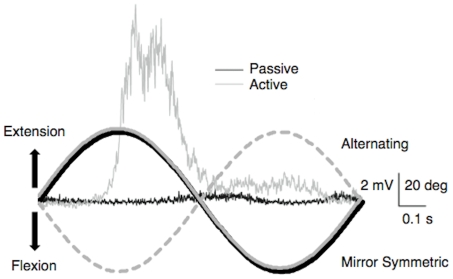
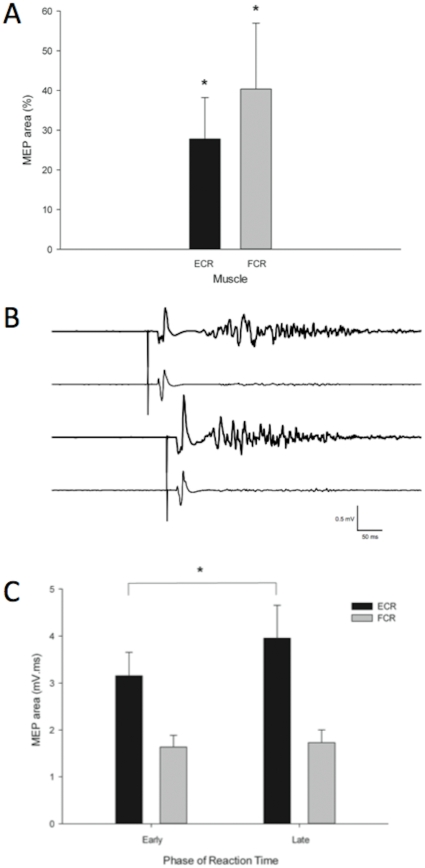
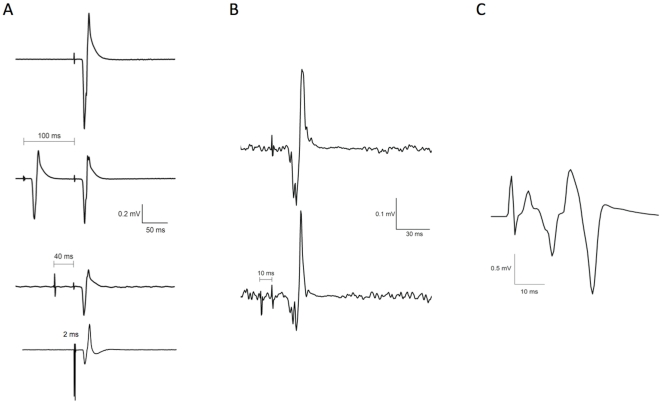
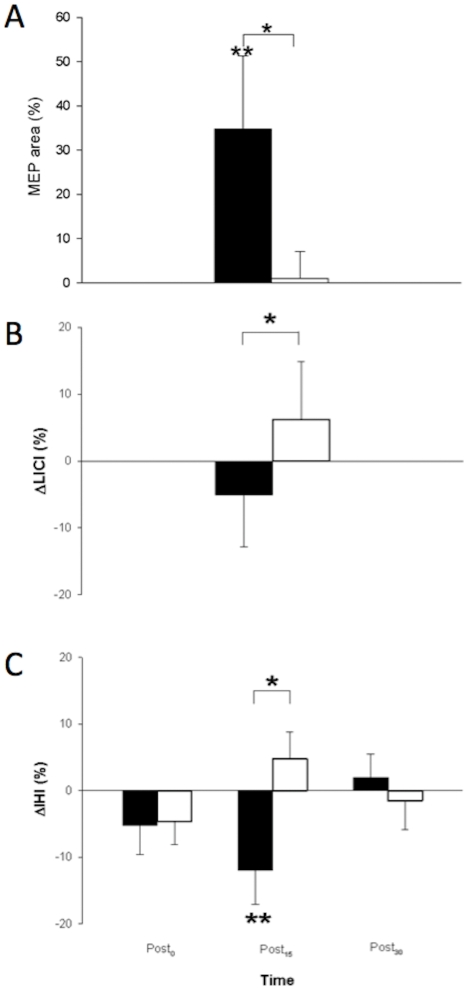
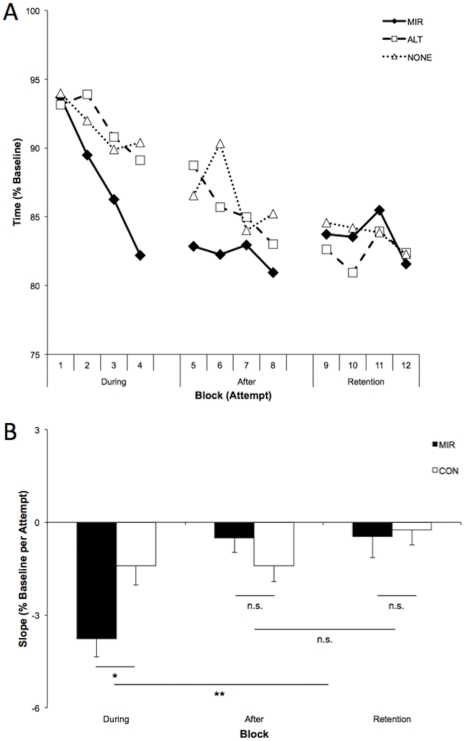
Repetitive mirror symmetric bilateral upper limb may be a suitable priming technique for upper limb rehabilitation after stroke. Here we demonstrate neurophysiological and behavioural after-effects in healthy participants after priming with 20 minutes of repetitive active-passive bimanual wrist flexion and extension in a mirror symmetric pattern with respect to the body midline (MIR) compared to an control priming condition with alternating flexion-extension (ALT). Transcranial magnetic stimulation (TMS) indicated that corticomotor excitability (CME) of the passive hemisphere remained elevated compared to baseline for at least 30 minutes after MIR but not ALT, evidenced by an increase in the size of motor evoked potentials in ECR and FCR. Short and long-latency intracortical inhibition (SICI, LICI), short afferent inhibition (SAI) and interhemispheric inhibition (IHI) were also examined using pairs of stimuli. LICI differed between patterns, with less LICI after MIR compared with ALT, and an effect of pattern on IHI, with reduced IHI in passive FCR 15 minutes after MIR compared with ALT and baseline. There was no effect of pattern on SAI or FCR H-reflex. Similarly, SICI remained unchanged after 20 minutes of MIR. We then had participants complete a timed manual dexterity motor learning task with the passive hand during, immediately after, and 24 hours after MIR or control priming. The rate of task completion was faster with MIR priming compared to control conditions. Finally, ECR and FCR MEPs were examined within a pre-movement facilitation paradigm of wrist extension before and after MIR. ECR, but not FCR, MEPs were consistently facilitated before and after MIR, demonstrating no degradation of selective muscle activation. In summary, mirror symmetric active-passive bimanual movement increases CME and can enhance motor learning without degradation of muscle selectivity. These findings rationalise the use of mirror symmetric bimanual movement as a priming modality in post-stroke upper limb rehabilitation.
重复的镜像对称双侧上肢可能是一种适合脑卒中后上肢康复的启动技术。在这里,我们在健康参与者中展示了神经生理和行为后效,即在身体中线(MIR)相对于交替屈伸(ALT)的镜像对称模式下进行 20 分钟的重复主动-被动双手腕屈伸后,与对照启动条件相比,参与者在 MIR 后至少 30 分钟内,被动半球的皮质运动兴奋性(CME)仍高于基线,这表现为 ECR 和 FCR 的运动诱发电位增大。还使用成对刺激检查了短潜伏期和长潜伏期皮质内抑制(SICI、LICI)、短传入抑制(SAI)和半球间抑制(IHI)。模式之间的 LICI 不同,MIR 后 LICI 小于 ALT,模式对 IHI 的影响,与 ALT 和基线相比,MIR 后 15 分钟被动 FCR 的 IHI 降低。模式对 SAI 或 FCR H 反射没有影响。同样,在 MIR 20 分钟后,SICI 保持不变。然后,我们让参与者在手的被动侧完成一项计时手灵巧性运动学习任务,该任务在 MIR 或对照启动期间、之后立即以及 24 小时后进行。与对照条件相比,MIR 启动时完成任务的速度更快。最后,在手腕伸展的预运动促进范式中检查 ECR 和 FCR MEPs 之前和之后的 MIR。ECR,但不是 FCR,MEPs 在 MIR 前后都持续得到促进,表明肌肉选择性没有降低。总之,镜像对称的主动-被动双手运动增加了 CME,并能在不降低肌肉选择性的情况下增强运动学习。这些发现为镜像对称双手运动作为脑卒中后上肢康复的启动方式提供了合理化依据。