Department of Microbiology, Centre for Infectious Disease Research and Biosafety Laboratories, Indian Institute of Science, Bangalore, India.
Virulence. 2012 Mar-Apr;3(2):122-35. doi: 10.4161/viru.19029. Epub 2012 Mar 1.
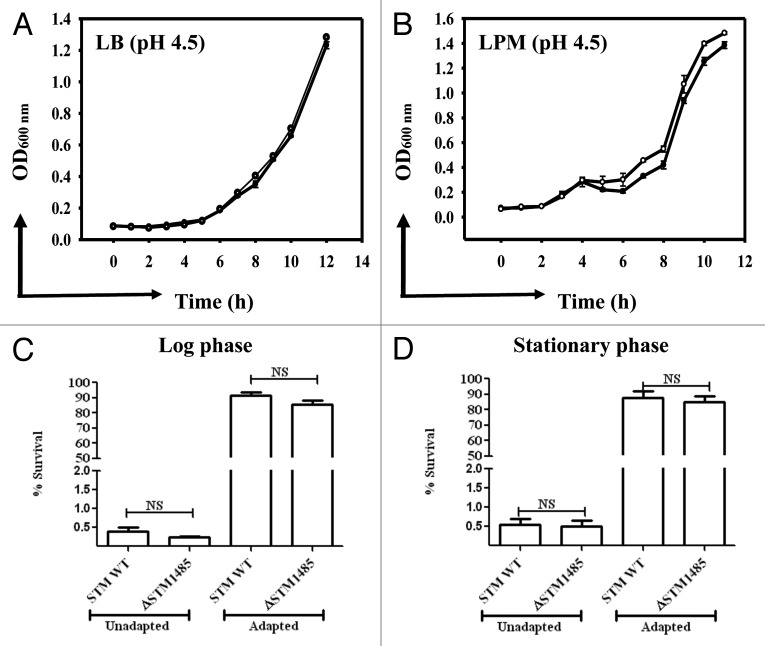
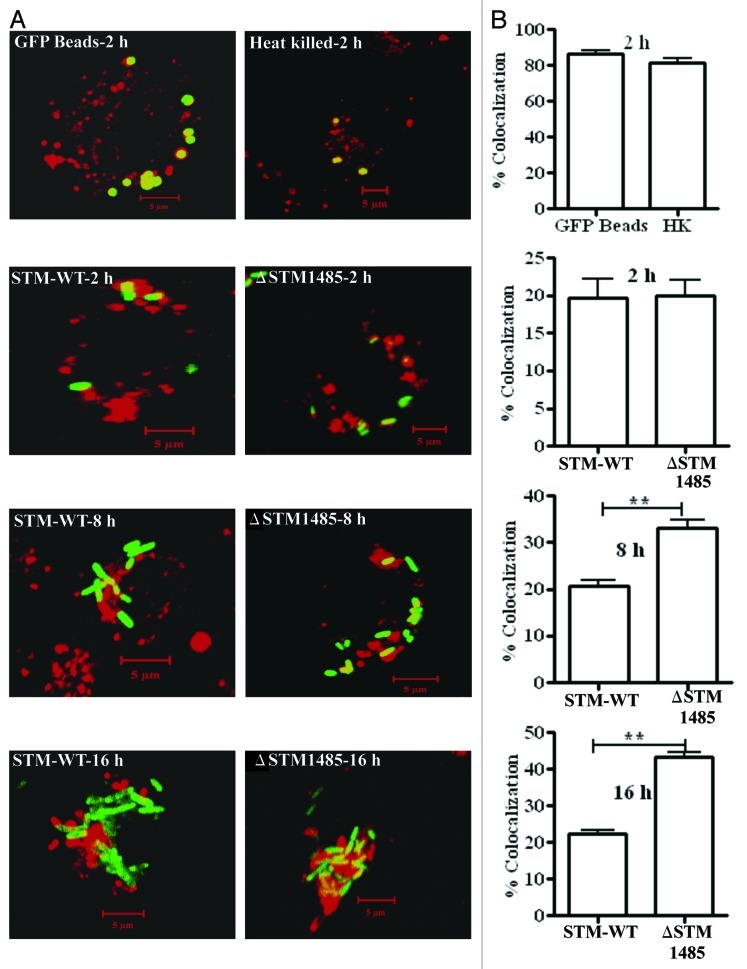
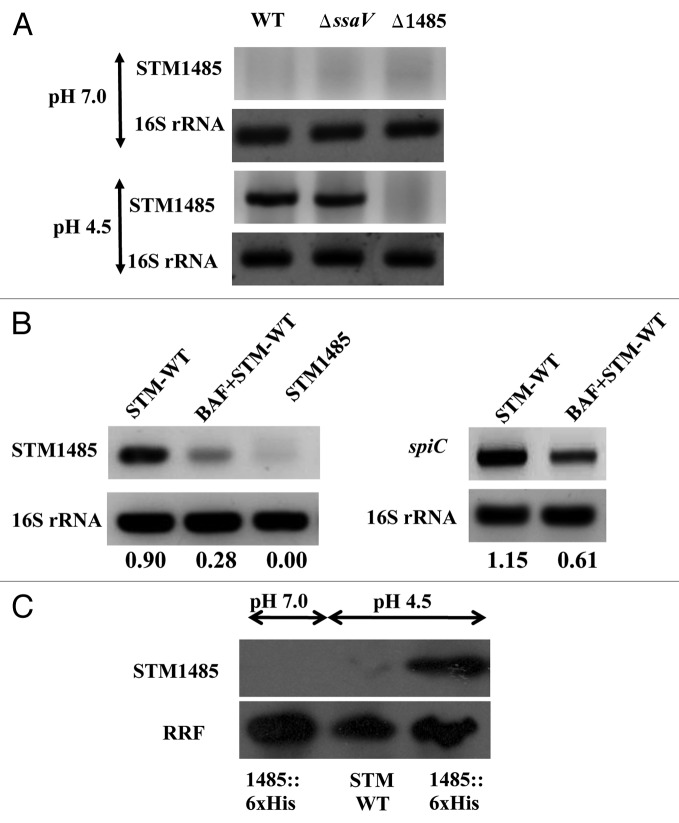
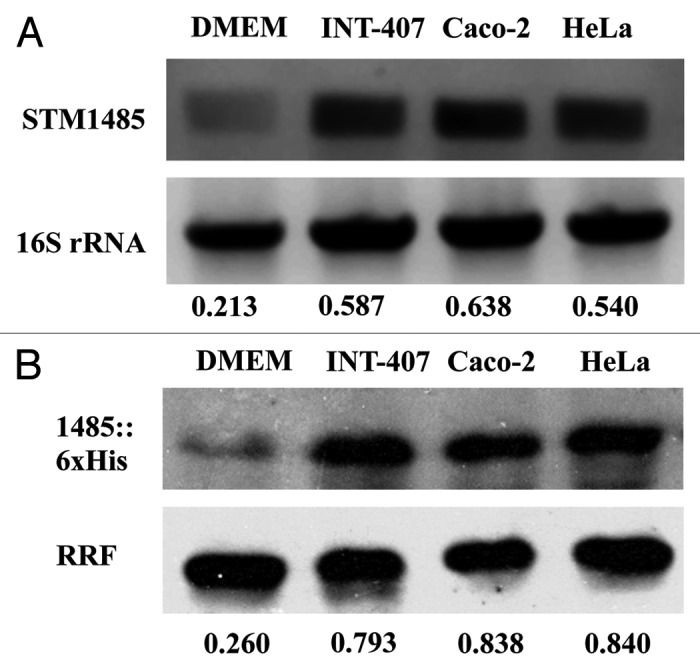
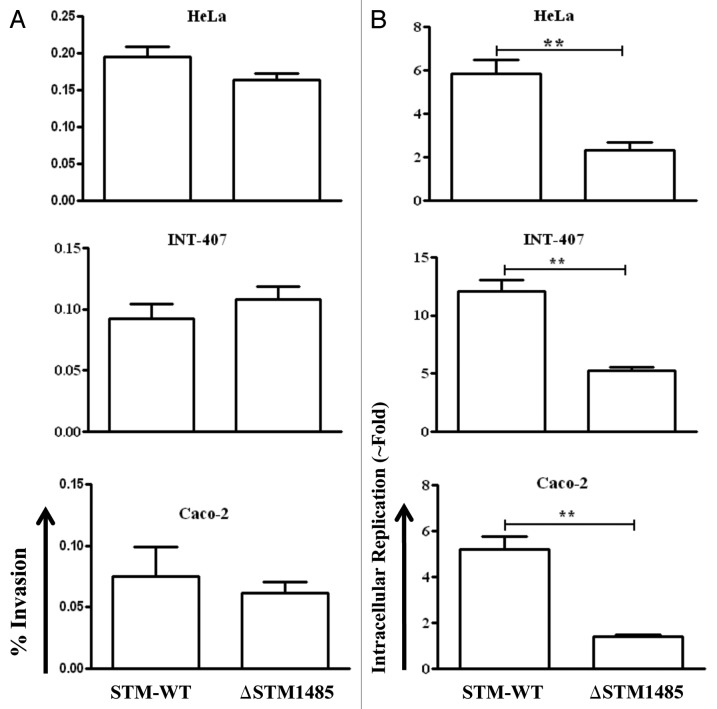
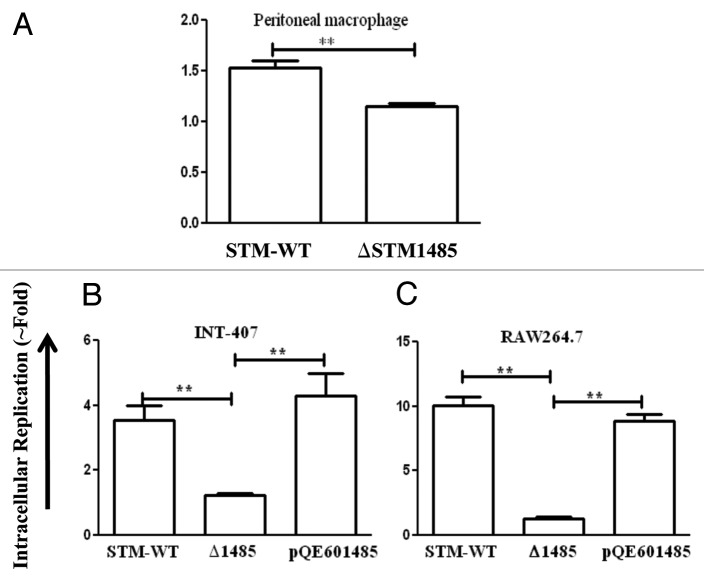
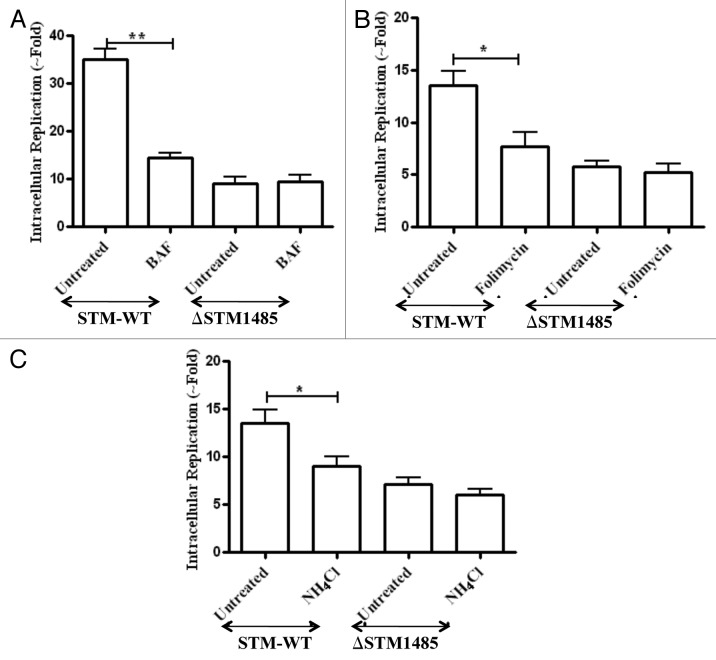
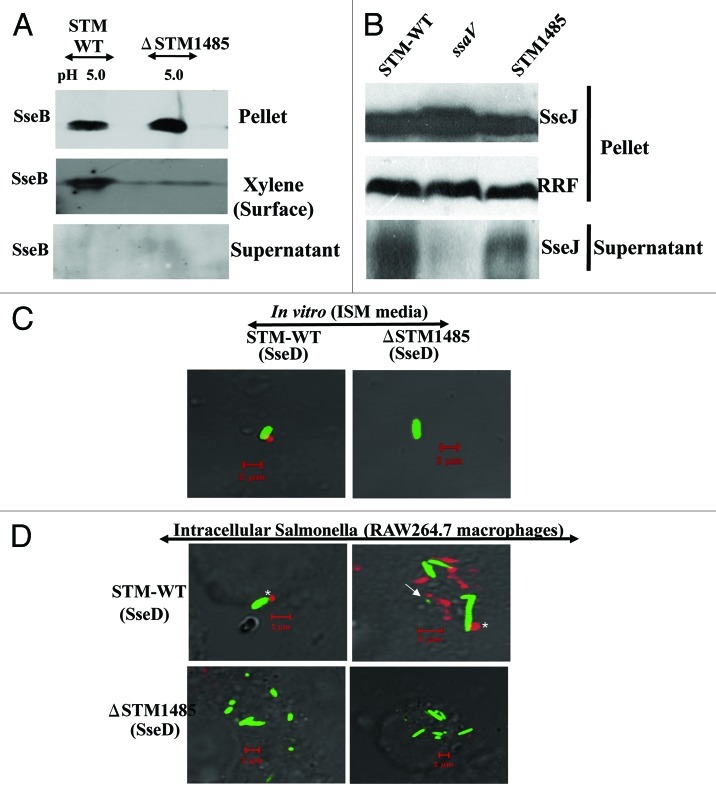
During the course of infection, Salmonella has to face several potentially lethal environmental conditions, one such being acidic pH. The ability to sense and respond to the acidic pH is crucial for the survival and replication of Salmonella. The physiological role of one gene (STM1485) involved in this response, which is upregulated inside the host cells (by 90- to 113-fold) is functionally characterized in Salmonella pathogenesis. In vitro, the ΔSTM1485 neither exhibited any growth defect at pH 4.5 nor any difference in the acid tolerance response. The ΔSTM1485 was compromised in its capacity to proliferate inside the host cells and complementation with STM1485 gene restored its virulence. We further demonstrate that the surface translocation of Salmonella pathogenicity island-2 (SPI-2) encoded translocon proteins, SseB and SseD were reduced in the ΔSTM1485. The increase in co-localization of this mutant with lysosomes was also observed. In addition, the ΔSTM1485 displayed significantly reduced competitive indices (CI) in spleen, liver and mesenteric lymph nodes in murine typhoid model when infected by intra-gastric route. Based on these results, we conclude that the acidic pH induced STM1485 gene is essential for intracellular replication of Salmonella.
在感染过程中,沙门氏菌必须面对几种潜在的致命环境条件,其中一种是酸性 pH 值。感应和响应酸性 pH 值的能力对沙门氏菌的存活和复制至关重要。参与这种反应的一个基因(STM1485)的生理作用在沙门氏菌发病机制中得到了功能表征,该基因在宿主细胞内(上调 90-113 倍)。在体外,ΔSTM1485 在 pH 4.5 下既没有表现出任何生长缺陷,也没有在耐酸反应中表现出任何差异。ΔSTM1485 在其在宿主细胞内增殖的能力受到损害,用 STM1485 基因进行互补恢复了其毒力。我们进一步证明,沙门氏菌致病性岛 2(SPI-2)编码转位器蛋白 SseB 和 SseD 的表面易位减少。还观察到这种突变体与溶酶体的共定位增加。此外,当通过胃内途径感染时,ΔSTM1485 在小鼠伤寒模型中的脾脏、肝脏和肠系膜淋巴结中的竞争指数(CI)显著降低。基于这些结果,我们得出结论,酸性 pH 值诱导的 STM1485 基因是沙门氏菌细胞内复制所必需的。