BioModeling and Bioinformatics, Department of Biomedical Engineering, Eindhoven University of Technology, Eindhoven, The Netherlands.
PLoS One. 2012;7(3):e34118. doi: 10.1371/journal.pone.0034118. Epub 2012 Mar 28.
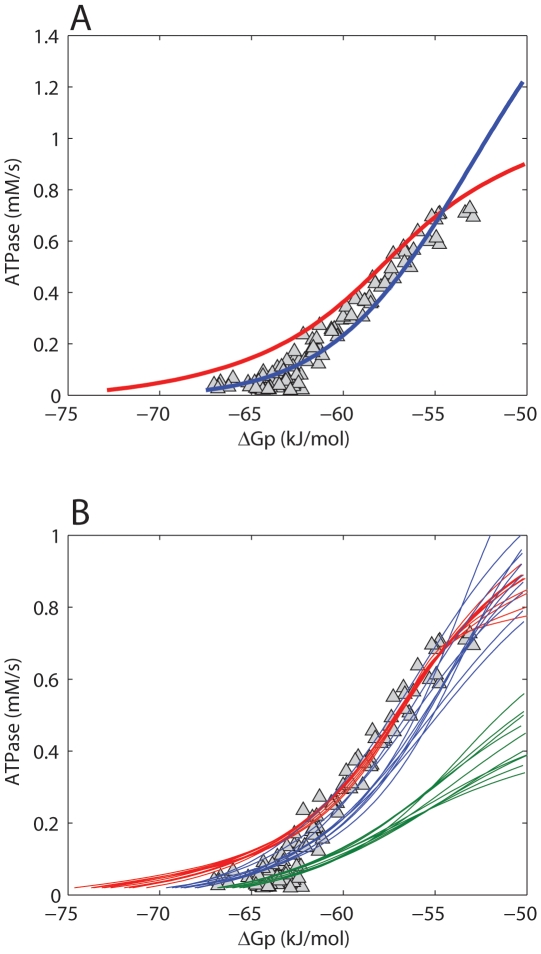
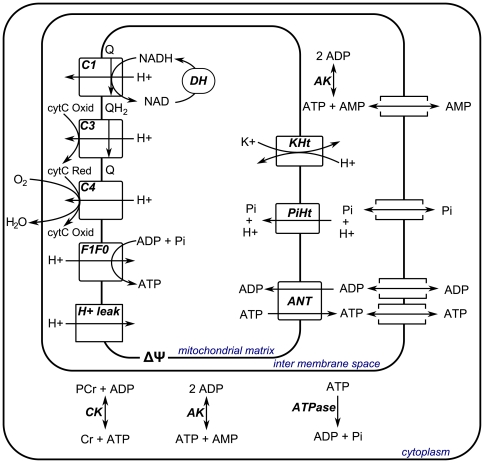
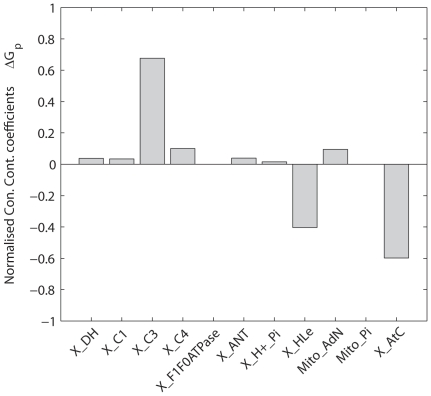
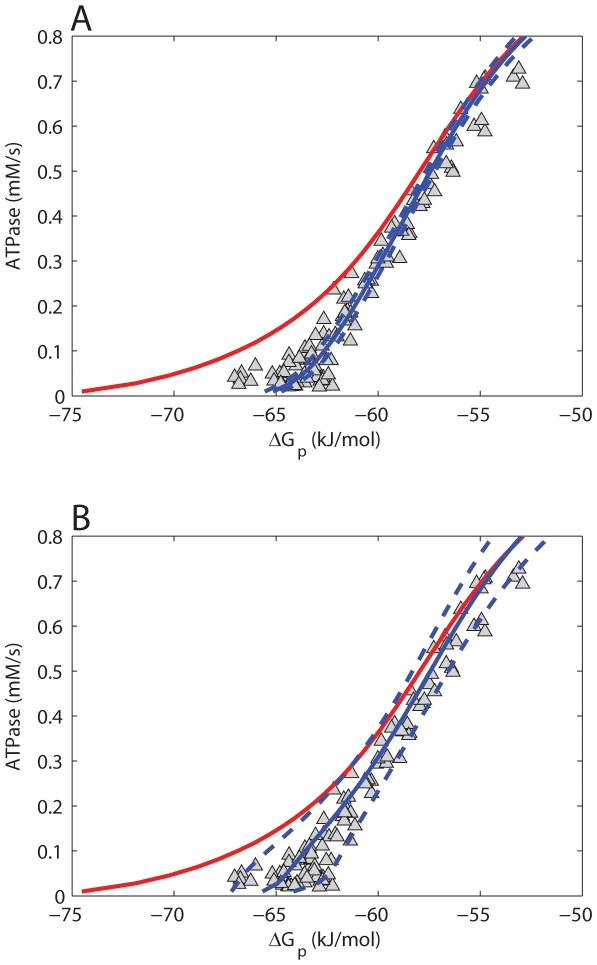
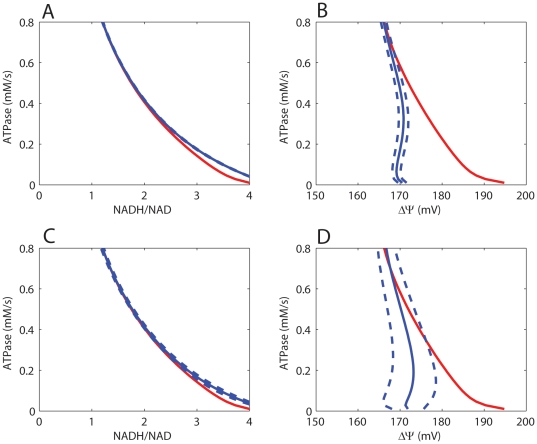
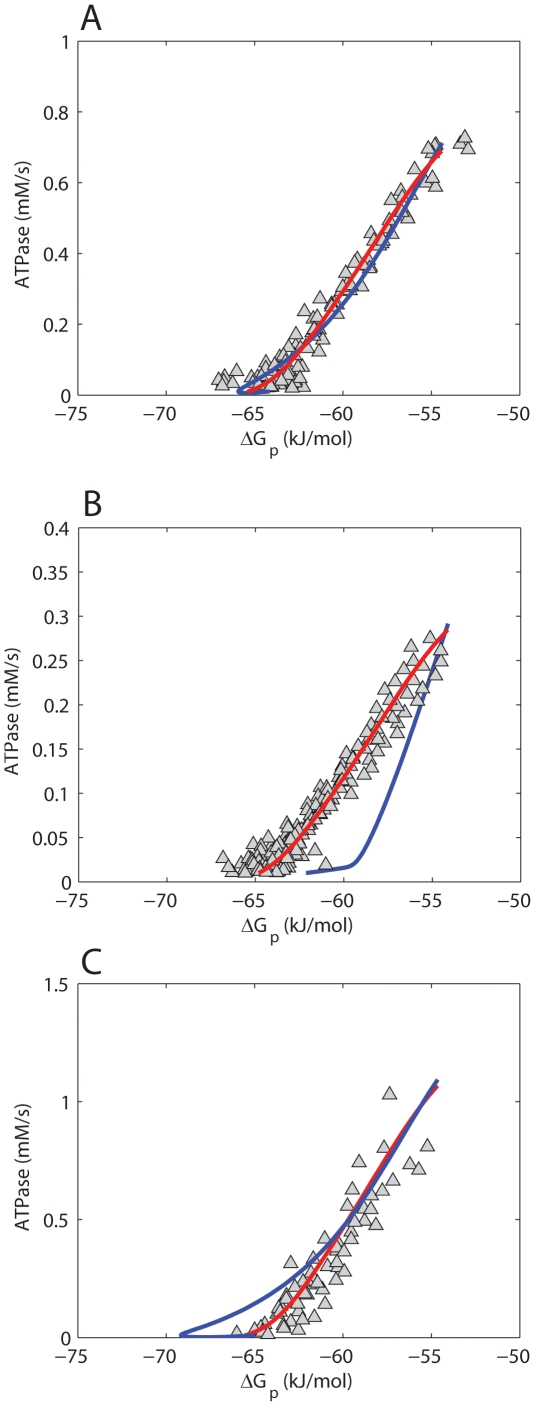
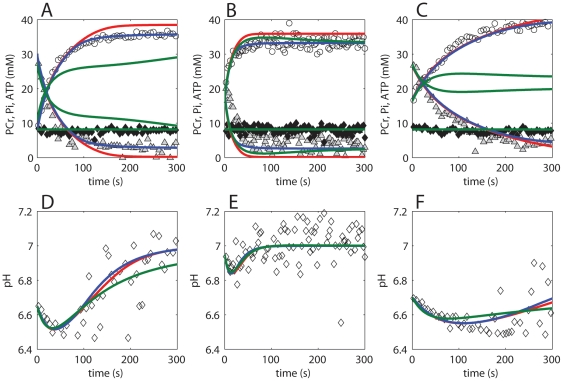
The regulation of the 100-fold dynamic range of mitochondrial ATP synthesis flux in skeletal muscle was investigated. Hypotheses of key control mechanisms were included in a biophysical model of oxidative phosphorylation and tested against metabolite dynamics recorded by (31)P nuclear magnetic resonance spectroscopy ((31)P MRS). Simulations of the initial model featuring only ADP and Pi feedback control of flux failed in reproducing the experimentally sampled relation between myoplasmic free energy of ATP hydrolysis (ΔG(p) = ΔG(p)(o')+RT ln ([ADP][Pi]/[ATP]) and the rate of mitochondrial ATP synthesis at low fluxes (<0.2 mM/s). Model analyses including Monte Carlo simulation approaches and metabolic control analysis (MCA) showed that this problem could not be amended by model re-parameterization, but instead required reformulation of ADP and Pi feedback control or introduction of additional control mechanisms (feed forward activation), specifically at respiratory Complex III. Both hypotheses were implemented and tested against time course data of phosphocreatine (PCr), Pi and ATP dynamics during post-exercise recovery and validation data obtained by (31)P MRS of sedentary subjects and track athletes. The results rejected the hypothesis of regulation by feed forward activation. Instead, it was concluded that feedback control of respiratory chain complexes by inorganic phosphate is essential to explain the regulation of mitochondrial ATP synthesis flux in skeletal muscle throughout its full dynamic range.
研究了骨骼肌中线粒体 ATP 合成通量的 100 倍动态范围的调节。在氧化磷酸化的生物物理模型中包含了关键控制机制的假设,并通过(31)P 核磁共振波谱学((31)P MRS)记录的代谢物动力学进行了检验。最初的模型仅具有 ADP 和 Pi 对通量的反馈控制,其模拟无法再现实验中采样的细胞质中 ATP 水解的自由能(ΔG(p) = ΔG(p)(o')+RT ln ([ADP][Pi]/[ATP])与低通量下(<0.2 mM/s)线粒体 ATP 合成速率之间的关系。模型分析包括蒙特卡罗模拟方法和代谢控制分析(MCA)表明,通过模型重新参数化无法解决此问题,而是需要重新制定 ADP 和 Pi 反馈控制或引入其他控制机制(前馈激活),特别是在呼吸复合物 III 处。这两种假设都已实施,并与运动后恢复期间磷酸肌酸(PCr)、Pi 和 ATP 动力学的时间过程数据以及通过静坐和田径运动员的(31)P MRS 获得的验证数据进行了检验。结果否定了前馈激活调节的假设。相反,结论是无机磷酸盐对呼吸链复合物的反馈控制对于解释整个动态范围内骨骼肌中线粒体 ATP 合成通量的调节是必不可少的。