Li Chang, Shen Zhenwei, Li Xiao, Bai Jieying, Zeng Lin, Tian Mingyao, Song Ying Jin, Ye Ming, Du Shouwen, Ren Dayong, Liu Cunxia, Zhu Na, Sun Dandan, Li Yi, Jin Ningyi
Institute of Military Veterinary Medicine, Academy of Military Medical Sciences, LiuYingXi Road No. 666, Changchun 130122, China.
Clin Dev Immunol. 2012;2012:958404. doi: 10.1155/2012/958404. Epub 2012 Feb 26.
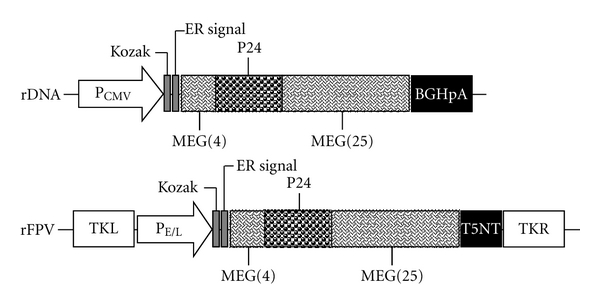
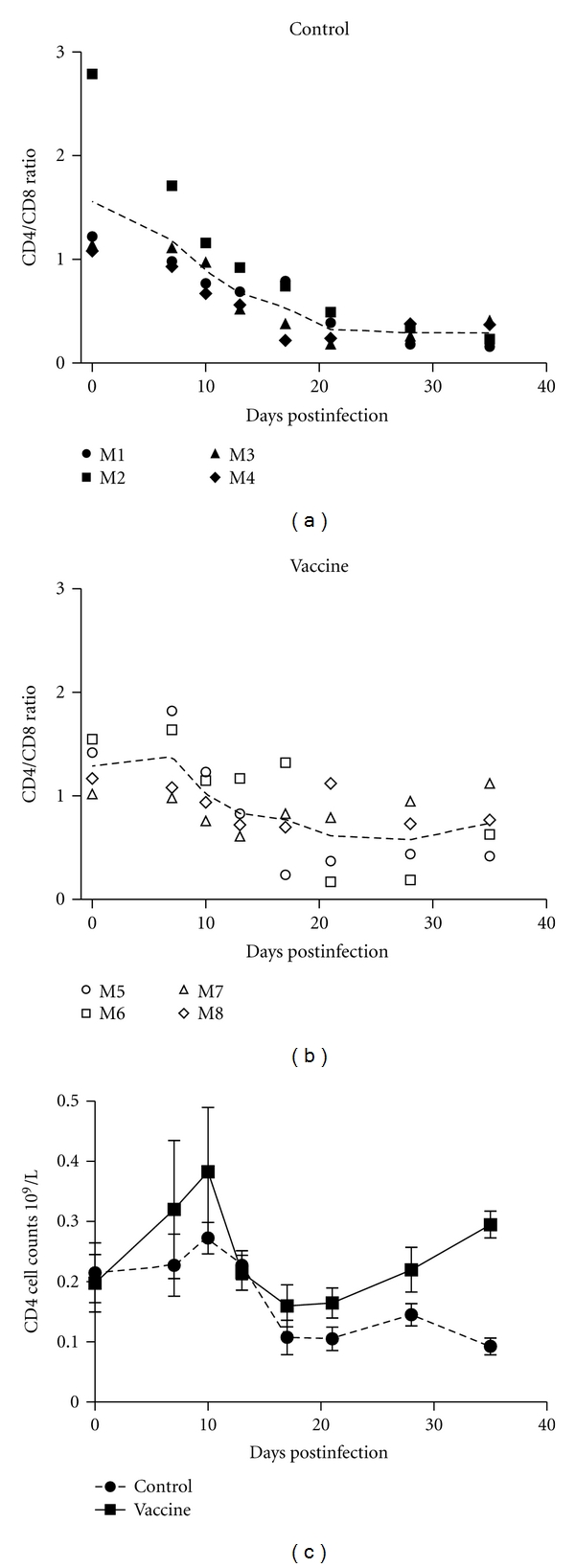
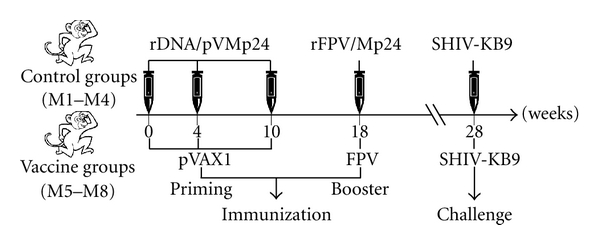
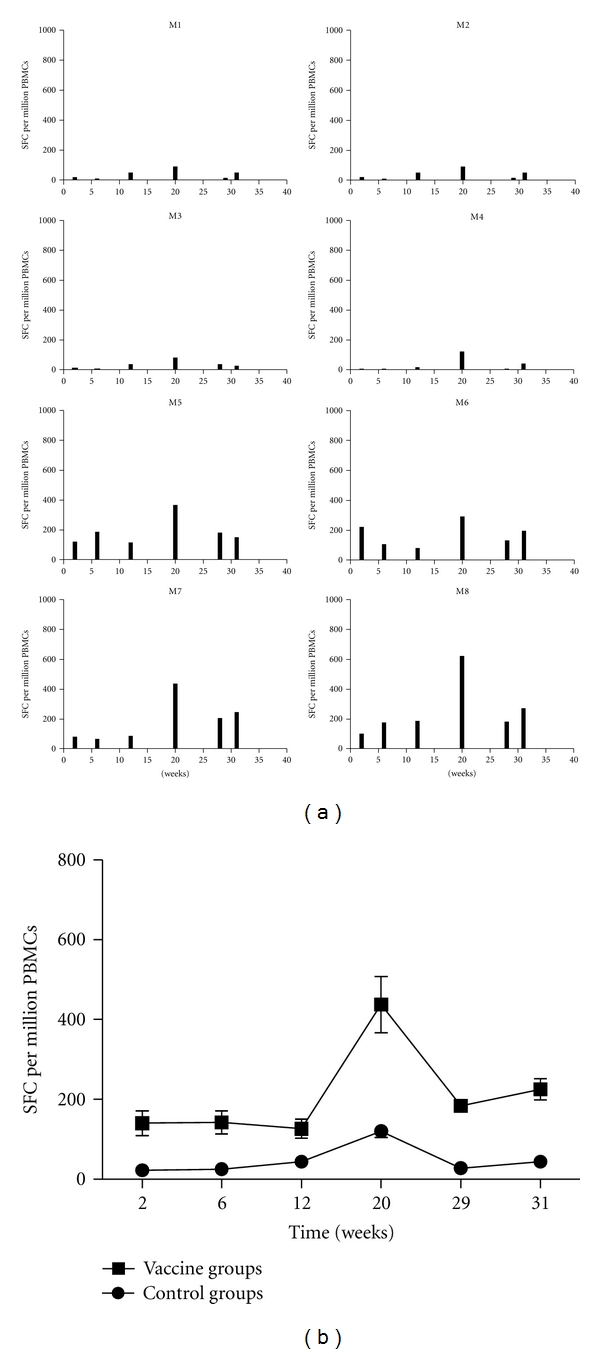
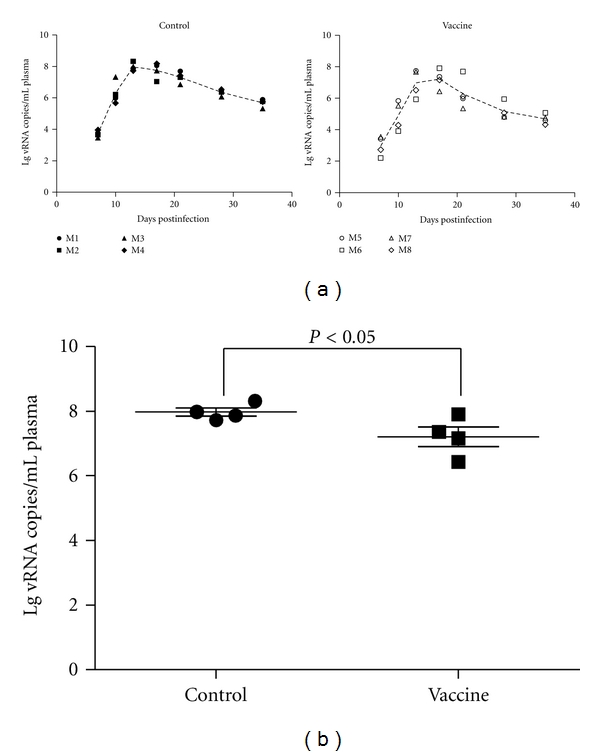
Developing an effective vaccine against HIV infection remains an urgent goal. We used a DNA prime/fowlpox virus boost regimen to immunize Chinese rhesus macaques. The animals were challenged intramuscularly with pathogenic molecularly cloned SHIV-KB9. Immunogenicity and protective efficacy of vaccines were investigated by measuring IFN-γ levels, monitoring HIV-specific binding antibodies, examining viral load, and analyzing CD4/CD8 ratio. Results show that, upon challenge, the vaccine group can induce a strong immune response in the body, represented by increased expression of IFN-γ, slow and steady elevated antibody production, reduced peak value of acute viral load, and increase in the average CD4/CD8 ratio. The current research suggests that rapid reaction speed, appropriate response strength, and long-lasting immune response time may be key protection factors for AIDS vaccine. The present study contributes significantly to AIDS vaccine and preclinical research.
开发一种有效的抗HIV感染疫苗仍然是一个紧迫的目标。我们使用DNA初免/禽痘病毒加强免疫方案对中国恒河猴进行免疫。动物通过肌肉注射致病性分子克隆的SHIV-KB9进行攻击。通过测量IFN-γ水平、监测HIV特异性结合抗体、检测病毒载量以及分析CD4/CD8比值来研究疫苗的免疫原性和保护效果。结果显示,在攻击后,疫苗组可在体内诱导强烈的免疫反应,表现为IFN-γ表达增加、抗体产生缓慢且稳定升高、急性病毒载量峰值降低以及平均CD4/CD8比值增加。当前研究表明,快速的反应速度、适当的反应强度和持久的免疫反应时间可能是艾滋病疫苗的关键保护因素。本研究对艾滋病疫苗及临床前研究有显著贡献。