Bayon Emilie, Morlieras Jessica, Dereuddre-Bosquet Nathalie, Gonon Alexis, Gosse Leslie, Courant Thomas, Le Grand Roger, Marche Patrice N, Navarro Fabrice P
1Univ. Grenoble Alpes, F-38000 Grenoble, France.
2Division for biology and healthcare technologies, CEA, LETI, MINATEC Campus, F-38054 Grenoble, France.
NPJ Vaccines. 2018 Oct 1;3:46. doi: 10.1038/s41541-018-0086-0. eCollection 2018.
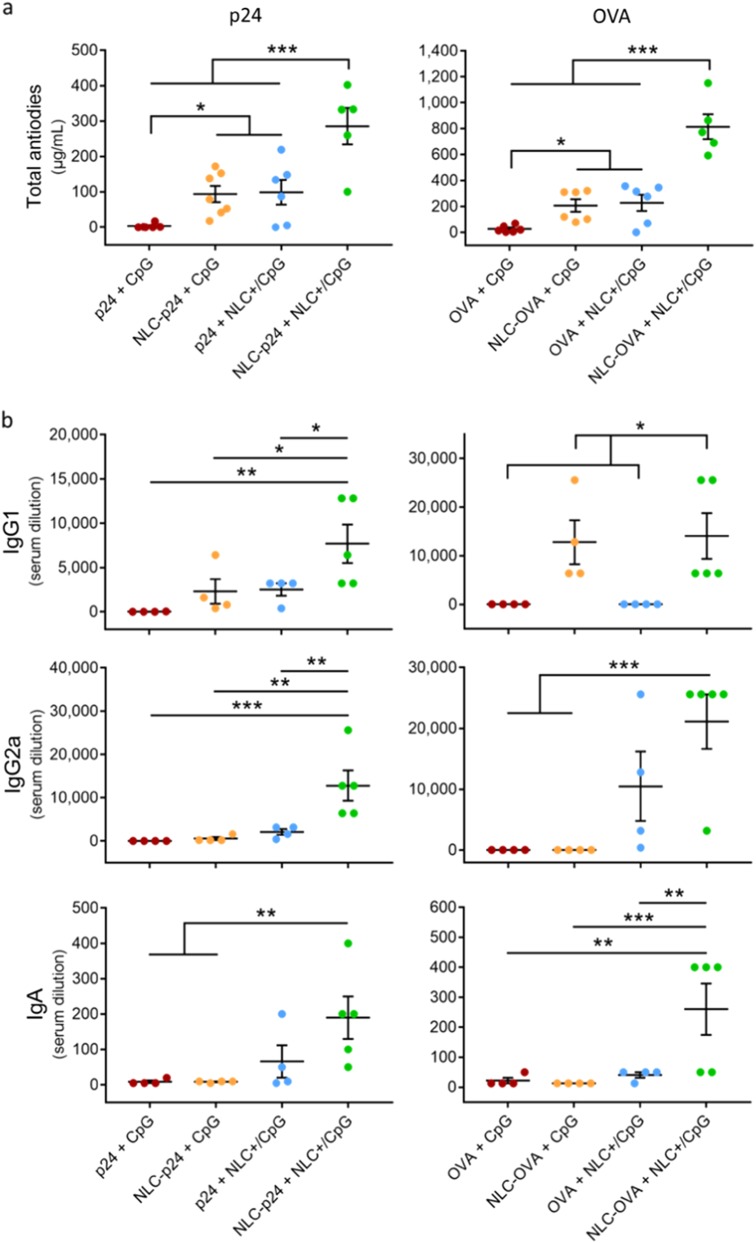
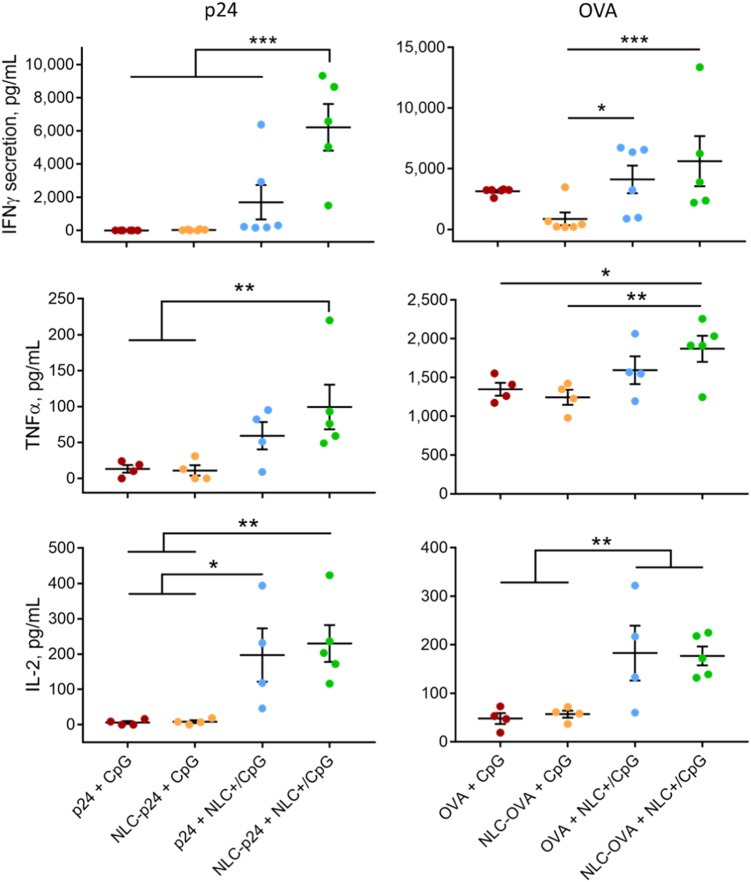
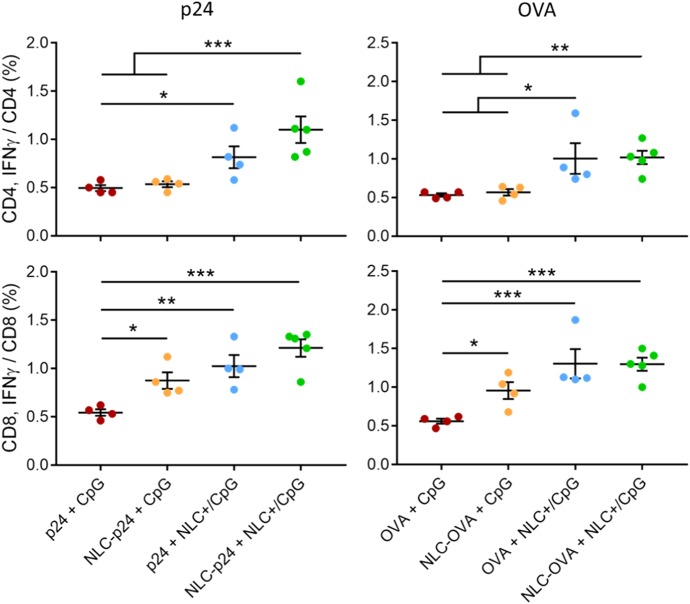
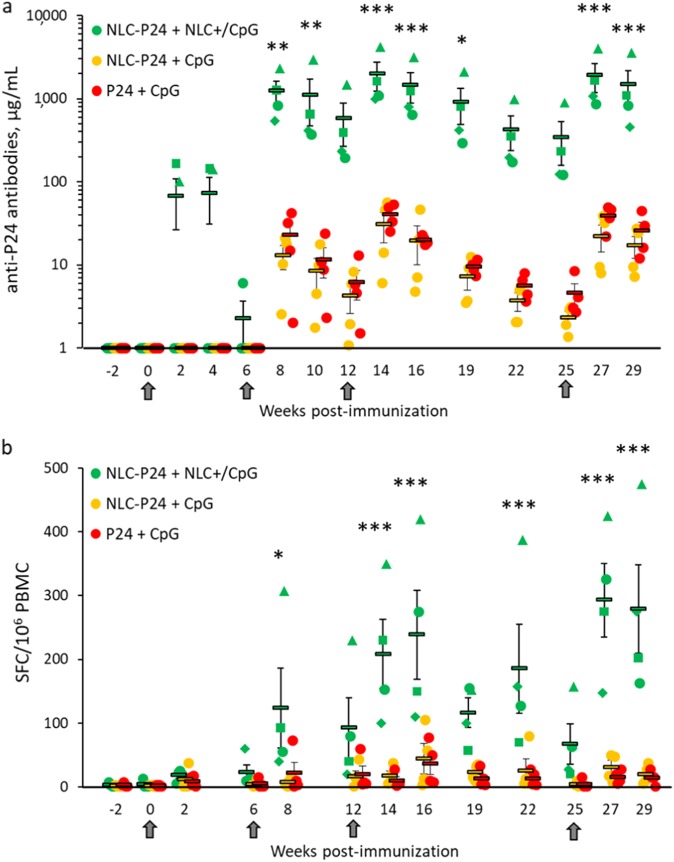
HIV is one of the deadliest pandemics of modern times, having already caused 35 million deaths around the world. Despite the huge efforts spent to develop treatments, the virus cannot yet be eradicated and continues to infect new people. Spread of the virus remains uncontrolled, thus exposing the worldwide population to HIV danger, due to the lack of efficient vaccines. The latest clinical trials describe the challenges associated with developing an effective prophylactic HIV vaccine. These immunological obstacles will only be overcome by smart and innovative solutions applied to the design of vaccine formulations. Here, we describe the use of nanostructured lipid carriers (NLC) for the delivery of p24 protein as a model HIV antigen, with the aim of increasing its immunogenicity. We have designed vaccine formulations comprising NLC grafted with p24 antigen, together with cationic NLC optimized for the delivery of immunostimulant CpG. This tailored system significantly enhanced immune responses against p24, in terms of specific antibody production and T-cell activation in mice. More importantly, the capacity of NLC to induce specific immune responses against this troublesome HIV antigen was further supported by a 7-month study on non-human primates (NHP). This work paves the way toward the development of a future HIV vaccine, which will also require the use of envelope antigens.
艾滋病毒是现代最致命的大流行病之一,已在全球造成3500万人死亡。尽管在研发治疗方法上付出了巨大努力,但该病毒仍无法根除,继续感染新的人群。由于缺乏有效的疫苗,病毒传播仍未得到控制,从而使全球人口面临艾滋病毒的威胁。最新的临床试验描述了开发有效的预防性艾滋病毒疫苗所面临的挑战。只有通过应用于疫苗配方设计的智能和创新解决方案,才能克服这些免疫障碍。在此,我们描述了使用纳米结构脂质载体(NLC)递送p24蛋白作为模型艾滋病毒抗原,目的是提高其免疫原性。我们设计了包含接枝有p24抗原的NLC的疫苗配方,以及针对免疫刺激剂CpG递送进行优化的阳离子NLC。在小鼠中,这种定制系统在特异性抗体产生和T细胞活化方面显著增强了针对p24的免疫反应。更重要的是,对非人类灵长类动物(NHP)进行的为期7个月的研究进一步支持了NLC诱导针对这种棘手的艾滋病毒抗原的特异性免疫反应的能力。这项工作为未来艾滋病毒疫苗的开发铺平了道路,未来的疫苗还需要使用包膜抗原。