Clinical Research Group, Liverpool School of Tropical Medicine, Liverpool, UK.
Virol J. 2011 Sep 7;8:429. doi: 10.1186/1743-422X-8-429.
There is renewed interest in the development of poxvirus vector-based HIV vaccines due to the protective effect observed with repeated recombinant canarypox priming with gp120 boosting in the recent Thai placebo-controlled trial. This study sought to investigate whether a heterologous prime-boost-boost vaccine regimen in Chinese cynomolgus macaques with a DNA vaccine and recombinant poxviral vectors expressing HIV virus-like particles bearing envelopes derived from the most prevalent clades circulating in sub-Saharan Africa, focused the antibody response to shared neutralising epitopes.
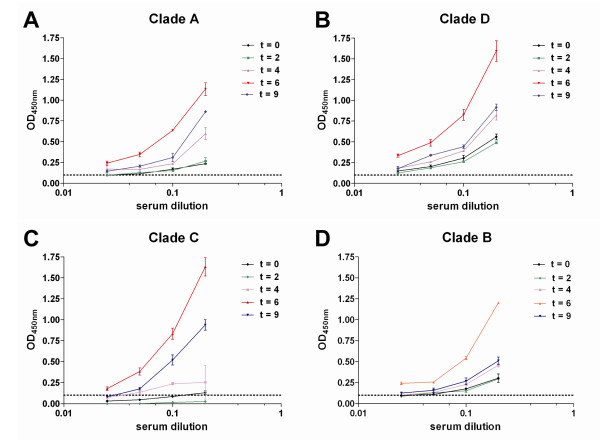
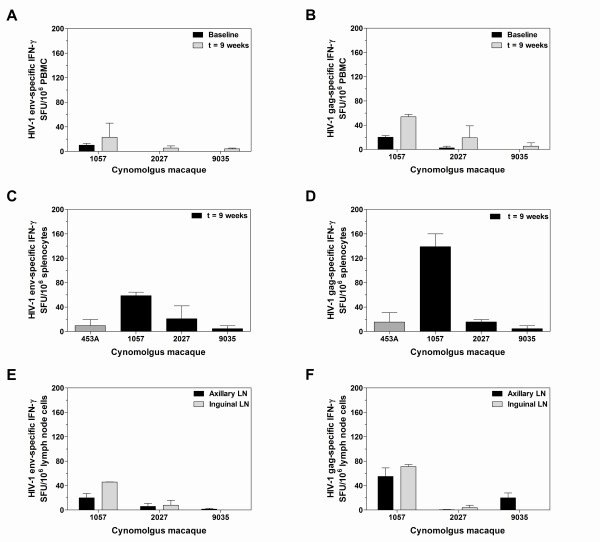
Three Chinese cynomolgus macaques were immunised via intramuscular injections using a regimen composed of a prime with two DNA vaccines expressing clade A Env/clade B Gag followed by boosting with recombinant fowlpox virus expressing HIV-1 clade D Gag, Env and cholera toxin B subunit followed by the final boost with recombinant modified vaccinia virus Ankara expressing HIV-1 clade C Env, Gag and human complement protein C3d. We measured the macaque serum antibody responses by ELISA, enumerated T cell responses by IFN-γ ELISpot and assessed seroneutralisation of HIV-1 using the TZM-bl β-galactosidase assay with primary isolates of HIV-1.
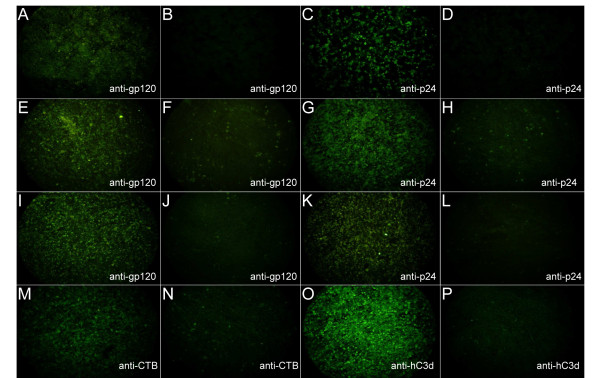
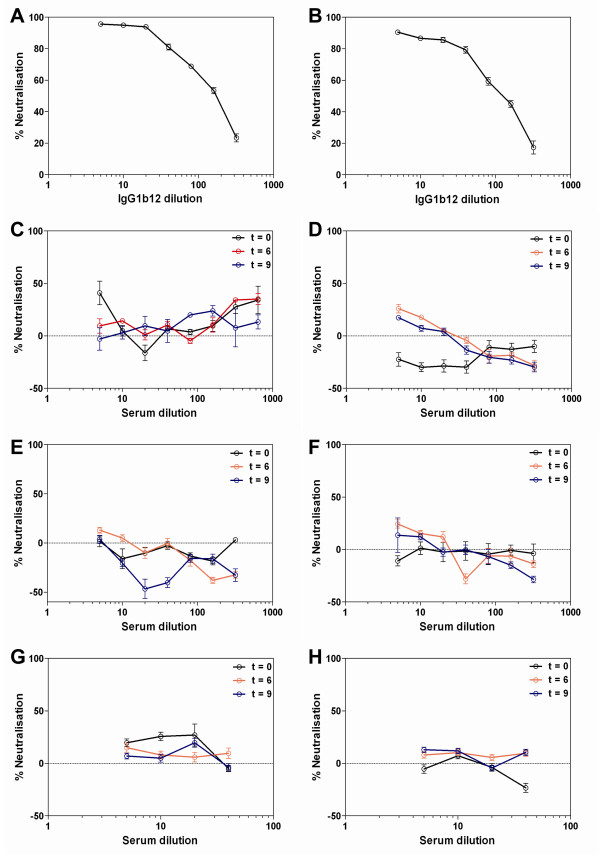
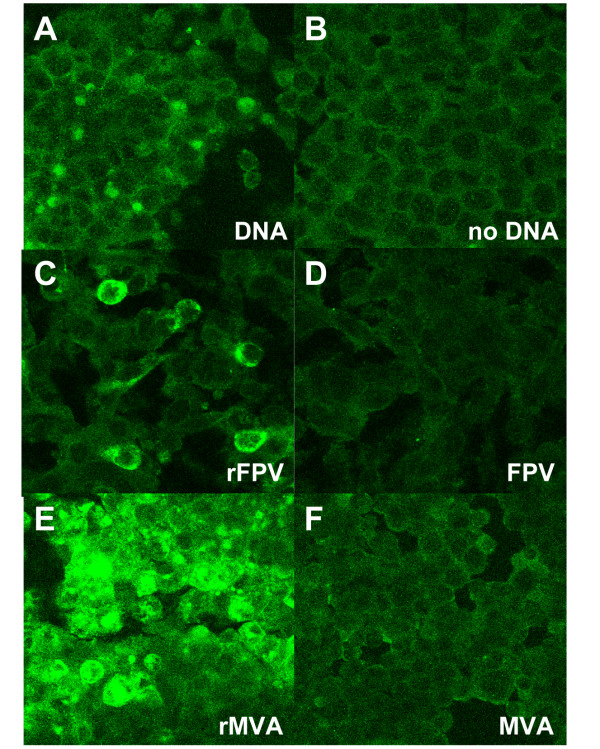
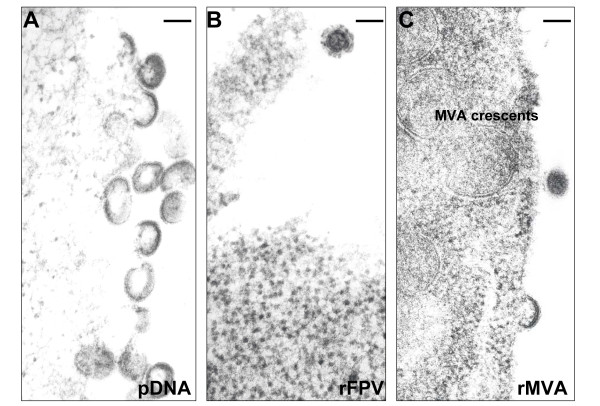
This study shows that large and complex synthetic DNA sequences can be successfully cloned in a single step into two poxvirus vectors: MVA and FPV and the recombinant poxviruses could be grown to high titres. The vaccine candidates showed appropriate expression of recombinant proteins with the formation of authentic HIV virus-like particles seen on transmission electron microscopy. In addition the b12 epitope was shown to be held in common by the vaccine candidates using confocal immunofluorescent microscopy. The vaccine candidates were safely administered to Chinese cynomolgus macaques which elicited modest T cell responses at the end of the study but only one out of the three macaques elicited an HIV-specific antibody response. However, the antibodies did not neutralise primary isolates of HIV-1 or the V3-sensitive isolate SF162 using the TZM-bl β-galactosidase assay.
MVA and FP9 are ideal replication-deficient viral vectors for HIV-1 vaccines due to their excellent safety profile for use in humans. This study shows this novel prime-boost-boost regimen was poorly immunogenic in Chinese cynomolgus macaques.
由于最近在泰国进行的安慰剂对照试验中,重复使用重组金丝雀痘进行初次免疫接种并用 gp120 加强免疫显示出保护作用,因此人们对开发痘病毒载体 HIV 疫苗重新产生了兴趣。本研究旨在探讨在中国食蟹猴中使用 DNA 疫苗和表达源自撒哈拉以南非洲流行分支的 HIV 病毒样颗粒包膜的重组痘病毒载体的异源初免-加强-加强疫苗方案是否能使抗体反应集中于共同的中和表位。
通过肌肉内注射,用包含两剂表达 A 型包膜/clade B gag 的 DNA 疫苗进行初免,然后用表达 HIV-1 clade D gag、包膜和霍乱毒素 B 亚单位的重组禽痘病毒进行加强,最后用表达 HIV-1 clade C 包膜、gag 和人补体蛋白 C3d 的重组改良安卡拉痘苗病毒进行加强,对 3 只中国食蟹猴进行免疫接种。我们通过 ELISA 测量猴血清抗体反应,通过 IFN-γ ELISpot 计数 T 细胞反应,并使用 TZM-bl β-半乳糖苷酶测定法评估对 HIV-1 的血清中和作用,该方法使用 HIV-1 的原发性分离物。
本研究表明,可以将大型复杂的合成 DNA 序列成功地一步克隆到两种痘病毒载体中:MVA 和 FPV,重组痘病毒可以大量生长。通过透射电子显微镜观察到,候选疫苗能够正确表达重组蛋白,并形成真实的 HIV 病毒样颗粒。此外,使用共聚焦免疫荧光显微镜显示候选疫苗中存在 b12 表位。候选疫苗安全地接种给中国食蟹猴,在研究结束时引起适度的 T 细胞反应,但只有 3 只猴中的 1 只产生了 HIV 特异性抗体反应。然而,在 TZM-bl β-半乳糖苷酶测定法中,抗体不能中和 HIV-1 的原发性分离物或 V3 敏感分离物 SF162。
MVA 和 FP9 是 HIV-1 疫苗的理想复制缺陷型病毒载体,因为它们对人类使用具有极好的安全性。本研究表明,这种新型初免-加强-加强方案在中国食蟹猴中免疫原性较差。