Department of Chinese Medicine, China Medical University Hospital, Taichung 40447, Taiwan.
Evid Based Complement Alternat Med. 2012;2012:932823. doi: 10.1155/2012/932823. Epub 2012 Mar 13.
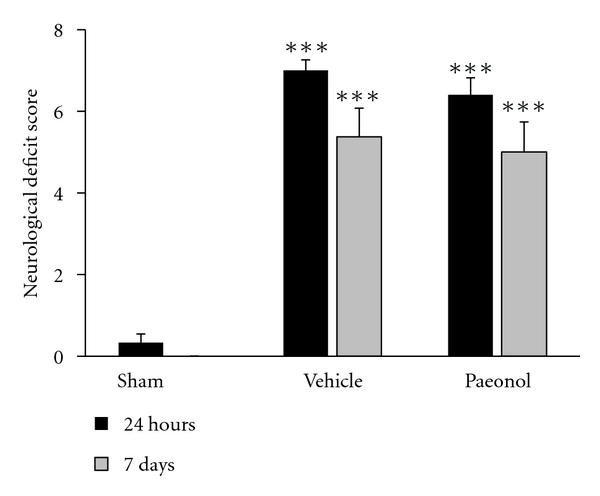
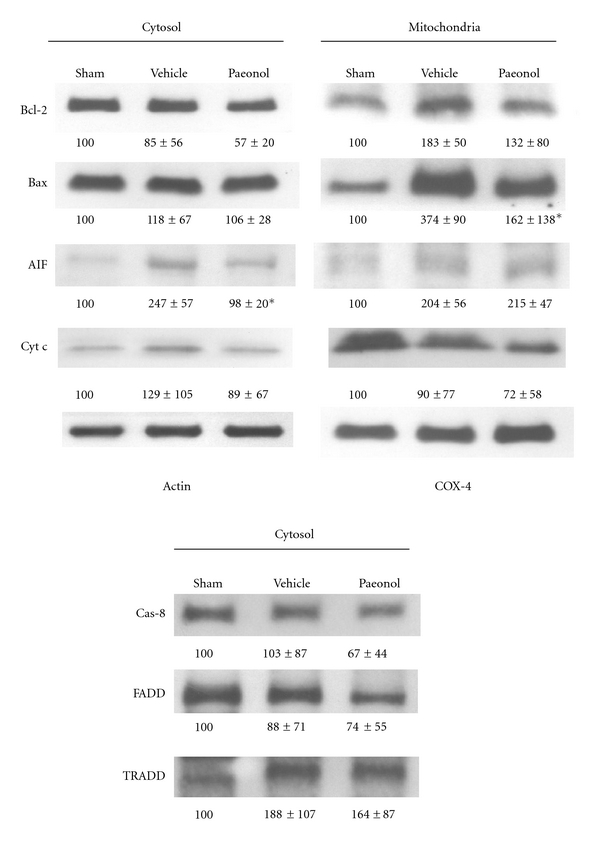
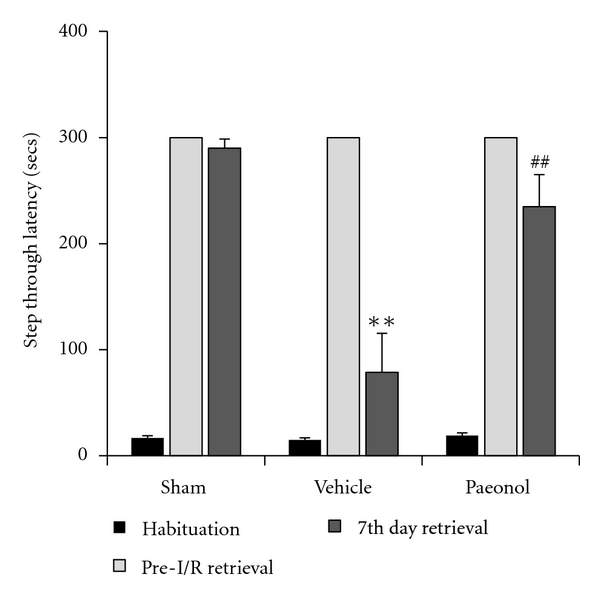
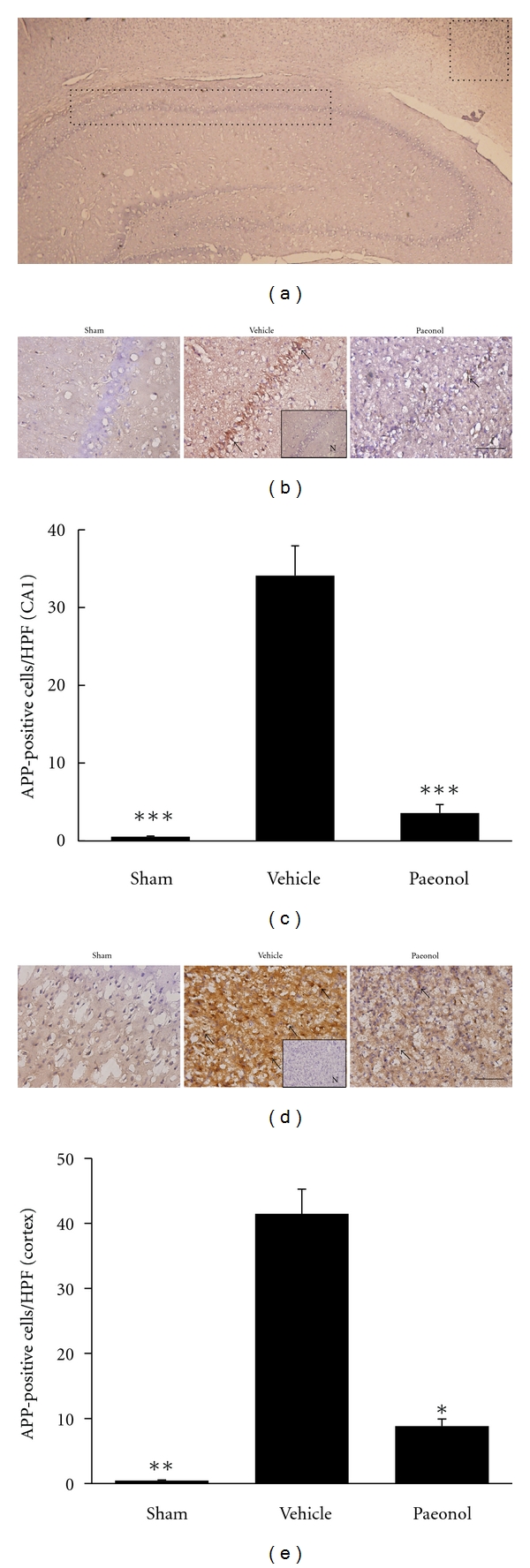
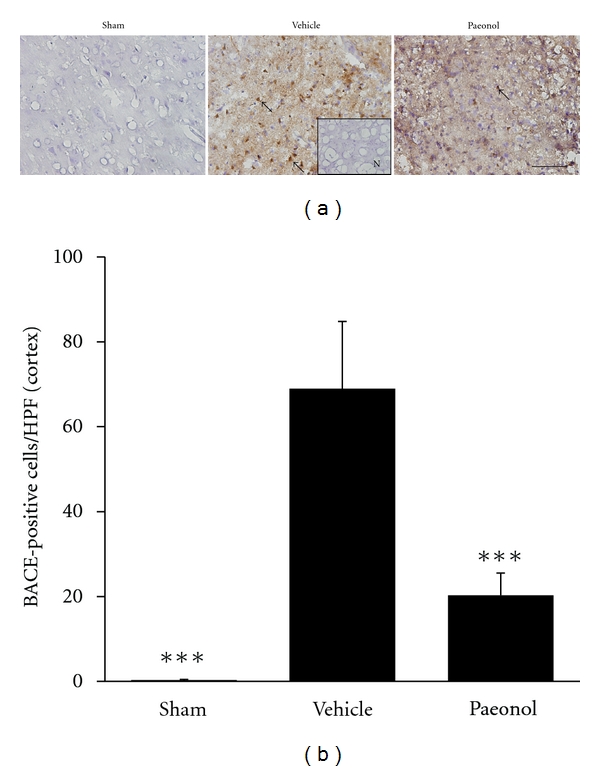
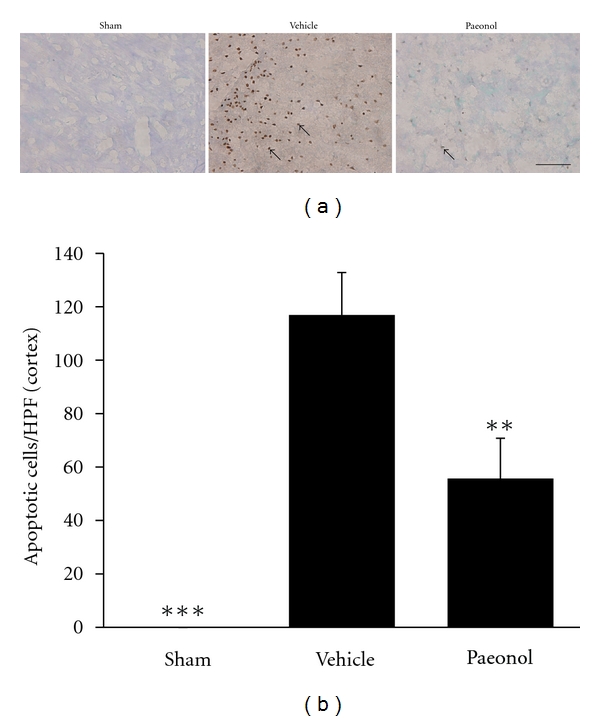
Poststroke dementia commonly occurs following stroke, with its pathogenesis related to β-amyloid production and apoptosis. The present study evaluate the effects of paeonol, one of the phenolic phytochemicals isolated from the Chinese herb Paeonia suffruticosa Andrews (MC), on protection from memory loss after ischemic stroke in the subacute stage. Rats were subjected to transient middle cerebral artery occlusion (tMCAo) with 10 min of ischemia. The data revealed that paeonol recovered the step-through latency in the retrieval test seven days after tMCAo, but did not improve the neurological deficit induced by tMCAo. Levels of Amyloid precursor protein (APP)- and beta-site APP cleaving enzyme (BACE; β-secretase)-immunoreactive cells, and terminal deoxynucleotidyl transferase-mediated dUTP-biotin nick end labeling (TUNEL)-positive cells decreased in the paeonol-administered group. Western blotting revealed decreased levels of Bax protein in mitochondria and apoptosis-inducing factor (AIF) in cytosol following paeonol treatment. In conclusion, we speculate that paeonol protected memory after ischemic stroke via reducing APP, BACE, and apoptosis. Supression the level of Bax and blocking the release of AIF into cytosol might participate in the anti-apoptosis provided by paeonol.
中风后常发生中风后痴呆,其发病机制与β-淀粉样蛋白生成和细胞凋亡有关。本研究评估了牡丹酚(从中药牡丹皮(MC)中分离出的酚类植物化学物质之一)对亚急性期缺血性中风后记忆丧失的保护作用。大鼠进行短暂性大脑中动脉闭塞(tMCAo),缺血 10 分钟。数据显示,牡丹酚在 tMCAo 后 7 天恢复了检索测试中的步出潜伏期,但不能改善 tMCAo 引起的神经功能缺损。牡丹酚给药组 APP-和β位 APP 裂解酶(BACE;β-分泌酶)-免疫反应细胞以及末端脱氧核苷酸转移酶介导的 dUTP-生物素缺口末端标记(TUNEL)阳性细胞的水平降低。Western blot 显示牡丹酚处理后线粒体中 Bax 蛋白和细胞质中凋亡诱导因子(AIF)水平降低。总之,我们推测牡丹酚通过减少 APP、BACE 和细胞凋亡来保护记忆。抑制 Bax 水平并阻止 AIF 释放到细胞质中可能参与牡丹酚提供的抗凋亡作用。